
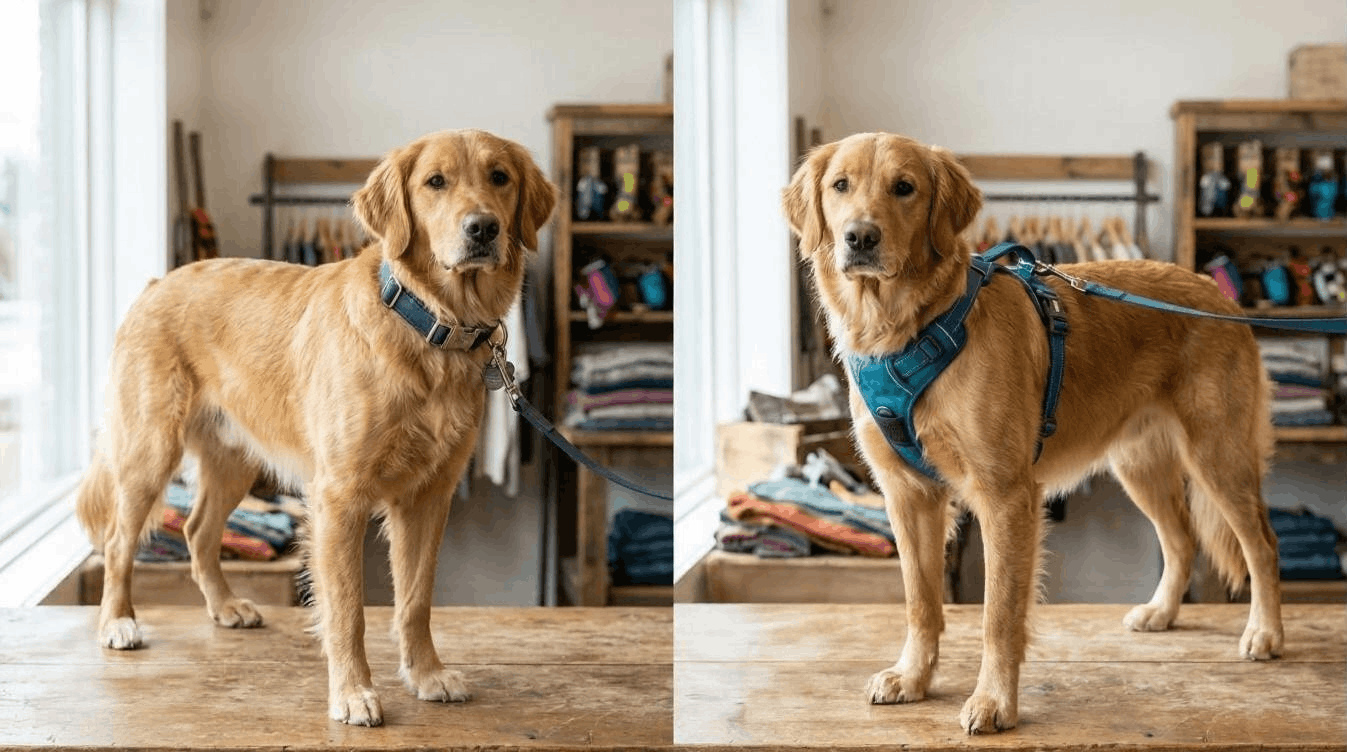
Some dogs become excited the moment they see a leash, while others completely refuse to move once the walk begins. They freeze, sit down, pull backward, or resist leaving the house entirely. This behavior frustrates many owners, especially when they are unsure whether fear, stubbornness, discomfort, or confusion is causing the problem. In many cases, however, the answer begins with understanding collar vs harness choices and how walking equipment affects canine comfort and confidence.
Walking equipment directly influences how dogs experience pressure, movement, and emotional security outdoors. A poorly fitted collar may create throat pressure or discomfort that increases hesitation during walks. Meanwhile, certain harnesses may either improve confidence or restrict movement depending on their design.
Dogs that refuse walks often feel physically uncomfortable, emotionally overwhelmed, or uncertain about their environment. Consequently, choosing the right walking equipment can make a major difference in helping them feel calmer and safer.
Not every dog responds the same way to collars or harnesses. Breed, age, body shape, confidence level, and previous experiences all influence what feels most comfortable and effective.
Understanding how each option works helps owners make better decisions while supporting healthier leash habits. More importantly, proper equipment combined with calm training can gradually transform stressful walks into positive daily experiences.
Why Some Dogs Refuse to Walk
Dogs refuse walks for many different reasons, and identifying the cause matters greatly before choosing equipment. Some dogs feel anxious outdoors because of loud sounds, traffic, crowds, or unfamiliar environments. Others associate walks with previous negative experiences such as rough handling or painful leash corrections.
Puppies often freeze because the world feels overwhelming during early socialization stages. Rescue dogs may also hesitate because they lack confidence or trust in unfamiliar situations.
Physical discomfort contributes as well. Neck pressure, joint pain, poorly fitted gear, or restricted movement may cause dogs to avoid walking entirely.
The collar vs harness decision becomes especially important in these situations because uncomfortable equipment can worsen emotional resistance significantly.
Dogs that feel trapped or restricted may refuse movement as a coping response. Similarly, dogs experiencing throat pressure from collars sometimes become even more hesitant when leash tension increases.
Understanding emotional and physical triggers helps owners respond compassionately rather than assuming the dog is simply stubborn.
Many reluctant walkers improve dramatically once owners combine supportive equipment with gradual confidence-building and positive reinforcement.
How Collars Affect Walking Behavior
Collars remain one of the most common walking tools because they are simple, lightweight, and easy to use. Many calm and confident dogs walk comfortably using collars without problems.
However, collar vs harness discussions become more important when dogs already feel nervous, resistant, or sensitive during walks.
Traditional collars place pressure directly around the neck and throat whenever leash tension occurs. For dogs that pull, freeze, or panic, this pressure may increase discomfort and emotional stress.
Sensitive dogs sometimes associate collars with choking sensations or physical restriction. Consequently, they may resist movement more strongly once leash pressure appears.
Certain breeds with delicate neck structures or breathing concerns may also struggle with collar-based walking. Small breeds, flat-faced dogs, and dogs prone to tracheal sensitivity often benefit from reduced neck pressure.
That said, collars still work well for identification purposes and calm leash walking in many situations. Lightweight flat collars remain practical for dogs that already walk politely and confidently.
Training collars designed to create discomfort or correction often worsen fear-based walking refusal. Dogs already hesitant outdoors rarely improve through increased pressure or intimidation.
The emotional experience during walks matters greatly. Dogs that feel physically comfortable usually learn and adapt more effectively over time.
How Harnesses Improve Comfort and Confidence
Harnesses distribute leash pressure across the chest and shoulders instead of focusing force around the neck. Because of this design, many reluctant walkers feel more secure and comfortable wearing harnesses.
In the collar vs harness debate, harnesses often provide better support for dogs that freeze, resist, or struggle emotionally during walks.
Well-designed harnesses allow dogs to move naturally while reducing pressure on sensitive areas. Consequently, nervous dogs often appear calmer and more willing to walk.
Front-clip harnesses can help guide dogs gently without harsh corrections. Since the leash attaches at the chest, dogs naturally turn back toward the owner when pulling occurs.
Padded harnesses also improve physical comfort by reducing rubbing and pressure points around the chest and shoulders.
Security matters too. Dogs that panic or back away from fear may escape loose collars more easily than properly fitted harnesses.
However, not every harness works equally well. Some designs restrict shoulder movement or sit too close to the armpits, causing discomfort during movement.
Choosing the right fit and design matters just as much as choosing between a collar or harness overall.
The Emotional Side of Walking Equipment
Walking equipment affects more than physical control alone. Dogs form emotional associations with collars, harnesses, and leash experiences over time.
A dog that repeatedly feels discomfort or fear while wearing certain equipment may eventually resist walks before leaving the house entirely.
The collar vs harness conversation often centers around comfort because emotional confidence strongly influences walking behavior.
Dogs that feel safe and supported usually move more naturally and calmly. In contrast, dogs that anticipate discomfort may freeze or resist movement altogether.
Positive emotional associations help significantly. Allowing dogs to wear new equipment indoors while receiving treats and praise creates healthier confidence before outdoor exposure begins.
Owners should also remain calm during preparation. Frustration or rushed handling can increase canine anxiety before the walk even starts.
Gentle routines help dogs feel emotionally secure. Calm leash attachment, cheerful praise, and patient encouragement all support healthier associations with walking equipment.
Dogs often communicate emotional discomfort subtly through body language. Lip licking, freezing, crouching, or avoiding the harness may signal anxiety or discomfort worth addressing carefully.
Harness Types and Their Benefits
Different harness designs offer different advantages depending on the dog’s personality and walking challenges.
Front-clip harnesses remain one of the best options for dogs that refuse walks because they encourage gentle redirection and improved owner communication.
Back-clip harnesses work well for calm dogs but may encourage pulling in stronger or more excitable dogs because they allow forward momentum more easily.
Dual-clip harnesses provide flexibility by offering both chest and back leash attachments. Owners can experiment to determine which setup feels most comfortable and effective.
The collar vs harness comparison also depends heavily on harness quality. Lightweight and breathable materials often feel less overwhelming for sensitive dogs.
Step-in harnesses may help dogs uncomfortable with overhead designs. Some nervous dogs dislike harnesses passing over their heads during preparation.
Padded straps reduce friction and improve comfort during longer walks. Reflective materials also improve visibility and safety during evening outings.
Harnesses should support natural movement rather than restricting shoulder motion or chest expansion.
Finding the right design often requires observation, patience, and willingness to adjust based on the dog’s comfort level.
When Collars Still Work Well
Although harnesses often benefit reluctant walkers, collars still remain useful in certain situations. Calm dogs that already walk politely may do perfectly well using flat collars alone.
The collar vs harness decision depends heavily on the dog’s emotional state, physical comfort, and walking habits.
Dogs that dislike harnesses because of body sensitivity or previous negative experiences may actually feel calmer using lightweight collars instead.
Flat collars also work well for identification tags and quick bathroom trips when dogs remain close to home.
However, collars should never create choking, gagging, or physical strain during walks. If leash tension occurs constantly, switching to a harness may improve comfort significantly.
Owners should also avoid relying on corrective collars for fearful or reluctant walkers. Increased pressure and discomfort often worsen emotional resistance rather than improving confidence.
Ultimately, comfort and emotional stability matter more than following rigid equipment rules.
Helping Dogs Feel Safer During Walks
Equipment alone rarely solves walking refusal completely. Dogs also need emotional support, gradual exposure, and positive experiences to build confidence outdoors.
One of the most important parts of the collar vs harness discussion involves helping dogs feel emotionally safe while walking.
Owners should begin in quiet environments with minimal distractions whenever possible. Calm neighborhoods, peaceful parks, or empty sidewalks usually feel less intimidating than crowded areas.
Short walks often work better than long stressful outings during early progress. Even several relaxed steps outside may represent meaningful success for nervous dogs.
Positive reinforcement remains extremely valuable. Treats, praise, and calm encouragement help dogs associate movement with positive outcomes instead of stress.
Forcing frightened dogs forward generally increases anxiety and resistance. Gentle patience creates stronger long-term confidence instead.
Some dogs also benefit from practicing indoors first. Wearing the harness calmly around the house helps create familiarity before outdoor exposure begins.
Confidence develops gradually through repeated safe experiences rather than sudden pressure or correction.
Proper Fit Matters More Than Many Owners Realize
Even the best walking equipment becomes problematic when it fits incorrectly. Poor fit may create rubbing, restricted movement, or escape risks that increase walking refusal.
The collar vs harness debate should always include careful attention to fit and comfort.
Collars should sit securely without pressing tightly against the throat. Owners should fit two fingers comfortably beneath the collar while ensuring it cannot slip over the dog’s head easily.
Harnesses should also allow free shoulder movement while staying snug enough to prevent escape.
Straps positioned too close to the armpits may cause painful rubbing during movement. Likewise, overly bulky harnesses may overwhelm small or sensitive dogs emotionally.
Dogs should walk naturally without stiffness or shortened stride length. Restricted movement often signals poor harness positioning.
Regular fit checks matter because puppies grow quickly and adult dogs may gain or lose weight over time.
Comfort directly affects emotional confidence during walks. Consequently, proper fit plays a major role in helping reluctant dogs improve gradually.
Training and Equipment Should Work Together
Walking equipment supports training, but it should never replace communication and confidence-building entirely.
The collar vs harness choice works best when combined with patient training focused on emotional security and calm behavior.
Owners should reward even small walking successes during early progress. Calm movement, curiosity, and loose leash moments all deserve praise and reinforcement.
Predictable routines also help dogs feel safer. Regular walk schedules reduce uncertainty while improving emotional stability over time.
Training sessions should remain short and positive whenever possible. Overwhelming nervous dogs often slows progress significantly.
Consistency matters greatly as well. Mixed handling styles or changing expectations may confuse dogs and weaken confidence.
Dogs learn more effectively when they feel emotionally supported instead of pressured. Calm leadership and positive reinforcement usually create stronger long-term walking habits.
Creating More Comfortable Walks Long Term
Walking should help dogs explore the world confidently while strengthening the bond with their owners. When dogs refuse walks, the issue often involves emotional discomfort, physical discomfort, or both working together.
Understanding collar vs harness differences helps owners choose safer and more supportive equipment based on the dog’s specific needs. While collars work well for some calm walkers, many reluctant or sensitive dogs feel significantly more comfortable using properly fitted harnesses.
However, equipment alone cannot replace patience and emotional support. Dogs build confidence gradually through repeated positive experiences, calm routines, and compassionate handling.
Owners should focus on helping dogs feel safe rather than forcing immediate perfection. Small improvements matter greatly during confidence-building.
The goal is not simply getting dogs to walk. Instead, it involves creating positive experiences where dogs feel emotionally secure and physically comfortable beside their owners.
With the right equipment, patient training, and calm encouragement, many dogs eventually transform from hesitant walkers into relaxed and confident companions who genuinely enjoy daily outings.
FAQ
1. Is a harness better for dogs that refuse walks?
Many reluctant dogs feel more comfortable using harnesses because they reduce neck pressure and improve security.
2. Can collars make dogs afraid to walk?
Yes. Some dogs become uncomfortable or anxious if collars create throat pressure or unpleasant leash tension.
3. What type of harness works best for nervous dogs?
Lightweight front-clip harnesses with padding often work well because they support gentle control and comfort.
4. Should puppies wear collars or harnesses?
Many puppies benefit from harnesses during leash training because they distribute pressure more safely during learning.
5. How do I help my dog feel calmer on walks?
Use positive reinforcement, quiet environments, proper equipment, and gradual exposure to build confidence slowly.

