
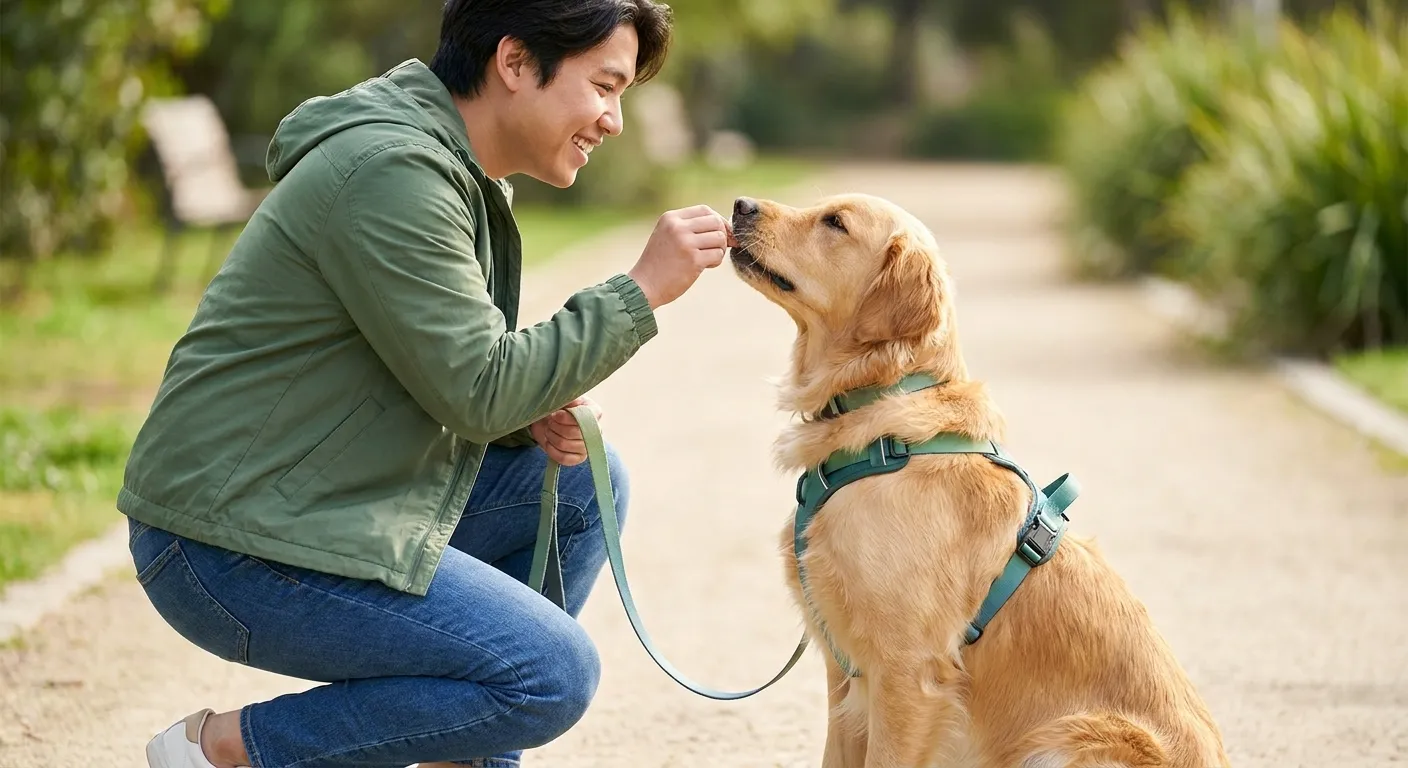
Is your daily dog walk feeling more like a tug-of-war than a peaceful stroll? You’re not alone. Many passionate dog owners, just like Ava with her energetic Golden Retriever Max, struggle with their dog pulling on the leash. Learning how to stop dog leash pulling is one of the most common challenges, but with the right techniques and a positive mindset, you can transform your walks into enjoyable experiences for both you and your canine companion.
At Expert Dog Walking Tips, we believe every walk is an opportunity to strengthen your bond. In this article, we’ll guide you through evidence-based strategies to achieve loose-leash walking, turning frustration into fulfillment. We’ll explore foundational positive reinforcement techniques, leash etiquette, and how understanding your dog’s motivation can make all the difference.
Understanding Why Dogs Pull on the Leash
Before we can address the pulling, it’s crucial to understand why it happens. Dogs pull for various reasons: excitement, curiosity about their environment, a desire to reach a scent or another dog, or simply because they haven’t been taught an alternative. For high-energy breeds like Max, the world is a fascinating place, and they often want to explore it at their own pace.
Traditional methods often focus on punishment, which can create fear and anxiety, damaging the trust between you and your dog. Our approach at Expert Dog Walking Tips champions positive reinforcement, rewarding desired behaviors to encourage their repetition. This builds a dog’s confidence and willingness to cooperate, which is central to the personalized, adaptive training offered by platforms like Dogo and Pupford Academy that prioritize humane techniques.
Essential Gear for Loose-Leash Training
Choosing the right equipment is your first step towards success. While a standard flat collar is common, it often doesn’t provide enough control for a strong puller. Consider these alternatives:
- Front-Clip Harness: This type of harness clips at your dog’s chest. When your dog pulls, the leash redirects them to the side, making it uncomfortable to pull forward effectively. It’s a gentle way to discourage pulling without causing discomfort to their neck.
- Head Halter: Similar to a horse halter, this gives you control over your dog’s head, and where the head goes, the body follows. It requires careful introduction and positive association to ensure your dog is comfortable wearing it.
Avoid retractable leashes, as they teach dogs that pulling extends their range and can be dangerous due to sudden stops or entanglement. A standard 6-foot leash made of sturdy nylon or leather is ideal. Furthermore, always ensure your dog wears an ID tag with up-to-date contact information, just in case.
Practical Steps to Teach Loose-Leash Walking
Teaching your dog to walk politely on a leash requires patience, consistency, and a clear communication system. Here’s how to get started:
1. Start in a Low-Distraction Environment
Begin training indoors or in a quiet, familiar area like your backyard. The goal is for your dog to learn the desired behavior without being overwhelmed by external stimuli. Use high-value treats to make the experience positive and rewarding.
2. Introduce the “Loose Leash” Concept
Hold the leash loosely, forming a ‘U’ shape. When your dog walks beside you with a loose leash, immediately mark the behavior with a verbal cue like

