
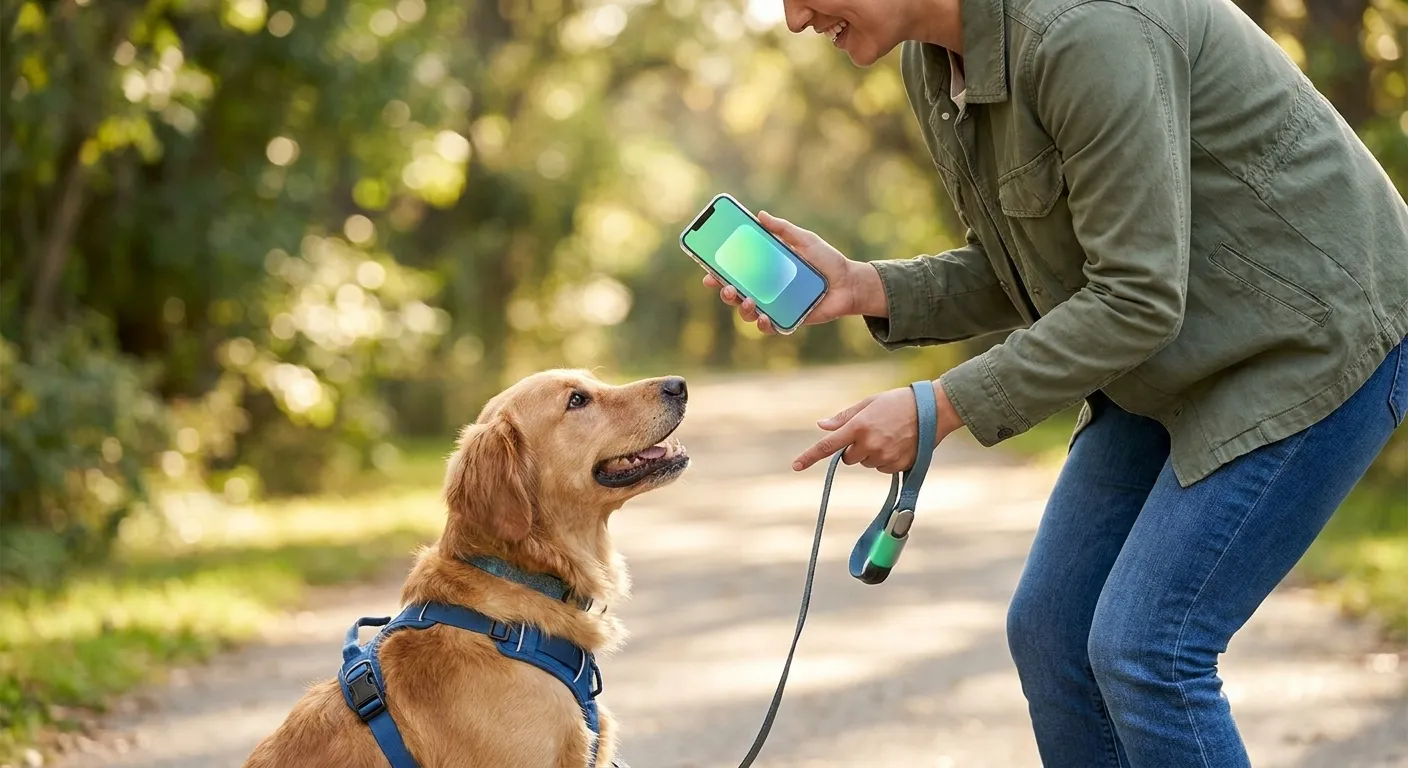
Meet Ava, a 29-year-old marketing manager, and her spirited Golden Retriever, Max. Max is a handsome, high-energy one-year-old, and like many young dogs he had a habit of pulling on the leash, turning what should be a relaxing walk into a tug-of-war. Ava, like so many owners of her generation, treats Max as family and wanted him to be a companion she could take anywhere. She needed a method that fit a busy schedule, and that is where AI powered leash training with the Pawsitive Path app came in. Ava and Max are an illustrative example; the techniques below work with any app, a notebook, or nothing but a treat pouch.
Traditional leash training often means generic advice or group classes at fixed times that don’t fit a working owner’s week. Ava wanted something flexible and specific to Max. She found it in a newer category of training apps that use video analysis to coach the owner. What follows is what she did, what the feedback looked like, and the techniques that actually changed Max’s walks.
The Leash Challenge: From Tug-of-War to Harmonious Stroll
Leash pulling is one of the most common frustrations for dog owners. It makes walks unpleasant, discourages people from walking their dogs at all, and is a genuine safety problem when a strong dog lunges towards a road. Ava experienced the dread firsthand. Max’s enthusiasm was wonderful, but his pulling made her shorten walks, which left him with more energy, which made the pulling worse.
She had tried a tighter collar and a few videos, but nothing stuck. The problem wasn’t Max’s willingness to please. It was that pulling kept working — he pulled, and he got to the lamppost — and that Ava had no way of seeing what she was doing with the leash in the moment. Loose-leash walking has a clear definition (the leash stays slack while the dog walks near your side), and Max needed consistent feedback on exactly that. So did Ava.
AI Powered Leash Training: Max’s Breakthrough with Video Analysis
The cornerstone of Max’s progress was video analysis. Rather than watching generic lessons, Ava filmed her own walks and got feedback on her technique. Here is how it worked:
- Recording walks: Ava propped her phone in a chest harness, or had a friend film from behind, and recorded 60-second clips three times a week — always the same stretch of quiet street at first, so progress was comparable.
- Feedback on the clip: The app’s analysis flagged where the leash went taut, how long each stretch of slack-leash walking lasted, and what Ava did just before each pull: slowing down, letting the leash out, or looking at her phone.
- Technique refinement: A typical note read, “Max pulled here because you paused after his sniff and the leash stayed slack for four seconds, then went tight. Say ‘let’s go’ as you start moving.” Or, “Good — your 180-degree turn here brought his attention back within two steps.” Ava couldn’t see these patterns while holding the leash; on video they were obvious.
Two numbers mattered most: the number of leash-tight moments per minute, and the percentage of the clip spent on a slack leash. In the first clips, Max was pulling every few seconds. Watching those numbers fall week over week kept Ava consistent, and consistency is what trains a dog.
Understanding Canine Behavior Through Technology
Dogs learn through association and repetition. If pulling sometimes gets Max where he wants to go, he will keep pulling; intermittent success is the most durable kind. Breaking the cycle requires that pulling stop working every single time, and that walking politely start working every single time. Most owners know this. The hard part is doing it on a cold Tuesday evening when the dog has spotted a squirrel.
Video coaching helps with the human half of that equation. It catches the small inconsistencies — a leash let out an extra foot, a treat delivered three seconds late, a stop that turned into a step — that quietly teach the dog the opposite of what you intend. The American Kennel Club publishes step-by-step guidance on loose-leash walking built on exactly this kind of timing and reinforcement; the technology just makes your timing visible.
A note on this article: we mention Pawsitive Path because it is the app in Ava’s story. Expert Dog Walking Tips does not sell it, and the method described here works with any tool or none.
The Science Behind AI Leash Training
Video-analysis tools of this kind work by pattern recognition: the software is shown many clips of walks and learns to tell a slack leash from a taut one, a steady pace from a stop-start one, and a dog watching its owner from a dog watching the horizon. Treat it as what it is — a way of measuring what is on the video, useful for feedback, not a substitute for a trainer’s judgement about a frightened or aggressive dog.
The training method the feedback supports is the one the American Veterinary Society of Animal Behavior recommends: reward-based, with no leash corrections, prong or shock collars. The app’s value is that it tells you when your rewards are landing on the right behaviour.
Beyond Feedback: Pawsitive Path’s Holistic Approach
Video analysis was the centre of Ava’s routine, but the plan around it is what made the gains stick. Any owner can copy this structure without an app.
Personalized Training Plans
Max’s plan broke loose-leash walking into stages, each with a clear exit criterion:
- Week 1 — hallway and yard: Three five-minute sessions a day. Treat at the seam of Ava’s left trouser leg every two or three steps while the leash is slack. Exit when Max holds position for twenty steps.
- Weeks 2-3 — quiet street: Stop dead the instant the leash tightens; move again when it slackens. Add a “let’s go” cue and a 180-degree turn whenever Max surges ahead. Exit when a 60-second clip shows fewer than two pulls.
- Weeks 4-5 — park at off-peak hours: Introduce distractions at a distance. Reward Max for glancing at a dog or jogger and then back at Ava. Exit when he can take treats calmly with another dog in view.
- Week 6 and on — busy sidewalks: Shorter sessions, bigger rewards, and one “sniff break” per block as a reward for polite walking.
The gear stayed the same throughout: a six-foot flat leash, a front-clip harness while Max was learning, a treat pouch on the hip, and no retractable leash.
Progress Tracking and Insights
Ava tracked slack-leash percentage, pulls per minute, and the environment for each clip. Seeing a graph move was motivating, but the more useful feature was the trigger log: the app noted that most of Max’s pulls on busy streets came within two seconds of a passing bicycle. Ava started rewarding Max the moment a bike appeared, before he pulled, and that one change removed most of the remaining pulls.
Community Support and Expert Guidance
The app also connected Ava with other owners and offered access to certified trainers for questions the software couldn’t answer. When Max went through a stubborn week, a trainer suggested raising the treat value (cheese instead of kibble) and shortening sessions. That is the right division of labour: software for feedback and consistency, a human for judgement.
The Results: Max’s Transformation and Ava’s Joy
After several weeks of consistent practice, Max’s pulling faded to an occasional surge at the start of a walk. Walks became longer and calmer. Max checked in with Ava without being asked, and Ava stopped bracing before every lamppost.
One afternoon in a busy park, another dog barked and lunged nearby. Max looked, looked back at Ava, and kept walking. That was the moment she knew the AI powered leash training had done its job — not because the app was clever, but because it had made her consistent enough for Max to learn.
Why AI-Powered Training Resonates with Modern Dog Owners
Owners with full calendars want training that fits around work, shows measurable progress, and does not depend on a class schedule. Video-based coaching delivers that: ten minutes a day, feedback on your own dog, and a record you can look back on.
It also suits people who like data. Turning “walks are getting better, I think” into a number you can watch climb week by week makes it easier to keep going through the plateau that almost every training plan hits somewhere in the middle. For general guidance on positive-reinforcement training and choosing a trainer, the ASPCA is a sound starting point.
The convenience is real, but so is the limit: an app cannot see a dog’s fear, assess a bite history, or notice a limp. Those still need a professional in the room.
Embracing the Future of Dog Training
Max and Ava’s story shows how technology fits into dog training: not as a replacement for the relationship between owner and dog, but as a mirror that shows the owner what she is actually doing. The method underneath — rewards for a slack leash, a full stop for a tight one, distance from triggers — is the same one trainers have taught for decades.
For owners struggling with pulling, AI powered leash training offers structure, feedback and accountability. If you would rather not use an app, film a walk on your phone once a week and watch it back. You will see most of what the software sees.
Conclusion: Walking Towards a Brighter Future
Ava and Max’s journey demonstrates what AI powered leash training can do when it is paired with a clear plan and daily practice: tense, short walks became long, relaxed ones, and a young dog learned that staying close pays better than pulling. For busy, data-minded owners, this kind of tool offers convenience, feedback and a record of progress.
Whatever tool you choose, start with the fundamentals in this article — short sessions, a slack-leash reward, a full stop for pulling, and patience through the inevitable plateau. The walks you want are on the other side of consistency.
This article is general training information, not veterinary or behavioural advice. For fear, aggression or health concerns, consult your veterinarian or a certified behaviour professional.
FAQ
How does smart leash training work?
You record short clips of your walks and the app analyses leash tension, your pace and your dog’s position, then tells you what preceded each pull. You use that feedback to tighten your timing: rewarding a slack leash within a second or two and stopping the instant the leash goes taut.
What are the benefits of using an AI dog training app?
A staged plan with clear exit criteria, feedback on your own technique rather than generic lessons, and progress tracking you can review. Those three things make it easier to stay consistent, which is what actually changes a dog’s behaviour.
Can artificial intelligence really teach my dog to walk better?
Not directly. It coaches you, the owner, on timing and consistency, and you teach the dog. The underlying method is standard reward-based training; the software makes your mistakes visible so you can fix them.
Is AI-driven dog training suitable for all dogs?
It suits most dogs with ordinary pulling or distraction problems. Dogs with fear, reactivity or a bite history need a certified trainer or veterinary behaviourist, who may use an app as a supplement but not as the plan.
How long does it take to see results with AI-assisted leash training?
It depends on the dog and on how consistently you practise. With three short sessions a day, you should expect gradual improvement over a period of weeks, as Ava saw with Max. Expect a plateau at some point and keep going.
Explore more: More from Expert Dog Walking Tips

