
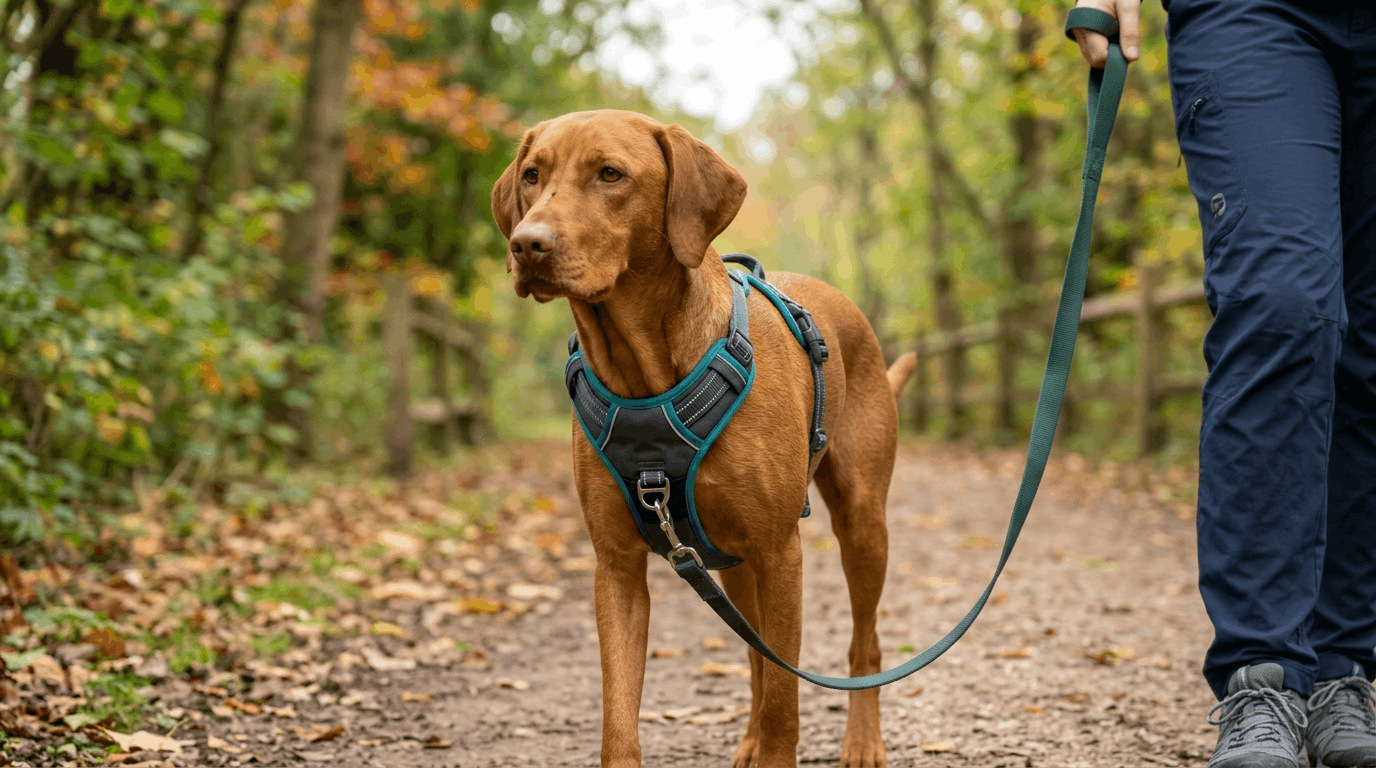
Finding the best harness for dogs that pull can completely change your walking experience, especially if your dog tends to lunge, drag, or resist control. While pulling may seem like a simple training issue, it often leads to frustration, discomfort, and even injury for both you and your dog. Therefore, choosing the right harness becomes essential not just for convenience, but also for safety and long-term behavior improvement.
Many dog owners start with a standard collar, assuming it will be enough. However, when a dog pulls, collars place direct pressure on the neck, which can lead to strain or injury over time. In contrast, the best harness for dogs distributes pressure more evenly across the chest and shoulders, allowing for better control without causing harm. As a result, walks become calmer, more enjoyable, and far less stressful for everyone involved.
Why A Harness Works Better Than A Collar
When a dog pulls against a collar, the force concentrates around the neck, which can lead to choking or breathing issues. This becomes especially concerning for smaller breeds or dogs with sensitive airways. On the other hand, the best harness for dogs redirects that pressure across stronger parts of the body, making it a safer and more effective solution.
Additionally, harnesses provide better leverage for owners. Instead of relying on neck control, you can guide your dog using the body, which improves communication during walks. Because of this, many trainers recommend switching to a harness as a first step in addressing leash pulling behavior.
Another advantage is comfort. Dogs are more likely to respond positively when they are not experiencing discomfort. Consequently, the best harness for dogs not only prevents injury but also encourages better walking habits over time.
Key Features To Look For In A Harness
Choosing the best harness for dogs requires attention to specific features that enhance both safety and control. First, front-clip designs are highly effective for dogs that pull. These harnesses attach the leash at the chest, which gently redirects your dog back toward you when they try to surge forward. This natural correction helps reduce pulling without harsh force.
Next, adjustable straps are crucial for achieving a proper fit. A well-fitted harness should be snug but not restrictive, allowing your dog to move comfortably while staying secure. If the harness is too loose, it may slip off, while a tight fit can cause chafing or discomfort.
Padding is another important feature. The best harness for dogs often includes soft, breathable padding that prevents irritation during longer walks. In addition, durable materials ensure the harness can withstand repeated use, especially for strong or energetic dogs.
Reflective elements can also improve safety during early morning or evening walks. Although it may seem like a small detail, visibility plays a significant role in preventing accidents. Therefore, combining functionality with safety features makes a noticeable difference in your daily routine.
Types Of Harnesses For Pulling Dogs
Not all harnesses are designed the same, and understanding the different types can help you find the best harness for dogs that suits your needs. Front-clip harnesses, as mentioned earlier, are ideal for training and reducing pulling behavior. They offer immediate feedback, making them a popular choice for beginners.
Back-clip harnesses, while comfortable, are generally better suited for dogs that already walk calmly. Since the leash attaches at the back, these harnesses may actually encourage pulling in strong dogs. However, they can still be useful when combined with proper training techniques.
Dual-clip harnesses provide the best of both worlds. With attachment points on both the chest and back, they offer versatility and control. Many dog owners find that this type represents the best harness for dogs transitioning from pulling to more controlled walking behavior.
No-pull harnesses are specifically designed to discourage pulling through gentle pressure or redirection. These models often include features that tighten slightly when the dog pulls, providing a clear signal to stop. While effective, they should always be used properly to avoid discomfort.
How To Choose The Right Size And Fit
Even the best harness for dogs will not perform well if it does not fit correctly. Therefore, measuring your dog accurately is essential. Start by measuring the chest girth, which is the widest part of the ribcage. This measurement helps ensure the harness fits securely without restricting movement.
Once you have the correct size, adjust the straps to achieve a snug fit. You should be able to fit two fingers between the harness and your dog’s body. This balance prevents slipping while maintaining comfort. Additionally, check for any rubbing or pressure points after short walks.
It is also important to consider your dog’s breed and body shape. For example, deep-chested breeds may require specific designs, while smaller dogs benefit from lightweight options. By tailoring your choice to your dog’s needs, you increase the effectiveness of the best harness for dogs in real-world situations.
Training Tips To Stop Leash Pulling
While the best harness for dogs provides better control, it should always be combined with proper training. A harness alone will not eliminate pulling behavior, but it creates the right conditions for success. Start by rewarding your dog for walking beside you calmly. Positive reinforcement helps reinforce good habits quickly.
Consistency is equally important. Use the same commands and walking patterns each time you go বাইরে. Over time, your dog will begin to associate calm walking with rewards and positive experiences. Additionally, stop walking when your dog pulls. This teaches them that pulling does not lead to progress.
Short, frequent training sessions often work better than long walks. By focusing on small improvements, you can gradually build better behavior. As a result, the best harness for dogs becomes a tool that supports training rather than replacing it.
Common Mistakes Dog Owners Make
Many owners unknowingly choose the wrong harness, which can worsen pulling behavior. One common mistake is selecting a harness based solely on appearance rather than functionality. While style matters, performance should always come first when searching for the best harness for dogs.
Another mistake is using a harness that does not fit properly. Even a high-quality product will fail if it is too loose or too tight. Therefore, always prioritize fit and adjust the harness as needed.
Inconsistent training is another issue. Some owners rely entirely on the harness without reinforcing good behavior. However, lasting results come from combining the best harness for dogs with clear, consistent training techniques.
Long Term Benefits Of Using The Right Harness
Investing in the best harness for dogs offers long-term advantages that go beyond easier walks. Over time, proper harness use reduces strain on your dog’s body, helping prevent injuries and joint issues. This becomes especially important as your dog ages.
Additionally, improved walking behavior strengthens the bond between you and your dog. Walks become more enjoyable rather than stressful, encouraging regular exercise and better overall health. Because of this, both you and your dog benefit physically and mentally.
The right harness also increases confidence. Dogs that feel secure and comfortable are more likely to respond positively during walks. Consequently, choosing the best harness for dogs creates a foundation for better behavior and happier outings.
Conclusion
Choosing the best harness for dogs that pull is one of the most effective ways to improve your daily walks. While pulling can be frustrating, the right harness combined with consistent training makes a noticeable difference. By focusing on comfort, fit, and functionality, you can guide your dog safely while encouraging better behavior.
Ultimately, the goal is not just control but a positive walking experience for both you and your dog. When you invest time in selecting the right harness and reinforcing good habits, you create a routine that feels natural and enjoyable. Over time, those small improvements lead to lasting results and a stronger connection with your pet.
FAQ
- What type of harness works best for strong pullers?
Front-clip or dual-clip harnesses usually provide the most control and help redirect pulling behavior effectively. - Can a harness stop pulling completely?
A harness helps manage pulling, but consistent training is necessary to eliminate the behavior over time. - Is a harness safer than a collar for daily walks?
Yes, harnesses reduce strain on the neck and distribute pressure more evenly across the body. - How do I know if the harness fits properly?
You should be able to fit two fingers under the straps while ensuring it stays secure during movement. - How long does it take to train a dog to stop pulling?
Training time varies, but with consistency, many dogs show improvement within a few weeks.

