
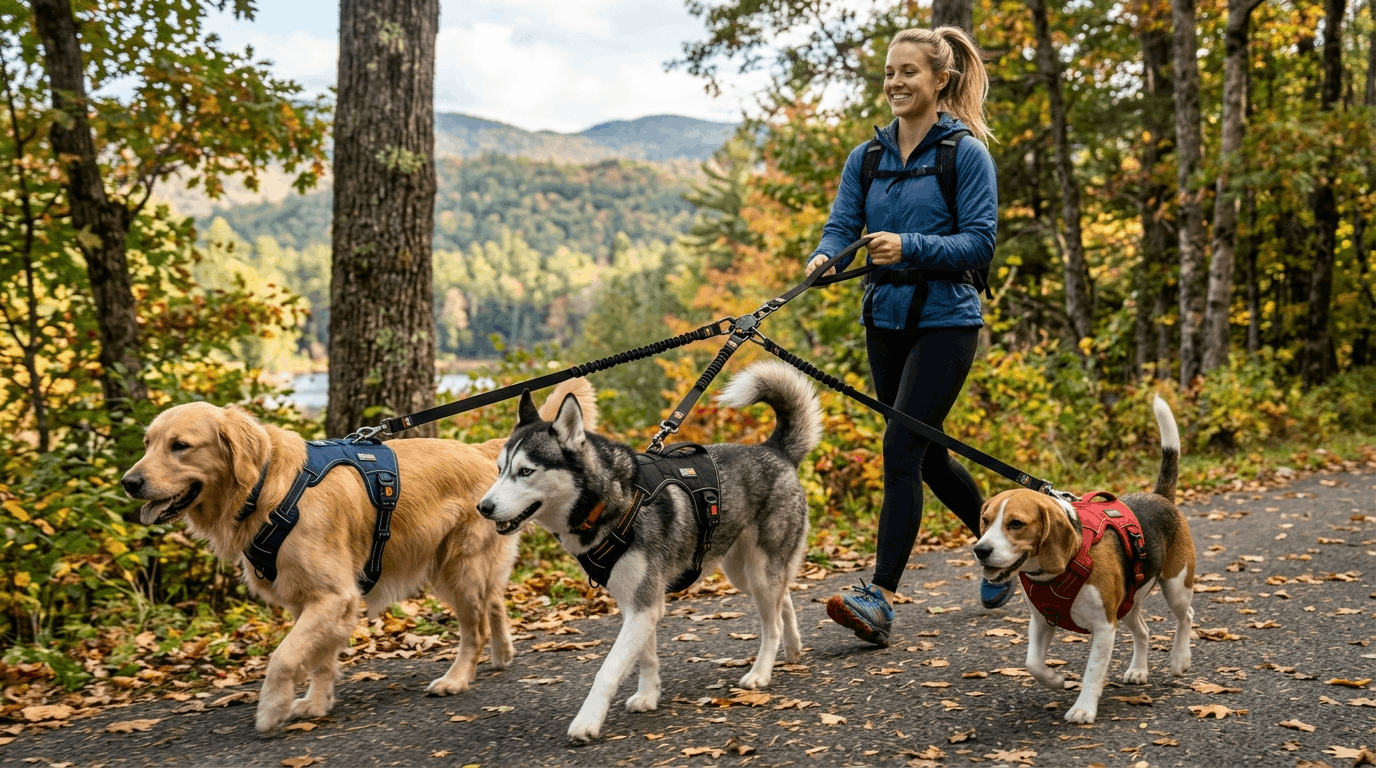
Walking more than one dog at the same time can feel overwhelming, especially when each dog has a different pace and energy level. Choosing the best harness for multiple dogs can completely change that experience by improving control, reducing strain, and creating a more balanced walk. While many dog owners focus only on leashes, the harness you choose plays an equally important role in managing movement and preventing chaos.
When dogs pull or move unpredictably, pressure shifts directly to your arms and shoulders. However, with the best harness for multiple dogs, that pressure is distributed more evenly across each dog’s body. As a result, you gain better control without relying on force. Over time, this leads to calmer behavior, smoother walks, and less physical stress for you.
Why Harness Choice Matters For Multiple Dogs
Using the right harness is not just about comfort; it is about control and communication. When you walk multiple dogs, small issues quickly become bigger problems if your setup lacks structure. Therefore, selecting the best harness for multiple dogs helps create consistency in how each dog moves and responds.
A poorly chosen harness can encourage pulling, especially if it allows dogs to lean forward with full force. In contrast, a well-designed harness guides movement and discourages tension. This difference becomes even more noticeable when handling more than one dog at a time.
In addition, harnesses improve safety. Collars can place strain on the neck, especially when dogs pull in different directions. By switching to the best harness for multiple dogs, you reduce the risk of injury while maintaining better overall control.
Front Clip Harnesses For Better Direction Control
Front clip harnesses are often considered the best harness for multiple dogs because they provide excellent control without causing discomfort. The leash attaches at the chest, which changes how pulling affects movement. When a dog pulls forward, the harness gently redirects it to the side instead of allowing it to continue straight ahead.
This redirection helps break the pulling habit naturally. As a result, managing multiple dogs becomes easier because each dog responds to the same guidance. When both dogs move in a controlled way, your walks feel more balanced and predictable.
Another advantage is reduced strain. Since the force is redirected rather than resisted, your body absorbs less tension. Over time, this makes walking multiple dogs more comfortable and sustainable.
However, proper fit is essential. If the harness is too loose, it may shift and reduce effectiveness. If it is too tight, it can restrict movement. Therefore, always adjust the harness carefully to ensure the best results.
Dual Attachment Harnesses For Flexibility
Some harnesses offer both front and back leash attachment points. These designs are often seen as the best harness for multiple dogs because they provide flexibility in how you manage each dog. You can use the front clip for training and the back clip for relaxed walking once behavior improves.
This flexibility is especially helpful when dogs have different needs. For example, one dog may require more guidance, while the other already walks calmly. With a dual attachment harness, you can adjust your approach without switching equipment.
In addition, these harnesses allow for smoother transitions during the walk. If a dog becomes more excited, you can switch to the front clip for better control. This adaptability makes them a strong option when looking for the best harness for multiple dogs.
Over time, this setup helps create consistency while still allowing room for progress.
No Pull Harness Designs That Reduce Strain
No pull harnesses are specifically designed to discourage pulling behavior. Many owners consider them the best harness for multiple dogs because they combine control with comfort. These harnesses often include padding and ergonomic designs that prevent pressure points.
When dogs pull, the harness applies gentle pressure in a way that discourages forward movement. Unlike harsh correction methods, this approach feels natural and does not cause discomfort. As a result, dogs learn to adjust their behavior without stress.
Another benefit is improved balance. When both dogs wear no pull harnesses, their movements become more synchronized. This reduces the chances of one dog overpowering the other, which makes your walks easier to manage.
By using the best harness for multiple dogs with no pull features, you create a system that supports both training and comfort.
Step In Harnesses For Quick And Easy Use
For owners who value convenience, step in harnesses can be a practical choice. While they may not offer as much control as front clip designs, they can still be part of the best harness for multiple dogs in certain situations.
These harnesses are easy to put on and remove, which saves time when preparing for walks. This is especially helpful when managing multiple dogs, as quick setup reduces excitement and chaos.
However, step in harnesses work best for dogs that already have good leash manners. If your dogs tend to pull, you may need additional features for better control. Still, for calm dogs, they provide a comfortable and efficient option.
Choosing the best harness for multiple dogs often depends on balancing convenience with control, and step in designs can meet that need for the right situation.
Matching Harness Types To Your Dogs’ Needs
Not all dogs respond the same way to a harness. Therefore, selecting the best harness for multiple dogs requires understanding each dog’s behavior and energy level. Dogs that pull strongly may benefit from front clip or no pull designs, while calmer dogs may do well with simpler harnesses.
In addition, consider size and strength. Larger dogs require sturdier harnesses with strong materials, while smaller dogs may need lightweight options for comfort. Matching the harness to each dog ensures better results and a more balanced walk.
Consistency also matters. When both dogs wear similar types of harnesses, their movements become more predictable. This makes your overall setup easier to manage and supports smoother walking.
By tailoring your choices, you create a system that works for both you and your dogs.
Combining Harnesses With Proper Leash Setup
Even the best harness for multiple dogs works best when combined with the right leash setup. Using a dual leash coupler or separate leashes can help maintain organization and control. The harness and leash should work together as a complete system.
For example, pairing front clip harnesses with a coupler keeps dogs aligned and reduces pulling. Alternatively, using separate leashes allows more flexibility if your dogs have different walking styles.
In addition, maintaining consistent positioning improves results. Assign each dog a specific side and reinforce that position during walks. This structure reduces tangling and supports better behavior.
By combining the best harness for multiple dogs with a thoughtful leash setup, you create a more effective and manageable walking routine.
Common Mistakes To Avoid When Choosing A Harness
While selecting a harness may seem simple, certain mistakes can reduce its effectiveness. One common issue is choosing based on appearance rather than function. A harness may look appealing but fail to provide the control needed for multiple dogs.
Another mistake is ignoring fit. Even the best harness for multiple dogs will not work if it is not adjusted properly. Always check for comfort and security before heading out.
In addition, relying only on the harness without training can limit progress. Harnesses support behavior, but they do not replace training. Consistent guidance and reinforcement are still necessary for long-term results.
Lastly, switching harnesses too often can confuse your dogs. Consistency helps them understand expectations, so stick with one setup long enough to see improvement.
Conclusion
Finding the best harness for multiple dogs can transform your daily walks from stressful to enjoyable. With the right design, proper fit, and consistent use, you gain better control while reducing strain on your body. More importantly, your dogs learn to move together in a calm and balanced way.
Although it may take time to find the perfect setup, the benefits are worth the effort. Walks become smoother, your confidence increases, and your dogs respond more predictably. By choosing the best harness for multiple dogs and combining it with proper technique, you create a walking experience that feels natural, safe, and enjoyable every day.
FAQ
- What type of harness works best for two dogs?
Front clip or no pull harnesses usually provide better control when walking two dogs together. - Should both dogs use the same harness style?
Using similar harness types can improve consistency and make walks easier to manage. - Are harnesses better than collars for multiple dogs?
Harnesses reduce neck strain and provide better control, especially when dogs pull. - Can I use different harnesses for each dog?
Yes, you can match each harness to the dog’s behavior and needs for better results. - How do I know if a harness fits properly?
A good fit should feel secure without restricting movement or causing discomfort.

