
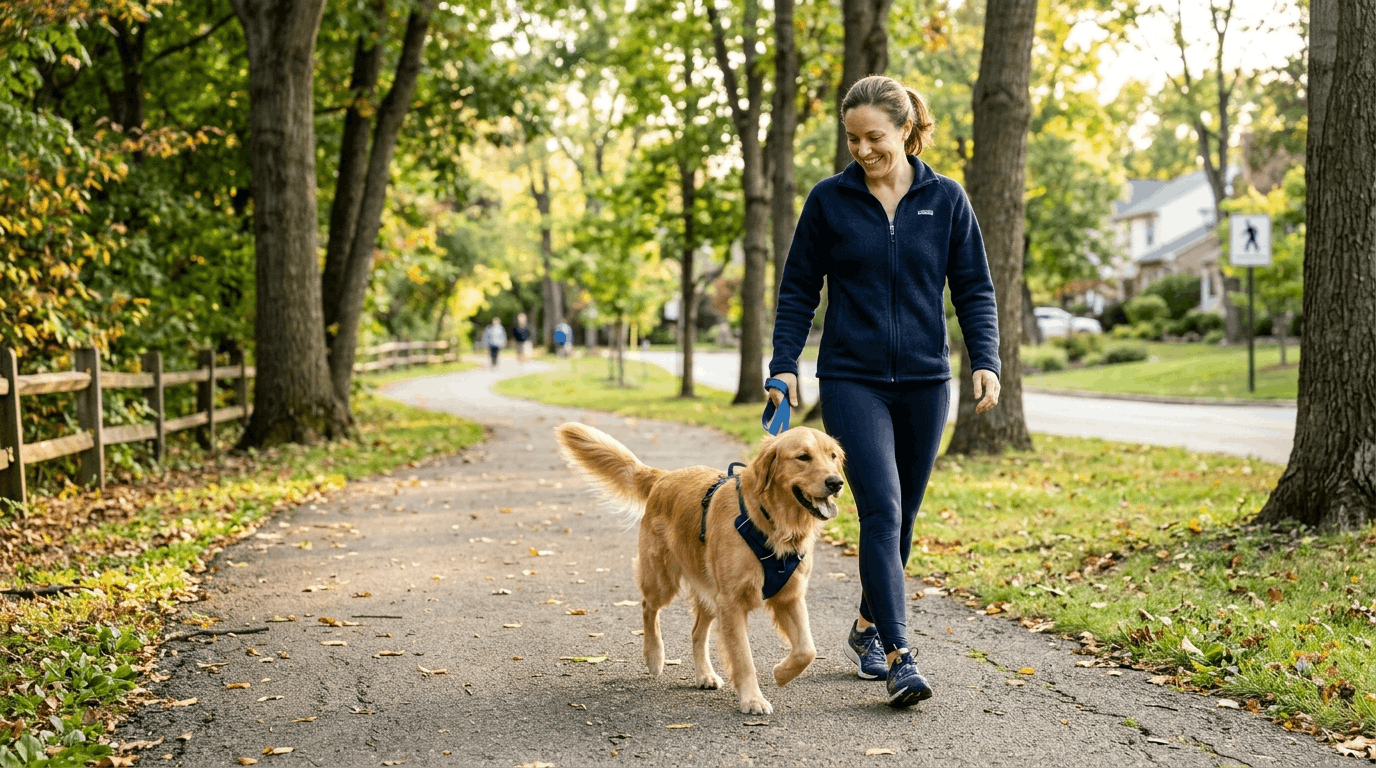
Many dog owners struggle with pulling during walks, especially when dogs become excited the moment the leash appears. Some dogs drag their owners toward every distraction, while others pull nonstop from the beginning of the walk until returning home. Although training tools and commands can help, lasting improvement often depends on something much simpler: structure and consistency. Building a consistent walking routine helps dogs understand expectations, regulate excitement, and develop calmer habits over time.
Dogs naturally thrive on predictability. Consistent routines help them feel emotionally secure because they learn what happens, when it happens, and how they should respond. Without structure, walks can become emotionally chaotic and overstimulating.
Pulling usually develops through repeated habits rather than intentional disobedience. Dogs learn that tension on the leash helps them move faster, reach smells sooner, or explore exciting environments more quickly.
Changing those habits requires repetition and emotional balance. A predictable walking routine creates opportunities for dogs to practice calmer behavior daily while reducing overstimulation and confusion.
Consistency also improves communication between dogs and owners. Dogs that understand clear patterns and expectations often become more focused and emotionally relaxed during walks.
While no routine creates instant perfection, steady structure and calm repetition often transform stressful walks into far more enjoyable experiences over time.
Why Dogs Pull During Walks
Dogs pull for many different reasons, yet excitement remains one of the most common causes. Walks provide stimulation, movement, smells, and opportunities for exploration that naturally increase emotional arousal.
A consistent walking routine helps reduce pulling because dogs stop viewing walks as unpredictable bursts of overwhelming excitement.
Many dogs become overstimulated before leaving the house even once. Leash grabbing, spinning, barking, and rushing through doors all create emotional momentum that continues during the walk itself.
Dogs also pull because pulling works. If leash tension consistently allows them to move forward, reach smells, or approach distractions, the behavior becomes reinforced automatically.
Inconsistent expectations often worsen the problem. Dogs may receive correction sometimes while being allowed to pull at other times, which creates confusion.
Anxiety may contribute as well. Some dogs pull because they feel nervous or uncertain outdoors.
Breed instincts also matter greatly. Sporting breeds, scent hounds, and working dogs naturally move with strong forward energy and environmental focus.
Understanding the reasons behind pulling helps owners create routines that address emotional balance rather than relying only on physical control.
How Structure Creates Calmer Behavior
Dogs feel more emotionally secure when life follows predictable patterns. Structured routines reduce uncertainty while helping dogs regulate excitement more effectively.
A consistent walking routine teaches dogs that walks happen regularly and calmly instead of feeling like rare overwhelming events.
Predictability lowers emotional intensity because dogs stop feeling desperate to release all their energy immediately.
Structured routines also improve learning. Dogs understand expectations more clearly when owners respond consistently during every walk.
Calm preparation, predictable walking rules, and regular schedules all contribute to emotional balance over time.
Dogs often behave better when they understand what comes next instead of constantly reacting impulsively to stimulation.
Routine also strengthens trust. Dogs that experience calm and predictable guidance usually become more responsive and focused outdoors.
Consistency does not mean rigid perfection. Instead, it means maintaining steady patterns that help dogs feel emotionally balanced and secure during daily activities.
Start With Calm Preparation Before Walks
One of the biggest mistakes owners make involves starting walks while dogs already feel emotionally overwhelmed.
A consistent walking routine should begin with calm behavior inside the home before the leash is even attached.
Dogs should not immediately receive walks while barking, spinning, jumping, or lunging excitedly. Waiting briefly for calmer behavior teaches emotional regulation naturally.
Owners should move calmly themselves as well. Dogs respond strongly to human energy and body language during preparation.
Simple commands such as sit, wait, or eye contact help dogs shift into calmer mental states before exiting the house.
Controlled door manners matter greatly too. Dogs rushing through doors in excitement often continue pulling throughout the walk afterward.
Practicing calm exits creates smoother emotional transitions from indoors to outdoors.
The beginning of the walk often determines the emotional tone for everything that follows.
Consistency Builds Better Leash Habits
Dogs learn through repetition and predictable outcomes. Consequently, inconsistent handling often slows progress significantly.
A consistent walking routine works because dogs repeatedly practice calm leash behavior under stable expectations.
If pulling sometimes succeeds while other times receives correction, dogs struggle to understand the rules clearly.
Owners should remain consistent about stopping movement during pulling and rewarding loose leash moments immediately.
Forward movement itself becomes a reward during training. Dogs learn that relaxed leash behavior helps the walk continue smoothly.
Clear patterns help dogs understand exactly which behaviors create success.
All family members should also follow similar walking expectations whenever possible. Mixed training styles often create confusion and slower improvement.
Small daily repetitions matter more than occasional long training sessions.
Dogs build habits gradually through consistent emotional and physical experiences over time.
Why Mental Stimulation Supports Better Walks
Physical exercise alone rarely solves pulling completely. Many dogs continue pulling even after long walks because their mental needs remain unmet.
A consistent walking routine should include mental stimulation alongside physical movement.
Training sessions, scent games, puzzle feeders, and interactive enrichment help dogs release mental energy constructively before walks begin.
Mentally stimulated dogs often display better focus and impulse control outdoors.
Sniffing opportunities during walks also provide valuable cognitive engagement. Dogs naturally process information through scent exploration, which helps create calmer emotional states.
Owners sometimes rush dogs through walks too quickly without allowing healthy exploration. Consequently, frustration and pulling may increase.
Balanced mental engagement helps dogs feel more emotionally satisfied overall.
Dogs that think and problem-solve regularly usually walk more calmly because they feel mentally fulfilled instead of overstimulated or bored.
The Importance of Walking at Predictable Times
Dogs adapt strongly to schedules. Feeding, sleeping, playtime, and walks all influence emotional balance throughout the day.
A consistent walking routine becomes more effective when walks happen around similar times daily.
Predictable schedules reduce anxious anticipation because dogs learn that walks reliably occur without needing frantic behavior.
Regular walking times also support healthier energy regulation and bathroom habits.
Morning walks often help dogs begin the day calmly, while evening walks release mental and physical tension before rest.
Owners should choose realistic schedules they can maintain consistently long term rather than attempting overly complicated routines.
Even small predictable habits create emotional stability over time.
Dogs that know when to expect activity usually settle more calmly between walks instead of remaining constantly restless or overstimulated.
Teaching Calm Walking Through Repetition
Loose leash walking develops gradually through repeated calm experiences rather than sudden correction or force.
A consistent walking routine allows dogs to practice calm movement patterns every single day.
Owners should reward loose leash moments frequently, especially during early training stages.
Treats, praise, and forward movement all reinforce desired walking behavior effectively.
Changing direction calmly when dogs pull also helps improve attention and engagement.
Dogs gradually learn that staying connected with the owner creates smoother and more rewarding walks overall.
Training should remain emotionally calm whenever possible. Frustration and harsh corrections often increase tension and overstimulation instead of improving focus.
Short successful walks usually create better long-term results than long stressful outings filled with constant pulling.
Every calm repetition strengthens healthier habits gradually over time.
Why Equipment Supports Routine Success
Walking equipment affects comfort, communication, and control greatly during training.
A consistent walking routine becomes easier when owners use equipment that supports calm movement rather than increasing discomfort or frustration.
Front-clip harnesses often help reduce pulling momentum gently while protecting the neck and throat.
Standard fixed-length leashes usually create clearer communication than retractable leashes, which often encourage constant tension.
Comfortable gear improves emotional confidence too. Dogs experiencing physical discomfort may pull more intensely or resist walking entirely.
Owners should regularly check harness fit to ensure dogs move naturally without rubbing or restriction.
However, equipment alone cannot replace training and routine consistency. Even the best harness still requires calm handling and repeated practice to create lasting behavioral change.
Managing Distractions During Walks
Outdoor environments contain endless stimulation for dogs. Smells, people, traffic, animals, and movement all compete for attention constantly.
A consistent walking routine helps dogs handle distractions better because emotional regulation improves gradually over time.
Owners should start training in calmer environments before progressing toward busier locations.
Dogs learn more effectively when they remain emotionally below overstimulation thresholds.
Rewarding calm attention around mild distractions builds stronger focus gradually.
Distance matters too. Dogs struggling with excitement or reactivity may initially need more space from triggers to remain calm enough for learning.
Patience becomes extremely important during distraction training because emotional control develops slowly.
Calm exposure repeated consistently often creates major improvement over time.
Why Patience Matters More Than Perfection
Many owners expect immediate results and feel discouraged when pulling continues after only a few walks.
However, a consistent walking routine works gradually because dogs must replace deeply established habits with new behavioral patterns.
Progress often appears in small steps first. Shorter pulling episodes, calmer starts, or improved focus all represent meaningful improvement.
Owners should avoid comparing their dogs to others because every dog learns differently depending on breed, age, confidence, and history.
Emotional consistency matters greatly too. Dogs learn best when owners remain calm, predictable, and supportive during training.
Harsh frustration usually weakens communication and increases stress for both dog and owner.
Long-term habits develop through steady repetition rather than quick fixes.
Patience allows dogs to build emotional confidence and understanding at sustainable speeds.
Creating Long-Term Success Through Routine
Pulling behavior rarely improves through random corrections or occasional training sessions alone. Dogs need structure, emotional balance, and repeated opportunities to practice calm leash habits consistently.
A consistent walking routine provides that structure while helping dogs feel more emotionally secure and focused outdoors.
Calm preparation, predictable schedules, mental stimulation, proper equipment, and steady reinforcement all work together to create healthier walking habits over time.
Importantly, routine helps owners become calmer and more confident too. Predictability reduces frustration while improving communication between dogs and humans naturally.
Dogs thrive when expectations remain clear and emotionally balanced. Once walks become calmer and more structured, many dogs naturally stop pulling as heavily because excitement and confusion decrease significantly.
Progress may feel slow initially, yet small improvements build powerful long-term habits through repetition and emotional consistency.
Ultimately, the goal is not perfect robotic obedience during every walk. Instead, owners should focus on creating safer, calmer, and more enjoyable routines that strengthen trust and communication daily.
With patience and steady structure, even strong pullers can gradually learn how to walk calmly and comfortably beside their owners.
FAQ
1. Why does routine help reduce pulling?
Predictable routines help dogs regulate excitement and understand walking expectations more clearly.
2. How often should I walk my dog daily?
Most dogs benefit from at least one to two structured walks each day depending on breed and energy level.
3. Should walks happen at the same time daily?
Yes. Consistent schedules often improve emotional balance and reduce overstimulation before walks.
4. Can mental stimulation improve leash manners?
Yes. Mentally engaged dogs usually display better focus and calmer behavior during walks.
5. What if my dog still pulls during structured walks?
Remain patient and consistent while rewarding calm leash moments and reducing overwhelming distractions temporarily.

