
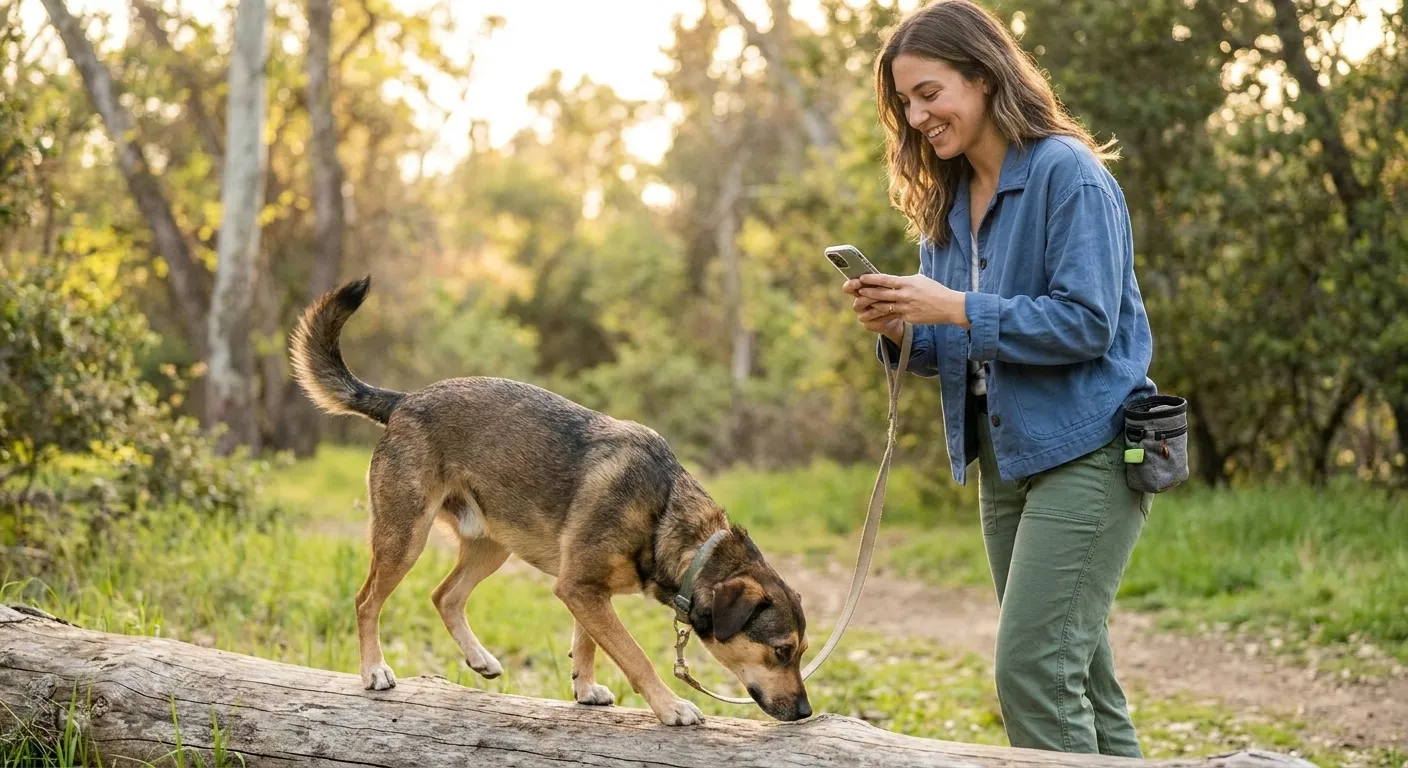
We all know that daily walks are essential for our dogs’ physical health. However, what if your routine stroll could offer so much more? For owners like Ava, who want Max to be a well-behaved and engaged companion, transforming walks into mentally stimulating adventures is truly empowering. This is the power of enrichment walks for dogs – a concept gaining significant traction among tech-savvy Millennials and Gen Z owners who view their pets as family and seek holistic well-being.
At Expert Dog Walking Tips, we believe every walk is an opportunity to deepen your bond and boost your dog’s overall happiness. In fact, with anxiety-based reactive behavior on the rise (affecting over 99% of U.S. dogs with at least one behavioral issue, according to a study by the American Veterinary Medical Association), enrichment isn’t just a luxury; it’s a vital tool for preventing and addressing common behavioral challenges. Let’s explore how to turn an ordinary walk into an extraordinary experience for your beloved dog.
Why Mental Stimulation is as Important as Physical Exercise
Imagine going to the gym every day and doing the exact same workout. While it certainly keeps you physically fit, it might not engage your mind or prevent boredom. Similarly, the same applies to our canine companions. While a brisk walk burns energy, it often doesn’t tap into their innate canine instincts for sniffing, exploring, problem-solving, and interacting with their environment in meaningful ways.
Enrichment walks address this by engaging all of your dog’s senses and cognitive abilities. Consequently, this mental workout can be far more tiring and satisfying than pure physical exertion, leading to a calmer, more content dog at home. It’s a core component of the relationship-based training approach, which increasingly sees training as something done with a dog, considering their individual needs and emotional state. Moreover, a mentally stimulated dog is often a happier dog, reducing the likelihood of destructive behaviors born from boredom.
Types of Enrichment Walks for Dogs to Try
Forget the traditional heel-and-march! Here are some creative ways to make your walks more enriching for your dog:
The Sniffari (Scent Walk)
This is perhaps the easiest and most powerful form of enrichment. Allow your dog to lead with their nose! Let them stop, sniff, and investigate every interesting scent for as long as they like. Dogs experience the world primarily through smell, and a sniffari allows them to process vast amounts of information, which is incredibly mentally stimulating. This helps them decompress and reduces stress. Think of it as letting them read their daily newspaper.
- How-to: Head to a park, trail, or even a quiet neighborhood street. Let the leash go slack and follow your dog’s nose. Resist the urge to pull them along. Furthermore, choose environments that offer a variety of natural scents.
Urban Explorer (Novelty Walk)
Introduce your dog to new sights, sounds, and textures in a controlled manner. Walk a different route, visit a new park, or explore a bustling (but safe) urban area. The novelty of new environments provides fresh mental input. Therefore, this can build confidence in dogs who might be hesitant about new experiences.
- How-to: Choose an area with new elements – a fountain, public art, different types of ground surfaces, or even just a new set of storefronts. Keep these excursions short initially, observing your dog’s comfort level. Always ensure their safety with proper ID tags and GPS trackers.
Puzzle Walk (Problem-Solving)
Integrate simple problem-solving into your stroll. This can be as straightforward as hiding treats along the path for your dog to find or encouraging them to navigate a small obstacle course. This type of activity hones their cognitive skills and keeps them engaged.
- How-to: Before your walk, stash a few high-value treats in various spots along a quiet, familiar path – behind a tree, under a bush, or on a low wall. Then, lead your dog to the general area and encourage them to

