
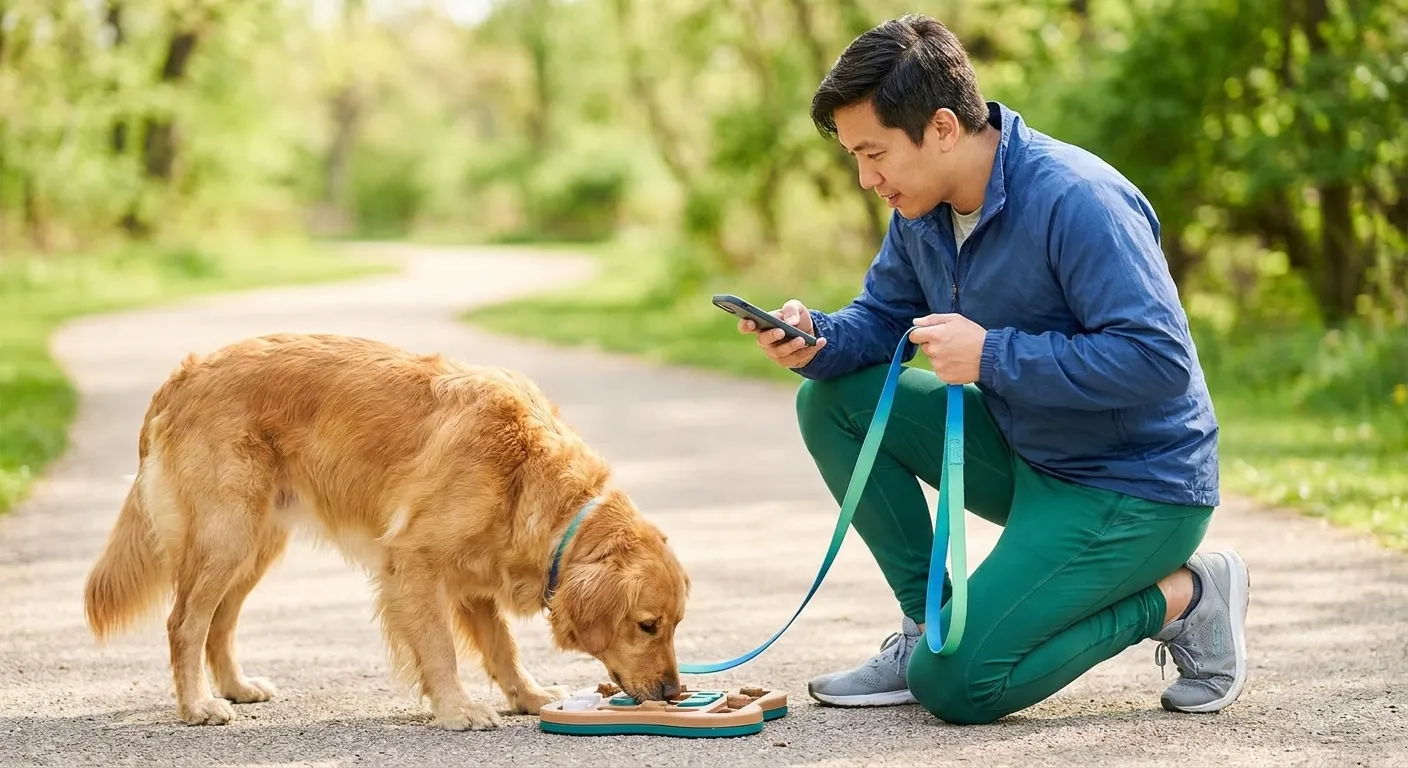
Are you looking for ways to elevate your daily strolls beyond just physical exercise? Many dog owners, especially those with high-energy breeds like Golden Retrievers, often wonder how to make their walks more engaging. The secret lies in incorporating mental enrichment dog walks into your routine. These aren’t just walks; they’re brain-boosting adventures that tap into your dog’s natural instincts, leading to a more content, calmer, and well-behaved companion.
Why Mental Enrichment Matters on Walks
While physical exercise is crucial for your dog’s health, mental stimulation is equally vital. Imagine a dog who’s physically tired but mentally bored – they might still exhibit unwanted behaviors at home. Mental enrichment on walks helps to:
- Reduce destructive behaviors: A mentally stimulated dog is less likely to chew furniture or bark excessively out of boredom.
- Improve focus and training: Engaging their brain makes them more receptive to learning and reinforces good habits.
- Build confidence: Successfully navigating new scents, puzzles, or challenges can boost your dog’s self-esteem.
- Strengthen your bond: Shared discovery and problem-solving deepen the connection between you and your furry friend.
For Ava, whose 1-year-old Golden Retriever Max has boundless energy, traditional walks might not be enough. Max needs outlets for his intelligent mind. Incorporating nose work, new routes, and controlled exploration can transform his walks from a simple output of energy to a fulfilling experience.
Practical Ways to Add Mental Enrichment to Your Walks
Ready to turn your walks into brain games? Here are some actionable strategies for enriching dog walks.
1. Engage Their Super Sniffer: Nose Work on the Go
Your dog’s nose is their primary way of exploring the world. Instead of rushing past every interesting smell, give them permission to sniff! Try these techniques:
- “Sniffari” walks: Dedicate a portion of your walk to letting your dog lead with their nose. Allow them to thoroughly investigate bushes, lampposts, and grassy patches. This is incredibly tiring and satisfying for them.
- Scent games: Hide a few small, high-value treats in the grass or under leaves in a safe, quiet area. Encourage your dog to find them using their nose. Start easy and gradually make it more challenging.
- Tracking simple trails: If you have access to a quiet park, lightly drag a treat along the ground for a few feet, then place the treat at the end. Let your dog follow the scent. This is a basic introduction to tracking.
2. Introduce Novelty and Exploration
Variety is the spice of life, even for dogs! Changing up your routine keeps things fresh and stimulating.
- Explore new routes: Regularly visit different parks, neighborhoods, or trails. New sights, sounds, and smells provide a wealth of information for your dog to process.
- Vary surfaces: Allow your dog to walk on different textures like grass, gravel, sand, or even shallow water (if safe). This provides proprioceptive stimulation and builds body awareness.
- Navigate obstacles: Safely guide your dog over a fallen log, around a bench, or through a tunnel if available. These mini-challenges build confidence and focus.
3. Incorporate Training and Brain Games
Walks are perfect opportunities to practice and reinforce training cues in a dynamic environment. This also contributes to enriching dog walks.
- “Find It” game: Toss a treat a short distance into the grass and tell your dog “Find it!”. This uses their nose and their brain.
- Practice “Leave It”: When you encounter something your dog shouldn’t pick up, practice “Leave It.” Reward them heavily for disengaging. This builds impulse control.
- “Look at Me”: In distracting environments, ask for a “Look at Me” cue. This helps your dog focus on you and strengthens your bond.
- Weave poles (improvised): If you find two trees or lampposts close together, you can practice weaving through them. This is a fun way to incorporate agility elements into your everyday walks.
4. Engage Their Inner Forager
Dogs are natural foragers. You can tap into this instinct even on your daily outings.
- Treat scattering: Instead of just handing out treats, scatter a few in the grass for your dog to sniff out. This slows down treat consumption and engages their brain.
- Use a snuffle mat or puzzle toy on a break: If you stop for a rest, bring a small, portable snuffle mat or a puzzle toy pre-filled with treats. This provides a focused mental activity.
- Natural foraging areas: In safe, clean areas, let your dog investigate fallen leaves or patches of tall grass, always supervising to ensure they don’t eat anything harmful.
Gear Up for Smarter Strolls
Having the right tools can make your enriching dog walks even more successful and enjoyable. Consider these items:
- Long line or retractable leash (use with caution): A longer leash can give your dog more freedom to explore scents in safe, open areas, but ensure you have control and are aware of your surroundings.
- Treat pouch: Keep high-value treats easily accessible for rewarding good choices and engaging in scent games.
- Portable water bowl: Hydration is key, especially during active and mentally stimulating walks.
- A reliable harness: A comfortable, well-fitting harness can prevent strain and give you better control, making the experience more pleasant for both of you.
Remember, safety is always paramount. Ensure your dog is wearing a secure collar with an ID tag, and consider a safety vest for low-light conditions. Always be mindful of your dog’s comfort and the environment.
Making Enrichment a Habit
Incorporating brain-boosting walks doesn’t mean every single outing has to be an elaborate adventure. Even small changes can make a big difference. Perhaps one walk a day is a dedicated “sniffari,” while another focuses on training cues. The key is consistency and observation. Pay attention to what your dog enjoys most and what tires them out in a good way.
You might notice a significant positive shift in your dog’s demeanor at home. They could be calmer, less prone to boredom behaviors, and more responsive to your cues. This is the power of engaging their minds as much as their bodies. For instance, a study published in Applied Animal Behaviour Science highlights the importance of environmental enrichment for canine welfare, underscoring that mental stimulation is just as vital as physical activity.
Think of these walks as an investment in your dog’s overall well-being. It’s an opportunity to strengthen your bond, build their confidence, and provide an outlet for their natural instincts. Moreover, it creates a happier home environment for everyone. If you’re looking for more ways to engage your dog’s mind, explore our article on interactive toys for at-home mental stimulation.
Overcoming Challenges on Your Enrichment Journey
Sometimes, introducing new elements to walks can present challenges. Perhaps your dog gets easily distracted, or maybe they pull excessively when they catch an exciting scent. These are common hurdles, and they’re opportunities for growth!
- Distraction management: Start in low-distraction environments. Gradually introduce more stimulating settings as your dog improves their focus. High-value treats and consistent positive reinforcement are your best friends here.
- Leash pulling: If your dog pulls to get to a scent, use positive interrupters or a “stop-and-go” method. When they pull, stop walking. Only resume when the leash is loose. This teaches them that pulling gets them nowhere.
- Safety first: Always ensure the areas you choose for sniffing or foraging are safe, free from hazards like broken glass, toxic plants, or aggressive wildlife. A good resource for identifying toxic plants is the ASPCA’s list of toxic plants.
- Respecting other dogs: Not all dogs are comfortable with close greetings. Maintain appropriate distance and always be ready to create space if another dog approaches.
Remember, every dog is an individual. What works wonders for one might need adjustment for another. Be patient, be consistent, and celebrate every small victory. The goal is to make these mental enrichment dog walks a positive and fulfilling experience for both of you.
The Benefits Beyond the Walk
The positive effects of incorporating more brain-stimulating activities into your dog’s walks extend far beyond the time you spend outside. You’ll likely observe a dog who is more relaxed at home, less prone to boredom-induced behaviors, and generally more content. These mental enrichment dog walks contribute to a dog’s holistic health, just like a balanced diet and regular vet check-ups.
For instance, a dog that has had a satisfying

