
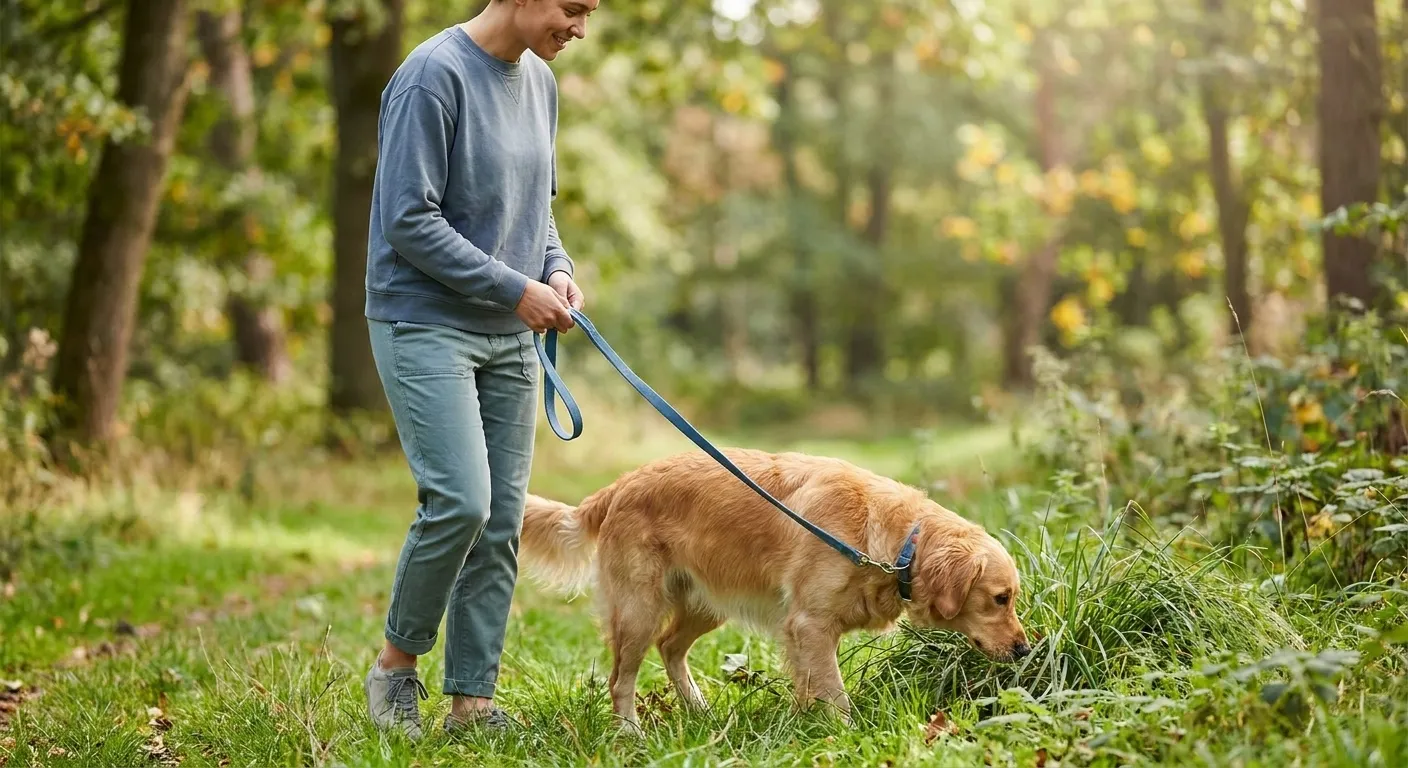
A useful plan for essential scent walks gives your dog time to investigate suitable places while you continue managing the outing. You do not need a distance target, a nose-receptor statistic or a promise that sniffing will cure anxiety. Start with a familiar route, appropriate equipment and a clear decision about where stopping is practical.
This guide offers a sniff-focused walking routine you can adapt to your dog. It is general care and training information, not veterinary advice. Ask your vet about suitable activity if health or mobility affects walking, and seek qualified behaviour help for fear or reactivity. A slower outing still needs supervision and attention to hazards.
Understand the purpose without overstating the benefit
Dogs Trust’s enrichment guidance includes allowing opportunities to sniff during walks. This supports offering exploration as part of the routine. It does not establish that a set amount of sniffing replaces exercise, reduces a particular hormone level or guarantees a quiet dog at home.
Write a simple aim for the next outing: allow investigation at suitable stopping places. Keep any other task, such as travelling to an appointment, separate. If you have limited time, choose a manageable route rather than begin a long walk and rush every pause at the end. The aim is an arrangement you can actually follow.
Avoid using the dog’s post-walk behaviour as a clinical test of the activity. A dog choosing to rest is an observation, not proof that a hormone changed or anxiety was treated. Record what happened if it helps you plan, and bring persistent concerns to the appropriate professional rather than interpreting them through an enrichment claim.
Select a familiar route before adding novelty
Map the route in ordinary terms: home entrance, pavement, crossing, quieter stopping area and return. Identify where you must keep moving and where you can pause without obstructing others. An attractive patch of grass is not automatically a suitable stopping place if it is beside traffic or requires entering private land.
Review the location when you arrive. Look for rubbish, sharp material, substances you cannot identify, approaching dogs and other practical concerns. Keep the dog away from questionable items instead of relying on sniffing to identify what is safe. If you cannot manage the area comfortably, choose another route or end the outing.
Plan a return option before you need it. A shorter familiar loop may be more workable than a new trail with no convenient way back. Consider conditions, your dog’s needs and your own ability to manage the equipment. A sniff-focused walk does not require visiting a novel place every time.
Check the walking arrangement you already use
Follow the manufacturer’s fitting and use instructions for the lead, collar or harness. Ask a qualified professional to help if you are unsure about fit or handling. Do not select a universal lead length from a blog without considering the route and your ability to maintain control. Equipment should suit the intended setting.
Before leaving, inspect the attachments and condition. Confirm that the lead is connected as intended and that you can manage it without wrapping it around your hands. Keep necessary care supplies available. Do not discover a broken clip or confusing fastening while the dog is approaching a road.
If the equipment is new, introduce it through an appropriate training plan separately from the new walking task. Wearing a familiar harness and stopping on a known route is a different exercise from learning new equipment in a busy place. Changing one part of the arrangement at a time can make your observations more useful.
Let a suitable stop become an investigation
At the selected area, give your dog room to investigate within the boundaries you can safely manage. Remain attentive to where the nose and mouth are going. Sniffing and picking up an object are different actions. Do not assume an investigation is harmless because it began as a pause beside the path.
Watch the lead position as you move. Keep it clear of other people and equipment, and avoid letting the dog circle you until the lead becomes tangled. If the arrangement is awkward, calmly reposition or leave the stopping area. A successful pause does not require letting the dog travel in every direction it chooses.
Allow the dog to choose whether it investigates. It may walk past one place and stop at another. Do not hold its head near the ground or hide food outdoors to force a scent activity. The walk can include ordinary movement as well as pauses; it does not need to look like a nose-work demonstration.
Prepare a calm way to move on
Use a familiar, appropriately taught cue or handling routine to continue the walk. If your dog does not understand the transition, ask a qualified trainer to demonstrate a reward-based approach. Avoid repeatedly calling a cue the dog has not learned and then treating the lack of response as deliberate disobedience.
Practise the transition in an easier suitable setting before relying on it near hazards. A simple exercise might involve a comfortable pause followed by moving together toward the next familiar section. Keep the reward within the dog’s feeding plan if food is used. The task is a manageable transition, not pulling the animal away from every investigation.
Write whether moving on was comfortable and where it was difficult. A crossing, another dog or a tempting object can change the situation. Those details help a trainer address the actual task. Avoid recording a broad claim such as ignores me everywhere when the difficulty occurred at one specific place.
Manage other dogs and difficult situations
Dogs Trust’s reactive-dog guidance recommends managing situations and seeking appropriate support. A sniffing opportunity is not a substitute for a behaviour plan. Do not move closer to a trigger merely because the dog had been investigating the ground calmly a moment earlier.
If a person or dog approaches, review the space and decide whether to move away or leave the area. Do not require an interaction to complete the outing. Letting your dog investigate a familiar verge and arranging a greeting are separate tasks. Ask for professional help if you cannot manage the route safely.
Dogs Trust’s guidance on fear and big emotions discusses recognising concerns and providing appropriate opportunities for exploration. Bring specific observations to your vet or behaviour professional: what happened, how near it was and how the dog responded. Avoid claiming that more sniffing alone will resolve the problem.
Adapt the outing to health and care needs
Ask the veterinary team what activity is appropriate if your dog has pain, illness or limited mobility. A slower route can still involve exertion, challenging surfaces or weather exposure. Do not describe sniff-focused walking as automatically suitable for every older or recovering dog. Follow the individual plan and contact the clinic about a concerning change.
Check whether the return route still fits the dog’s condition during the outing. If something seems wrong, stop the activity and obtain appropriate advice. Do not continue because the plan allocated a particular number of minutes. A route card is a guide to the arrangement, not permission to ignore discomfort.
At home, review equipment and follow the normal care checks appropriate for your dog. Record an observed concern without attempting an unfamiliar examination or treatment. If your dog may have swallowed something hazardous, seek veterinary advice rather than waiting to see whether the walk’s enrichment benefits compensate for the exposure.
Keep a short route record
Use four fields: route, stopping area, what the dog did and what you would change. For example, a pause beside a familiar path may have worked, while a busier corner made moving on difficult. This is a hypothetical entry showing the level of detail, not a case study or measured result.
Essential scent walks are most practical when they fit the dog’s care and the actual surroundings. Choose a manageable route, offer suitable investigation stops and keep transitions and safety under your supervision. At the next outing, repeat the part that worked or ask for help with the specific difficulty. You can provide a useful opportunity to explore without promising a medical or behavioural outcome.

