
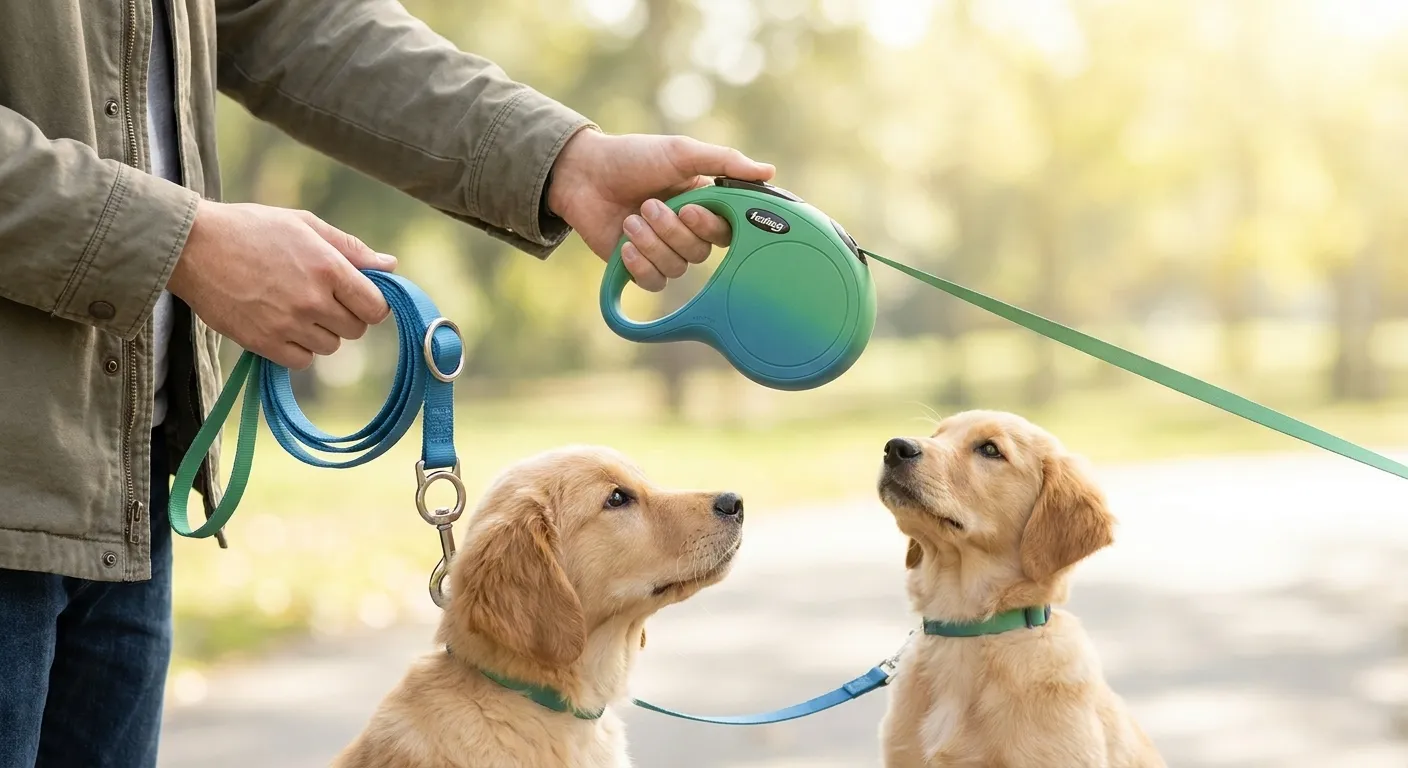
The leash is your primary communication tool with your dog during walks, and its length plays a significant role in both safety and training. For tech-savvy dog owners looking for optimal control and appropriate freedom, understanding the nuances of leash length choice is essential. There’s no one-size-fits-all answer; the best leash depends on your dog, your environment, and your training goals. Furthermore, selecting the right length empowers you to build a stronger, more positive relationship with your canine companion.
The Versatility of Shorter Leashes (4-6 Feet)
Standard 4 to 6-foot leashes are the most common and versatile choice for everyday walks in urban or suburban environments. This length offers excellent control, making it easier to navigate crowded sidewalks, cross streets safely, and keep your dog close when encountering other people or animals. Consequently, you maintain a sense of security for both of you. Shorter leashes are ideal for teaching loose leash walking, as they provide immediate feedback when your dog pulls, allowing for quicker correction and reward. They are also safer in high-traffic areas, reducing the risk of your dog getting tangled or wandering into danger. For strong pullers or reactive dogs, a 4-foot leash can offer the precise control needed for effective management and training. In fact, many trainers recommend starting with this length for foundational skills.
Why a Shorter Leash Excels in Urban Settings
In bustling city environments, a shorter leash is often a lifesaver. Consider the tight spaces, sudden distractions, and numerous obstacles you might encounter. A 4 to 6-foot leash keeps your dog right by your side, preventing them from darting into traffic or greeting every passerby. Moreover, it allows you to quickly guide them around potential hazards like broken glass or discarded food. For instance, when you’re crossing a busy street, the close proximity ensures their safety and your peace of mind. This control is paramount when you’re focusing on safe urban navigation.
Furthermore, this length helps reinforce good walking manners. When your dog is consistently close, they learn to pay attention to your cues and movements. This establishes a clear line of communication, which is crucial for successful loose-leash training. Expert Dog Walking Tips provides resources on various interactive toys that can complement your training efforts by keeping your dog mentally stimulated at home.
Embracing Freedom with Longer Leashes (10-30 Feet)
Longer leashes, typically 10 to 30 feet (often called long lines), are not for everyday street walking but are invaluable tools for specific training scenarios and safe exploration. They are excellent for practicing recall in a secure, open area, giving your dog the sensation of off-leash freedom while maintaining a safety connection. Long lines allow for sniffing, exploring, and engaging in more natural behaviors in parks or open fields where safety is paramount. They are also beneficial for desensitizing reactive dogs from a greater distance, allowing them to observe triggers without feeling trapped. However, long lines require careful handling to prevent tangles and ensure your dog doesn’t build up too much speed before hitting the end, which can cause injury. Always use them in spacious, safe environments away from roads or other hazards. This deliberate approach to leash length choice opens up new training possibilities.
Mastering Recall with a Long Line
One of the most significant benefits of a long line is its utility in recall training. Imagine your dog joyfully exploring a field, yet still safely connected to you. This setup allows them to practice coming back when called, even from a distance, without the risk of them running off. It builds their confidence in responding to your voice, and it builds your confidence in their ability to return. As a result, you can gradually transition them to off-leash adventures when they’ve mastered the skill. Remember, consistency is key in recall training.
To maximize safety during these sessions, consider pairing your long line with proper ID tags & GPS trackers. This provides an extra layer of security, especially in expansive outdoor areas. Additionally, ensure the area is truly secure before beginning your long-line training.
Factors Influencing Your Leash Length Choice
Making the right leash length choice involves considering several key factors unique to you and your dog. These include your dog’s temperament, their training level, the environment you’ll be in, and your specific goals for the walk or training session. Thoughtfully evaluating these aspects ensures a positive experience for both of you.
Your Dog’s Temperament and Training Level
A calm, well-trained dog might handle a slightly longer leash in certain situations than a high-energy puppy or a reactive dog. Puppies, for example, often benefit from a shorter leash initially to help them learn boundaries and focus. On the other hand, a dog with excellent recall might enjoy the extra freedom of a longer leash in a safe, open park. Furthermore, for dogs working through reactivity, a longer line can provide valuable space from triggers, allowing for desensitization at a comfortable distance. Understanding your dog’s individual needs is paramount.
The Walking Environment
The setting of your walk is a critical determinant of your optimal leash length choice. As discussed, urban environments with heavy foot traffic, roads, and distractions necessitate a shorter leash for safety and control. Conversely, wide-open spaces like large parks, private fields, or nature trails offer the perfect backdrop for a longer line. In these less restrictive environments, your dog can enjoy more sniffing, exploring, and natural movement without the immediate dangers of traffic or dense crowds. Always assess the environment before clipping on your leash.
Your Training Goals
What do you hope to achieve with your walk? If your goal is focused loose-leash walking practice, a shorter leash provides the immediate feedback needed for success. If you’re working on recall, practicing ‘stay’ from a distance, or simply allowing your dog more freedom to explore scents in a safe area, a long line becomes an indispensable tool. Moreover, for scent work or tracking, a longer leash allows your dog to follow their nose without you constantly tugging them back. Aligning your leash length choice with your training objectives is crucial for effective results.
Materials and Features to Consider
Beyond length, the material and features of a leash also impact its effectiveness and your comfort. Understanding these aspects will further refine your leash length choice and overall walking experience.
Leash Materials: Durability and Comfort
- Nylon: A popular choice due to its durability, affordability, and wide range of colors. Nylon leashes are generally strong and easy to clean.
- Leather: Offers a classic look and feel, becoming softer and more pliable with use. Leather is very durable but requires more maintenance and can be more expensive.
- Biothane: A coated webbing material that is waterproof, odor-proof, and extremely durable, making it excellent for all weather conditions and easy to grip.
Each material has its pros and cons, so consider your lifestyle and preferences. For example, if you frequently walk in wet conditions, a Biothane leash might be an excellent leash length choice for you.
Handle and Hardware
Look for a comfortable handle, perhaps padded, especially if your dog tends to pull. The hardware, particularly the clip that attaches to your dog’s collar or harness, should be sturdy and reliable. Swivel clips prevent tangles, which is a small but significant detail. Furthermore, ensuring the clip is easy to operate, even with gloves on, can make a big difference in daily convenience.
Safety First: Important Considerations for Every Leash
Regardless of your leash length choice, safety should always be your top priority. A well-chosen leash is only effective when used responsibly and coupled with awareness.
Proper Leash Handling Techniques
Always hold the leash securely, but avoid wrapping it around your hand or wrist, which can cause injury if your dog suddenly pulls. Maintain a relaxed grip and be ready to respond to your dog’s movements. For longer lines, be mindful of the excess length on the ground to prevent tripping hazards for yourself or others. Moreover, learn to gather the slack effectively to maintain control. Resources from the American Veterinary Medical Association offer valuable insights into safe dog handling practices, which can further inform your approach to using your chosen leash length. Learn more about dog care from the AVMA.
Avoiding Retractable Leashes
While seemingly offering the best of both worlds, retractable leashes are generally discouraged by trainers and veterinarians. They offer inconsistent feedback to your dog, making loose-leash walking difficult to teach. More importantly, they pose significant safety risks, including severe rope burns, falls for owners, and injuries to dogs due to sudden jolts at the end of the line. For these reasons, they are typically not a recommended leash length choice for responsible dog owners.
Regular Inspection of Your Leash
Periodically inspect your leash for signs of wear and tear, such as fraying, cracks in the material, or weakened hardware. A damaged leash can break unexpectedly, putting your dog at risk. Replacing a worn leash is a small investment for your dog’s safety. Expert Dog Walking Tips also recommends ensuring your dog has a comfortable and secure harness; explore options like those discussed in our article about safety vests, as a good harness complements your leash choice.
Integrating Different Leash Lengths into Your Routine
Many experienced dog owners find it incredibly beneficial to have a selection of leashes, allowing them to adapt their leash length choice to each specific situation. This flexible approach maximizes both safety and training effectiveness.
The Everyday Standard Leash
Your 4-6 foot leash will likely be your workhorse. Use it for all your daily walks around the neighborhood, trips to the vet, and any situation requiring close control. It’s the foundation for teaching polite leash manners and ensures your dog stays safe in potentially crowded or hazardous areas. This standard length is reliable and easy to manage.
The Training and Exploration Long Line
Reserve your 10-30 foot long line for dedicated training sessions in secure, open spaces. This is where you’ll build strong recall, practice long-distance stays, and allow your dog to enjoy supervised sniffing and exploration. Remember to always be aware of your surroundings and the environment when using a long line. It’s a fantastic tool for enrichment, but it demands careful handling.
Considering a Leash for Specific Sports or Activities
For those interested in dog sports like canicross or bikejoring, specialized leashes designed for these activities are necessary. These often feature bungee sections to absorb shock and hands-free attachments. While outside the scope of typical leash length choice, it’s worth noting that specific activities may call for very particular equipment. For general training and enrichment, a variety of puzzle toys can also be a great way to engage your dog’s mind.
Ultimately, your leash length choice should align with the activity and environment. Many dog owners find it beneficial to have both a standard leash for daily walks and a long line for training and enrichment in appropriate settings. Thoughtfully selecting the right leash enhances safety, improves training outcomes, and makes every adventure more enjoyable for you and your dog. Furthermore, this mindful approach fosters a deeper bond and understanding between you and your canine companion. The right equipment truly makes a difference in your shared journey.
For further reading on responsible pet ownership and training, the Association of Professional Dog Trainers (APDT) offers a wealth of resources and advice. Visit the APDT website for more information.
Conclusion
The journey of dog ownership is filled with learning, and making an informed leash length choice is a significant step towards successful, joyful walks and effective training. By understanding the distinct advantages of shorter and longer leashes, and by considering your dog’s individual needs and your environment, you empower yourself to provide the best possible experience. Remember, each walk is an opportunity to connect, learn, and grow together. Choose your leash wisely, embrace the adventure, and celebrate every step you take with your beloved canine companion.
FAQ
What’s the best leash for a new puppy?
For a new puppy, a shorter leash, typically 4 to 6 feet, is generally recommended. This length provides better control, which is essential for teaching basic manners, loose-leash walking, and keeping your curious pup safe in new environments. It helps them understand boundaries more clearly.
When should I use a very long dog lead?
A very long dog lead (10-30 feet) is best used in secure, open areas like large parks or private fields. It’s ideal for practicing recall, allowing supervised exploration, and giving your dog a sense of freedom while maintaining a safe connection. Avoid using it in crowded or high-traffic areas.
Can one leash length work for all situations?
While a 6-foot leash is quite versatile, one single leash length might not be optimal for all situations. Many owners find it beneficial to have both a shorter leash for daily urban walks and a longer lead for training and safe exploration in open spaces. This allows for flexibility and addresses different needs.
How does leash selection impact dog training?
Leash selection significantly impacts dog training. A shorter leash provides immediate feedback for loose-leash walking and control. A longer lead, conversely, is excellent for recall practice and allowing dogs to explore naturally while still being connected. The right tool for the right job enhances learning and safety.
Are there any leash types to avoid?
Yes, it’s generally recommended to avoid retractable leashes. They can be dangerous, leading to rope burns, falls, and inconsistent training signals for your dog. They offer a false sense of control and are not ideal for teaching good leash manners. Focus instead on fixed-length leads.

