
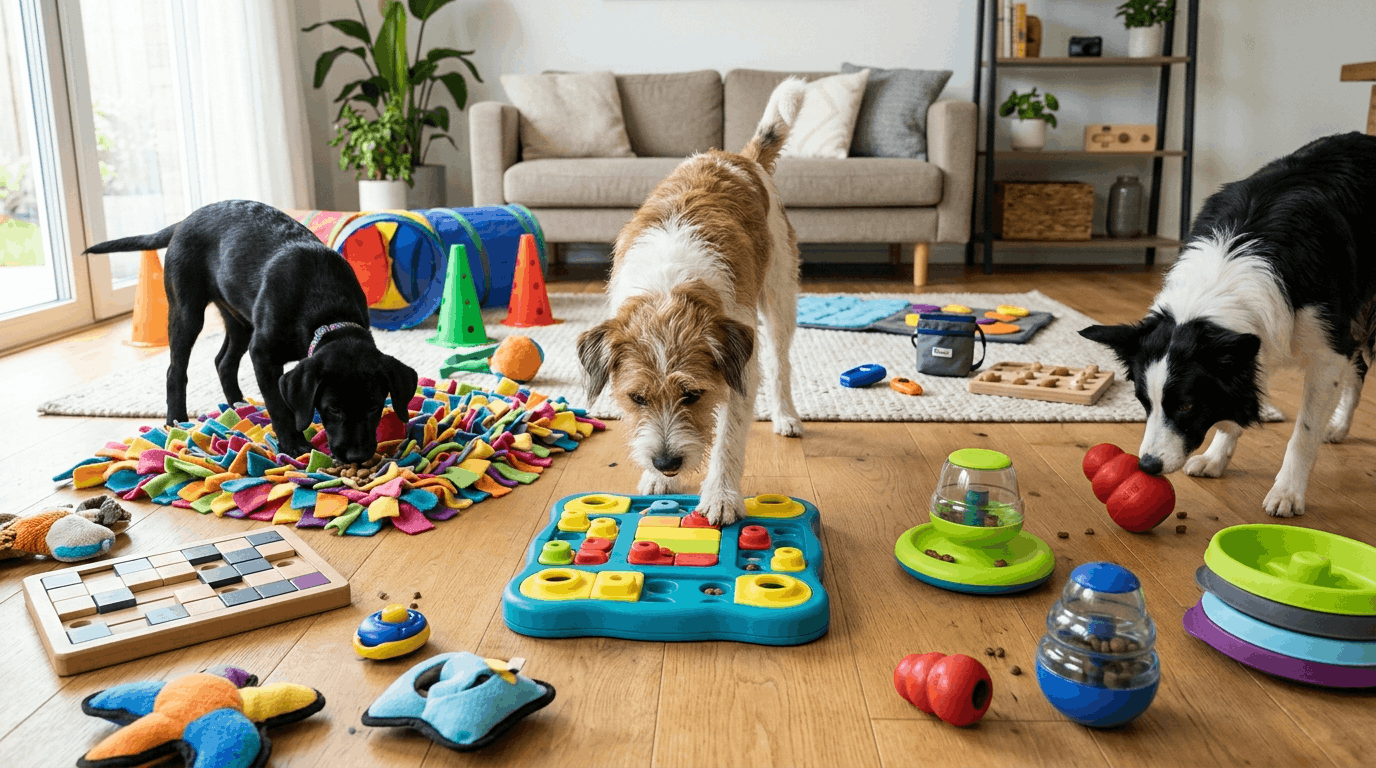
Many dog owners focus heavily on physical exercise while overlooking one of the most important parts of canine wellness: mental stimulation. Although walks and active play matter greatly, dogs also need opportunities to think, explore, solve problems, and engage their natural instincts daily. Without enough cognitive enrichment, even physically active dogs may still become restless, destructive, anxious, or overly reactive at home. That is why mental stimulation ideas play such an important role in creating calmer and more emotionally balanced dogs.
Dogs naturally use their brains constantly. In the wild, they would search for food, track scents, solve environmental challenges, and make decisions throughout the day. Modern home life sometimes removes many of these natural outlets, especially for intelligent or high-energy breeds.
Mental enrichment helps dogs release emotional energy in healthy ways. Consequently, mentally satisfied dogs often settle more easily indoors and display fewer unwanted behaviors overall.
Many common behavior problems actually stem from boredom or frustration rather than disobedience. Excessive barking, pacing, chewing, digging, and leash pulling frequently improve once dogs receive more cognitive engagement consistently.
Mental stimulation does not require expensive equipment or complicated routines either. Small daily activities often create meaningful behavioral improvements over time.
Understanding how dogs process stimulation and why mental exercise matters can help owners create happier, calmer, and more relaxed companions long term.
Why Mental Enrichment Matters for Dogs
Dogs experience the world through curiosity, exploration, and problem-solving. When those instincts remain underused, frustration often appears through hyperactivity, destructive behavior, or emotional imbalance.
Mental stimulation ideas help dogs use natural cognitive skills productively. Instead of creating their own entertainment through chewing furniture or barking excessively, dogs channel energy into healthy challenges and enrichment activities.
Mental exercise also creates emotional fatigue differently from physical activity. Dogs that think, solve problems, and engage their senses often feel calmer afterward because cognitive work requires concentration and emotional regulation.
Highly intelligent breeds especially benefit from mental stimulation. Herding breeds, working breeds, sporting dogs, and scent hounds usually require more cognitive engagement than owners initially expect.
Mental enrichment also strengthens confidence. Dogs that solve problems successfully often become more emotionally resilient and adaptable over time.
Training sessions, scent work, and interactive games improve communication between dogs and owners as well.
Importantly, mentally stimulated dogs usually learn relaxation more effectively because their emotional needs receive healthier balance throughout the day.
Scent Games Encourage Natural Calmness
Dogs rely heavily on smell to understand their environment. Their noses process information at extraordinary levels, which makes scent-based enrichment one of the most effective mental stimulation ideas available.
Simple scent games help dogs focus calmly while satisfying natural instincts. Hiding treats around the house or yard encourages dogs to use concentration and problem-solving skills productively.
Snuffle mats also work extremely well because dogs search through fabric layers using scent rather than rushing through food mindlessly.
Owners can gradually increase difficulty levels by hiding treats in more challenging locations once dogs understand the game.
Scent trails provide another valuable enrichment activity. Dragging a treat or toy lightly across the floor creates a scent path dogs can follow independently.
These activities often tire dogs mentally more effectively than intense physical exercise alone because scent work requires patience and concentration.
Nose work also benefits anxious or reactive dogs because sniffing naturally encourages calmer emotional states.
Even short scent sessions can create noticeable improvements in focus and relaxation afterward.
Puzzle Toys Build Focus and Patience
Interactive puzzle toys challenge dogs to solve problems before accessing treats or food rewards. This process creates healthy mental fatigue while encouraging patience and concentration.
Many mental stimulation ideas involve food because dogs naturally enjoy problem-solving related to eating and scent exploration.
Treat-dispensing toys encourage dogs to think strategically rather than consuming meals immediately from bowls.
Different puzzle difficulty levels help owners adjust challenges based on the dog’s experience and intelligence level.
Rotating puzzle toys regularly also helps maintain novelty and interest over time.
Frozen enrichment toys provide additional mental stimulation because dogs must lick, chew, and manipulate the toy slowly to access rewards.
Dogs that work for food often display calmer behavior afterward because problem-solving satisfies cognitive needs more effectively than passive feeding routines alone.
Puzzle activities also help reduce boredom during rainy days, busy schedules, or indoor confinement.
Training Sessions Provide Mental Exercise
Training exercises challenge the canine brain while strengthening communication and trust between dogs and owners. Even short daily sessions can create major emotional and behavioral benefits.
Mental stimulation ideas involving obedience or trick training often improve focus and impulse control significantly.
Commands such as sit, stay, wait, leave it, and place all encourage dogs to think carefully before reacting impulsively.
Teaching tricks provides valuable enrichment as well. Spin, shake, touch, weave, and retrieve exercises stimulate learning and problem-solving abilities.
Positive reinforcement remains especially important during training because dogs learn faster when emotionally relaxed and motivated.
Short sessions generally work best. Five to ten minutes of focused training often produces better results than long repetitive drills.
Training also improves confidence. Dogs that succeed during learning activities often become more emotionally balanced in other situations too.
Owners should keep sessions upbeat and rewarding while adjusting difficulty gradually to prevent frustration.
Consistency matters more than intensity. Daily small training opportunities create stronger long-term benefits over time.
Interactive Play Strengthens Emotional Balance
Play provides much more than physical exercise alone. Structured interactive games also create valuable mental stimulation while supporting emotional connection between dogs and owners.
Many mental stimulation ideas involve games that encourage problem-solving, focus, and communication.
Hide-and-seek works especially well because dogs use scent, memory, and searching instincts while building confidence through successful discovery.
Fetch can become mentally enriching when combined with obedience cues such as wait, drop it, or directional commands.
Tug games also support impulse control when owners teach rules around starting, stopping, and releasing the toy calmly.
Obstacle courses encourage dogs to think through movement challenges while improving body awareness and confidence.
Interactive play helps release emotional tension productively instead of allowing frustration to build indoors.
However, overstimulation should still be avoided. Calm pauses between exciting activities help dogs practice emotional regulation and relaxation afterward.
Balanced play teaches dogs how to transition smoothly between excitement and calmness more effectively.
Food Enrichment Improves Relaxation
Many dogs eat meals too quickly without engaging mentally at all. Transforming feeding routines into enrichment opportunities provides valuable daily cognitive stimulation.
Food-based mental stimulation ideas often create calmer behavior because dogs naturally enjoy working for rewards.
Scatter feeding encourages dogs to sniff and search for kibble across safe indoor or outdoor spaces.
Stuffed food toys also provide long-lasting engagement while encouraging calm licking and chewing behaviors.
Slow feeder bowls help reduce frantic eating while increasing concentration and patience during meals.
Frozen food enrichment creates additional mental challenge because dogs must work gradually to access food rewards.
Owners can vary ingredients, textures, and puzzle difficulty levels to maintain interest and novelty over time.
Interactive feeding also helps reduce boredom and separation-related stress because dogs stay mentally occupied productively.
Mentally engaging meals often leave dogs feeling more emotionally satisfied afterward compared to passive bowl feeding alone.
Why Rotation Keeps Dogs Interested
Dogs become bored when enrichment activities remain completely predictable every day. Consequently, rotating activities regularly helps maintain excitement and cognitive engagement.
One of the smartest mental stimulation ideas involves creating variety rather than relying on the same puzzle or game constantly.
Different textures, scents, toys, and challenges encourage continued curiosity and problem-solving.
Owners do not need endless new products either. Simple changes in presentation often make familiar activities feel fresh again.
For example, hiding treats in different locations or adjusting puzzle difficulty creates novelty naturally.
Rotating enrichment activities also helps engage different instincts and thinking styles throughout the week.
Some days may focus more on scent work, while others emphasize training, exploration, or interactive games.
Balanced variety prevents dogs from becoming mentally stagnant while supporting emotional adaptability.
Mental Stimulation Supports Anxious Dogs
Anxiety often worsens when dogs lack healthy cognitive outlets. Nervous dogs frequently benefit greatly from calm enrichment activities that encourage focus and emotional regulation.
Mental stimulation ideas help anxious dogs redirect nervous energy into productive problem-solving instead of pacing, barking, or destructive behavior.
Scent work works especially well because sniffing naturally lowers stress levels for many dogs.
Licking activities also support relaxation because repetitive licking often creates soothing emotional effects.
Predictable training routines improve confidence by helping dogs understand expectations and experience successful outcomes consistently.
Puzzle toys and food enrichment provide calming structure during stressful situations such as storms, visitors, or schedule changes.
However, overstimulating anxious dogs with chaotic environments or nonstop activity may increase stress instead of helping.
Calm enrichment and emotional support usually produce the best results for nervous dogs.
How Mental Enrichment Reduces Destructive Behavior
Many destructive behaviors stem from boredom and frustration rather than intentional misbehavior. Dogs left mentally unstimulated often create their own activities to release energy and curiosity.
Mental stimulation ideas provide healthier outlets that reduce the likelihood of chewing, digging, barking, or furniture destruction indoors.
Dogs that engage their brains productively usually feel more emotionally balanced afterward.
Problem-solving activities also increase satisfaction because dogs experience accomplishment and cognitive engagement naturally.
Chewing itself becomes healthier when directed toward appropriate enrichment toys instead of household objects.
Owners should also ensure dogs receive enough rest between enrichment activities because overstimulation may create additional restlessness.
Balanced routines involving physical exercise, cognitive engagement, and relaxation usually produce the healthiest long-term behavior overall.
Creating a Balanced Daily Routine
Mental enrichment works best when incorporated consistently into daily routines rather than offered occasionally.
Dogs thrive on predictability because structured routines create emotional security and balance naturally.
Mental stimulation ideas should fit realistically into everyday life instead of becoming overwhelming for owners.
Short morning training sessions, puzzle feeding, scent games, and evening play sessions often provide excellent daily variety.
Even five minutes of focused cognitive activity can create noticeable behavioral improvement over time.
Owners should observe how their dog responds emotionally as well. Some dogs need more calming enrichment, while others enjoy more challenging cognitive tasks.
Balancing stimulation with rest remains extremely important too. Dogs need opportunities to decompress and relax after engaging mentally.
Consistency, variety, and emotional balance usually create the best long-term results.
Helping Dogs Feel More Relaxed Through Mental Stimulation
Dogs need more than physical exercise alone to feel emotionally healthy and behaviorally balanced. Mental enrichment provides opportunities for dogs to think, explore, solve problems, and engage natural instincts in productive ways.
The best mental stimulation ideas encourage calm focus rather than nonstop excitement. Scent games, puzzle toys, training exercises, food enrichment, and interactive play all help dogs release emotional energy while improving confidence and concentration.
Many unwanted behaviors naturally improve once cognitive needs receive consistent attention. Dogs that feel mentally satisfied often become calmer, more relaxed, and easier to manage indoors.
Mental stimulation also strengthens communication between dogs and owners while supporting emotional resilience and adaptability.
Importantly, enrichment does not need to feel complicated or expensive. Small daily activities often create meaningful improvements over time when practiced consistently.
Every dog has unique preferences and cognitive needs. Observing what activities create calm focus and emotional satisfaction helps owners build healthier routines long term.
Ultimately, mentally engaged dogs tend to feel happier, more balanced, and more capable of relaxing peacefully at home.
FAQ
1. Why is mental stimulation important for dogs?
Mental enrichment helps reduce boredom, improve focus, and support healthier emotional balance.
2. Can mental activities tire dogs more than exercise?
Yes. Cognitive activities often create deeper emotional fatigue than physical exercise alone.
3. What are easy enrichment games for beginners?
Simple scent games, puzzle feeders, and short training sessions work very well for most dogs.
4. How often should dogs receive mental stimulation?
Most dogs benefit from daily mental enrichment combined with physical exercise and rest.
5. Do anxious dogs benefit from cognitive enrichment?
Yes. Calm mental activities often help anxious dogs feel more focused and emotionally relaxed.

