
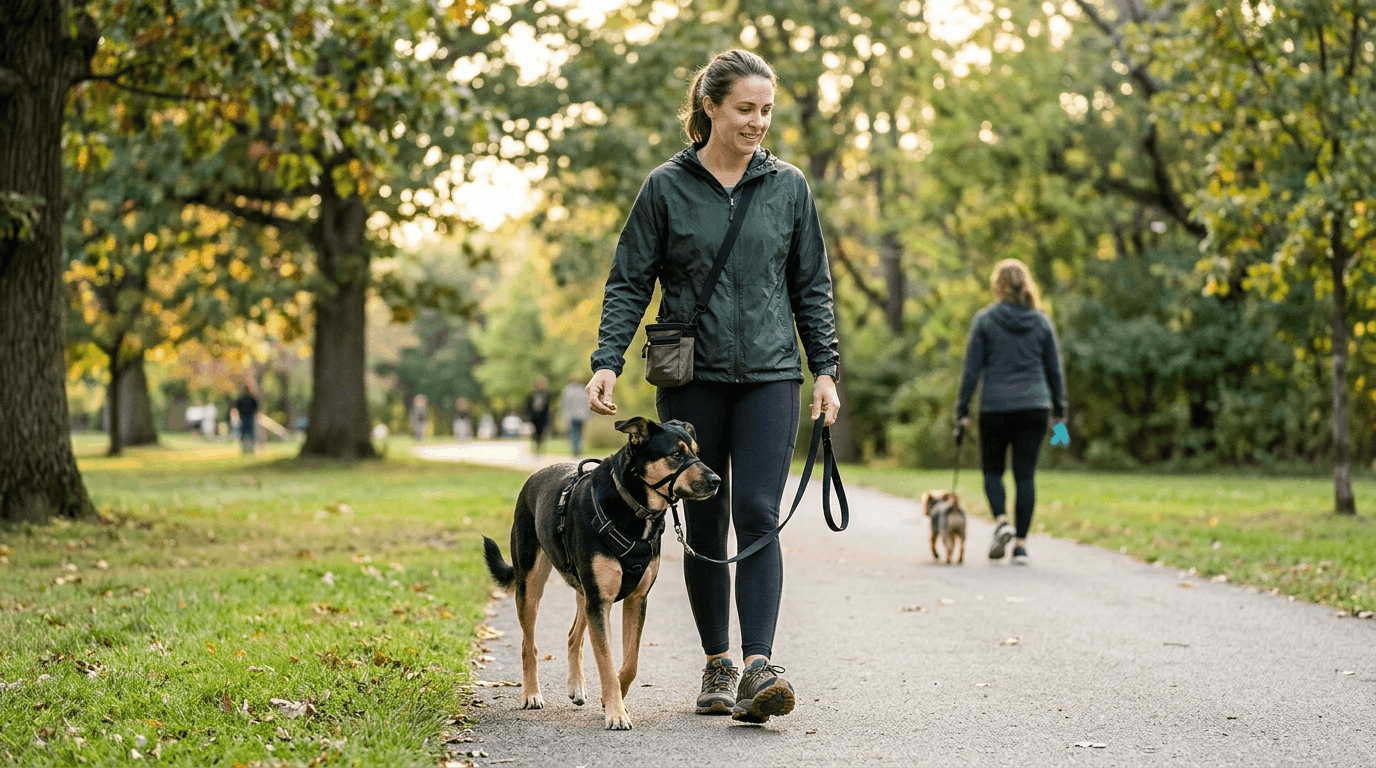
Learning how to walk a reactive dog can feel overwhelming at first, especially when every outing seems unpredictable. One moment your dog is calm, and the next, it lunges, barks, or pulls toward a trigger. However, reactivity is not a permanent behavior. With the right approach, you can walk a reactive dog in a way that feels controlled, calm, and even enjoyable. Instead of reacting to every situation, you begin to guide your dog with confidence and clarity.
Most reactive behavior comes from heightened emotions such as excitement, fear, or frustration. When those emotions build without direction, they quickly turn into pulling or lunging. Therefore, the goal is not just to manage the behavior but to change how your dog responds to the environment. Once you learn to walk a reactive dog with structure and patience, everything starts to shift.
Understanding What Causes Reactivity On Walks
Before you can successfully walk a reactive dog, you need to understand what drives the behavior. Dogs react because they feel overwhelmed or overstimulated. Triggers such as other dogs, loud noises, or fast movement can quickly push them beyond their comfort level. As a result, they respond with pulling, barking, or lunging.
In addition, leash restriction plays a role. When a dog cannot approach or move freely, frustration builds. This tension often leads to stronger reactions. Therefore, learning to walk a reactive dog involves reducing that tension and helping your dog stay within a manageable emotional state.
Another important factor is repetition. If your dog reacts the same way repeatedly, the behavior becomes a habit. Over time, it feels automatic. However, with consistent guidance, you can break that pattern and replace it with calmer responses.
Start With Distance And Awareness
One of the most effective ways to walk a reactive dog is by creating distance from triggers. When your dog is too close to something that causes a reaction, it becomes difficult to maintain control. Therefore, giving your dog space helps prevent escalation.
For example, if your dog reacts to other dogs, cross the street or step aside early. This allows your dog to observe the situation without becoming overwhelmed. As your dog improves, you can gradually decrease that distance.
At the same time, stay aware of your surroundings. Scan ahead and anticipate potential triggers. This proactive approach helps you act before your dog reacts. Over time, this awareness becomes a habit that makes it easier to walk a reactive dog in any environment.
Build Focus Before Reactivity Happens
Focus is one of the most powerful tools you can use. When your dog pays attention to you, it becomes less reactive to distractions. Therefore, teaching focus is essential if you want to walk a reactive dog successfully.
Start by practicing attention exercises in a calm environment. Reward your dog for looking at you or responding to its name. These small actions build a habit of checking in with you.
During walks, use these cues before your dog reacts. If you notice a trigger approaching, ask for attention and reward it immediately. This shifts your dog’s focus away from the trigger and back to you.
Timing is critical. Acting early prevents escalation and helps your dog stay calm. With repetition, your dog learns to rely on you instead of reacting automatically.
Use Calm Movement To Guide Behavior
Your movement plays a major role in how your dog responds. When you walk a reactive dog, avoid sudden or forceful reactions. Instead, guide your dog with smooth and controlled movement.
Changing direction is one of the simplest techniques. If your dog begins to pull or fixate, turn and walk the other way. This breaks the pattern and helps your dog reset. Over time, your dog learns that staying with you is the better option.
Another effective method is slowing down or stopping. When your dog pulls, pause until it relaxes. This teaches your dog that calm behavior leads to movement.
By using calm and consistent movement, you create a clear structure that helps walk a reactive dog without adding tension.
Reinforce Calm Behavior Consistently
Positive reinforcement is essential when working with reactive dogs. While managing reactions is important, rewarding calm behavior is what creates lasting change. Every time your dog stays calm near a trigger, acknowledge it immediately.
Use treats, praise, or gentle encouragement to reinforce the behavior. This helps your dog associate calm responses with positive outcomes. Over time, this makes it easier to walk a reactive dog without stress.
Consistency matters. Reward the behavior you want to see, and avoid reinforcing reactions unintentionally. For example, if your dog pulls and still moves forward, the behavior continues. Therefore, be mindful of what actions lead to progress.
With repetition, calm behavior becomes the new habit.
Choose The Right Equipment For Support
While training is the main focus, the right equipment can support your efforts. Certain tools provide better control and reduce strain, making it easier to walk a reactive dog.
Front clip harnesses are a popular option. They redirect your dog’s movement when it pulls, which helps prevent lunging. This gives you better control without relying on force.
Head collars are another option for strong pullers. They guide the dog’s head, which influences direction. However, they require proper introduction to ensure comfort.
Regardless of the tool, proper fit is essential. Equipment should support your training, not replace it. When used correctly, it makes it easier to maintain control and reduce stress.
Stay Calm To Influence Your Dog’s Behavior
Your energy has a direct impact on your dog. If you feel tense or anxious, your dog will sense it. Therefore, staying calm is one of the most important steps when you walk a reactive dog.
Move with intention and avoid rushing. Speak in a calm, steady tone and maintain relaxed body language. This helps your dog feel more secure and reduces the likelihood of reactions.
In addition, avoid reacting emotionally to setbacks. Frustration can increase tension and make the situation worse. Instead, treat each moment as a learning opportunity.
Over time, your calm presence becomes a signal that helps regulate your dog’s behavior.
Be Patient And Build Progress Gradually
Training a reactive dog takes time, and progress often happens in small steps. However, each improvement brings you closer to your goal. When you walk a reactive dog consistently, you begin to see changes in behavior and confidence.
Celebrate small wins, such as shorter reactions or quicker recovery times. These moments indicate that your training is working. Over time, these small improvements add up to lasting change.
If your dog struggles, adjust your approach. Return to a quieter environment or increase distance from triggers. Flexibility helps maintain progress without causing frustration.
By staying patient and consistent, you create an environment where your dog can learn and improve naturally.
Conclusion
Learning how to walk a reactive dog without stress or pulling is a process that requires understanding, patience, and consistency. While the behavior may feel challenging at first, it can be changed with the right approach. By focusing on distance, attention, calm movement, and positive reinforcement, you create a system that supports better behavior.
Over time, walks become more predictable and less stressful. Your dog learns to stay calm, and you gain confidence in handling different situations. Most importantly, your connection strengthens as you work together toward a shared goal. With commitment and practice, you can walk a reactive dog in a way that feels calm, controlled, and enjoyable.
FAQ
- Why does my dog react strongly on walks?
Dogs often react due to excitement, fear, or frustration when they feel overwhelmed by their environment. - Can training reduce leash reactivity?
Yes, consistent training helps dogs learn to stay calm and respond differently to triggers. - How long does it take to improve behavior?
Most dogs show progress within a few weeks, although consistent practice is needed for lasting results. - Should I avoid all triggers during training?
Temporary avoidance helps, but gradual exposure is important for long-term improvement. - What is the best way to handle sudden reactions?
Stay calm, create distance, and redirect your dog’s attention before the behavior escalates.

