
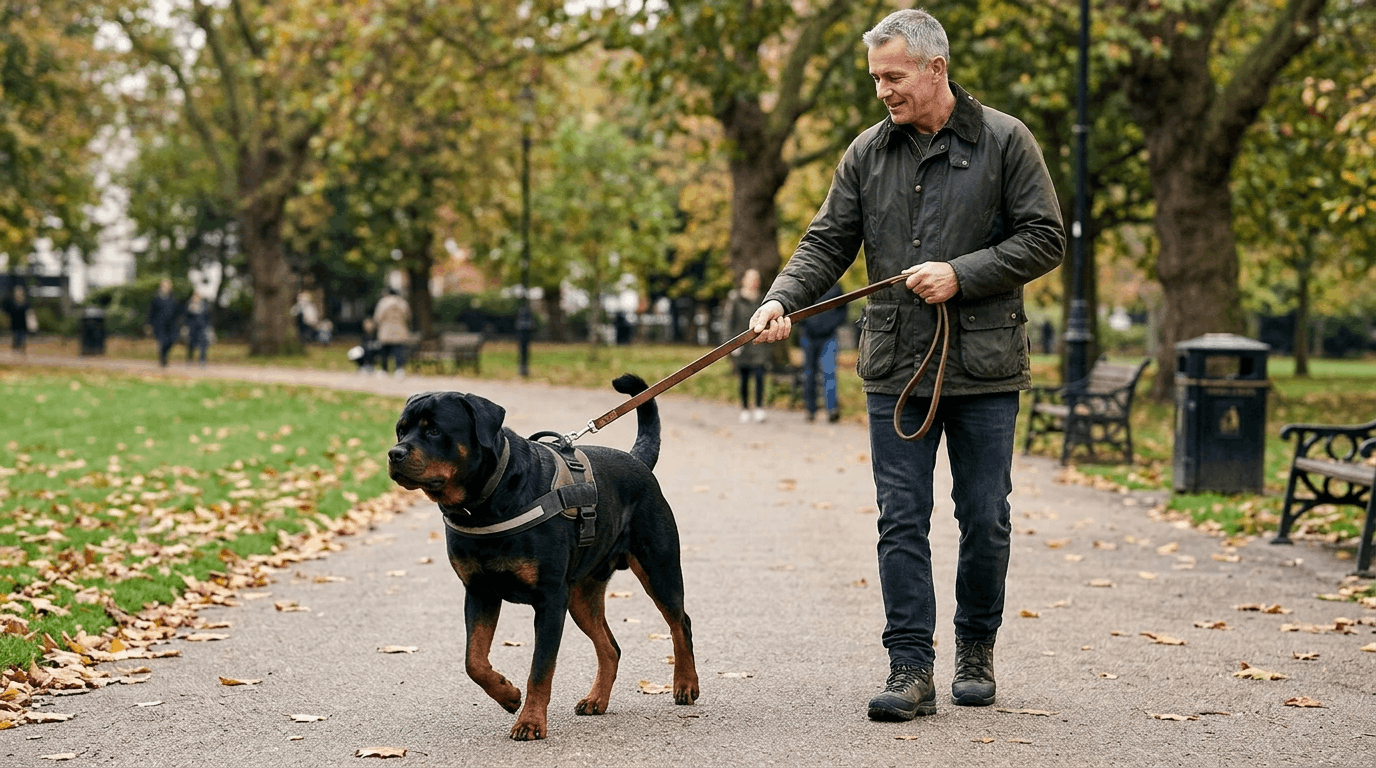
Learning how to walk a strong dog can feel intimidating, especially when your dog pulls with force or reacts suddenly. However, the challenge is not about strength alone. Walk a strong dog successfully by focusing on technique, consistency, and understanding your dog’s behavior. With the right approach, even powerful dogs can learn to move calmly and safely beside you, transforming stressful walks into controlled and enjoyable routines.
Strong dogs often pull because they have learned that pulling gets results. When they move forward with force, they reach what they want faster. Over time, this behavior becomes a habit. Therefore, when you aim to walk a strong dog, the goal is not to overpower them but to change what they learn from each walk. Once your dog understands that calm behavior leads to progress, everything begins to shift.
Why Strong Dogs Pull And How It Affects Safety
Before you can confidently walk a strong dog, it is important to understand why pulling happens. Strong dogs usually have high energy levels, and they naturally want to explore their surroundings. When excitement builds, they move forward with intensity. As a result, the leash becomes tight, and control becomes difficult.
In addition, physical strength amplifies the issue. A strong dog can generate significant force, which puts pressure on your arms, shoulders, and back. Over time, this can lead to discomfort or even injury. Therefore, learning to walk a strong dog safely is not just about behavior; it is also about protecting your own body.
Another factor is unpredictability. Strong dogs can react quickly to distractions such as other animals or sudden noises. Without proper control, these reactions can become dangerous. By addressing the root causes, you create a safer and more manageable walking experience.
Start With The Right Mindset And Approach
The first step to walk a strong dog effectively is adjusting your mindset. Instead of expecting immediate results, focus on building habits over time. Training is a process, and consistency matters more than perfection.
Stay calm and patient during walks. Dogs are highly sensitive to your energy, so tension or frustration can increase their excitement. By maintaining a steady and relaxed approach, you help your dog feel more secure.
In addition, set clear expectations. Decide how you want your dog to behave and reinforce that consistently. When your dog understands what is expected, it becomes easier to walk a strong dog without constant struggle.
This mindset creates a foundation for success and makes every step of training more effective.
Use Proper Equipment For Better Control
Choosing the right equipment is essential when you walk a strong dog. While training is the main focus, supportive tools can make a significant difference in control and safety.
Front clip harnesses are one of the best options. They redirect your dog’s movement when it pulls, making it easier to guide behavior. This reduces strain on your body and prevents strong forward lunges.
Head collars are another option for dogs that pull with significant force. They control the dog’s head, which influences its direction. However, they should be introduced gradually to ensure comfort.
A sturdy leash with a comfortable grip is also important. Avoid overly long leashes in busy areas, as they reduce control. By using the right equipment, you create a safer environment to walk a strong dog confidently.
Train Loose Leash Walking Step By Step
Training is the key to long-term success. To walk a strong dog without pulling, you must teach loose leash walking consistently. Start by reinforcing the idea that a loose leash leads to movement.
When your dog pulls, stop walking immediately. Wait until the leash becomes loose, then continue. This simple technique teaches your dog that pulling does not lead to progress. Over time, this pattern helps walk a strong dog more smoothly.
Another effective method is changing direction. If your dog pulls ahead, turn and walk the other way. This encourages your dog to pay attention and follow your lead.
Consistency is essential. Every time your dog pulls, respond the same way. This clarity helps your dog learn faster and creates lasting habits.
Build Focus And Attention During Walks
Attention is one of the most powerful tools when you walk a strong dog. A dog that focuses on you is less likely to react to distractions. Therefore, building engagement should be part of your training.
Practice simple attention exercises, such as rewarding your dog for looking at you. During walks, use these cues to redirect focus when needed. This helps prevent pulling before it starts.
Timing is important. Act before your dog becomes overly excited. By staying proactive, you reduce the chances of sudden reactions.
Over time, your dog learns to check in with you regularly. This connection makes it much easier to walk a strong dog in different environments.
Manage Energy Before The Walk Begins
High energy often leads to pulling, so managing your dog’s energy before the walk is important. When you walk a strong dog, starting in a calm state makes a noticeable difference.
Before leaving, wait for your dog to settle. If your dog is overly excited, pause and allow it to calm down. This sets the tone for the entire walk.
Mental stimulation can also help. Short training sessions or simple tasks before the walk reduce excess energy. As a result, your dog becomes more focused and less reactive.
By preparing your dog properly, you create better conditions for success and make it easier to walk a strong dog without stress.
Stay Aware And Anticipate Triggers
Awareness plays a key role in maintaining control. When you walk a strong dog, staying alert allows you to handle situations before they escalate.
Scan your surroundings and look for potential triggers. If you notice something that may cause a reaction, adjust your position or direction early. This proactive approach reduces sudden pulling and keeps your dog calm.
In addition, create space when needed. If a situation feels overwhelming, move away and regain control. This prevents unnecessary tension and protects both you and your dog.
By staying aware, you maintain control and ensure that each walk remains safe and manageable.
Protect Your Body While Walking
Walking a strong dog can place strain on your body if not done correctly. Therefore, proper technique is essential for long-term comfort.
Keep your posture upright and your shoulders relaxed. Avoid leaning back or gripping the leash too tightly, as this increases tension. Instead, keep your arms slightly bent and your movements fluid.
Use your body position to guide your dog rather than relying on force. This reduces pressure on your joints and makes the walk feel more natural.
If you feel discomfort, take breaks and adjust your approach. Listening to your body helps prevent injury and ensures that you can continue to walk a strong dog comfortably.
Be Consistent And Patient With Progress
Training a strong dog takes time, but progress happens with consistency. Each walk is an opportunity to reinforce good behavior and build better habits.
Avoid becoming frustrated when progress feels slow. Dogs learn through repetition, and small improvements add up over time. Celebrate moments of calm walking, even if they are brief.
Stay consistent with your approach. Mixed signals can confuse your dog and slow down progress. By maintaining clear and steady guidance, you create an environment where learning can happen.
With patience, you will notice that walking becomes easier and more enjoyable.
Conclusion
Learning how to walk a strong dog safely without pulling is a process that combines training, awareness, and proper technique. While the challenge may feel overwhelming at first, the right approach makes it manageable and effective. By focusing on consistency, calm energy, and clear communication, you can transform your walking routine into a controlled and enjoyable experience.
Over time, your dog learns to move with you instead of against you. This not only improves safety but also strengthens your connection. With dedication and patience, you can walk a strong dog with confidence, creating a routine that benefits both you and your dog every day.
FAQ
- Why does my dog pull so strongly on walks?
Dogs pull because it helps them reach things faster, and the behavior becomes reinforced over time. - Can strong dogs be trained to walk calmly?
Yes, with consistent training and proper techniques, even strong dogs can learn loose leash walking. - What equipment works best for powerful dogs?
Front clip harnesses and head collars often provide better control for strong pullers. - How long does it take to improve leash behavior?
Most dogs show progress within a few weeks, but consistent practice is needed for lasting results. - Should I avoid walking my dog if it pulls too much?
No, instead use structured training during walks to improve behavior gradually.

