
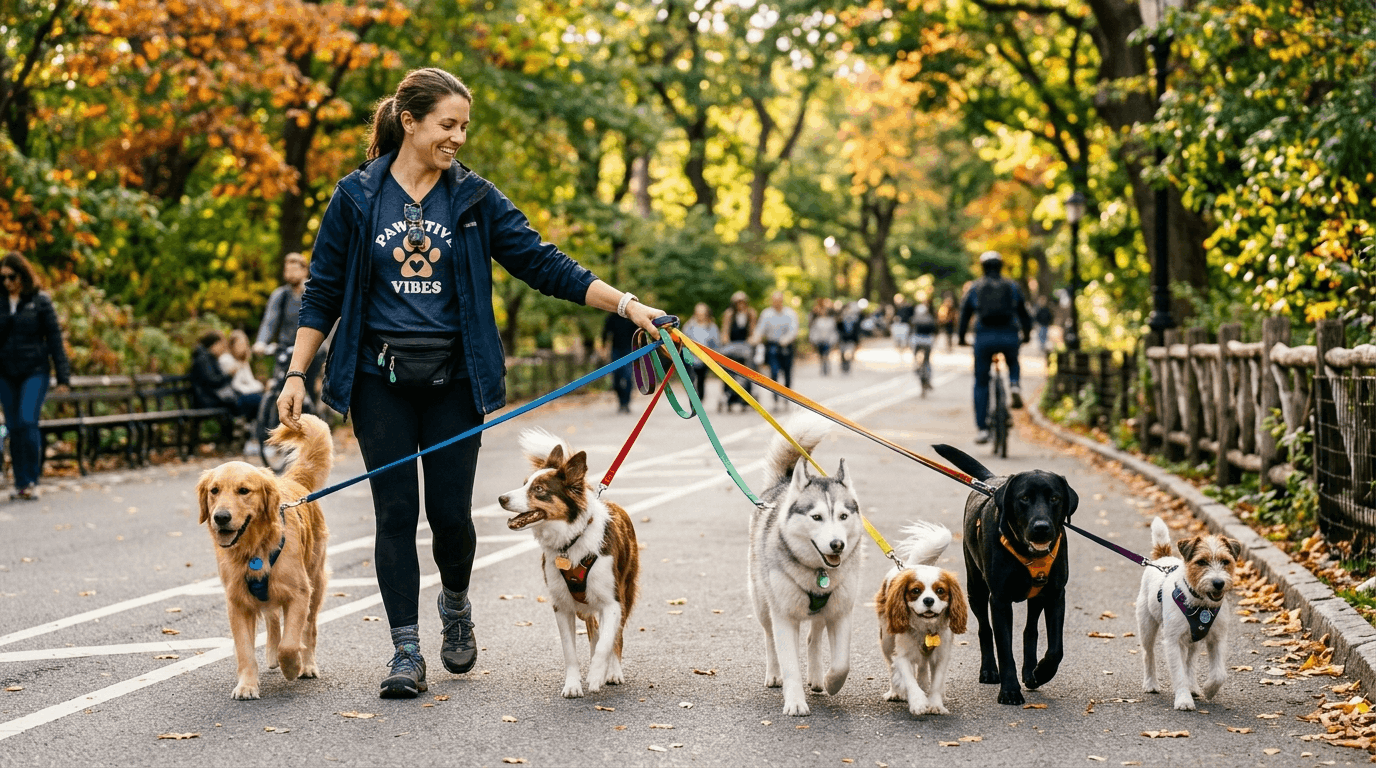
Trying to walk several dogs at the same time can feel overwhelming, especially when each dog has a different personality, energy level, and walking style. One dog may pull forward excitedly while another suddenly stops to sniff every corner. Some dogs react to distractions, while others zigzag across the sidewalk without warning. Without proper structure, even a short walk can quickly become stressful and exhausting. Fortunately, learning how to walk multiple dogs calmly is possible with the right preparation, equipment, and training approach.
Many owners assume walking several dogs simply requires stronger leash control. However, physical control alone rarely creates peaceful walks long term. Emotional balance, consistent routines, and communication matter just as much as leash handling itself.
Dogs naturally influence one another during group walks. Excitement, anxiety, pulling, and reactive behavior can spread quickly between dogs if the walk lacks structure. Consequently, owners must focus on calm leadership and balanced energy from the very beginning.
Walking multiple dogs successfully takes patience and practice. Some dogs adjust quickly, while others need gradual exposure before feeling comfortable walking together calmly.
The goal is not perfect robotic behavior. Instead, successful group walks should feel safe, manageable, and emotionally relaxed for both the dogs and the owner. Once routines improve, walking several dogs often becomes far more enjoyable and rewarding than many owners initially expect.
Why Group Walks Become Chaotic
Dogs naturally feed off each other’s energy. If one dog becomes excited, nervous, or reactive, the others often respond emotionally within seconds. This emotional chain reaction commonly creates pulling, barking, tangling leashes, or sudden lunging.
Owners trying to walk multiple dogs often struggle because the dogs lack individual leash skills first. Dogs that already pull heavily or react strongly alone usually become even harder to manage in groups.
Excitement also increases significantly when dogs walk together. Many dogs view group walks as stimulating social experiences filled with movement, smells, and distractions.
Different walking speeds create another challenge. Smaller dogs may move cautiously, while energetic dogs rush forward constantly.
Leash tangling often occurs because dogs have not learned clear walking positions. Without structure, dogs naturally weave, switch sides, and cross in front of one another repeatedly.
Owners sometimes contribute unintentionally as well. Tight leash tension, frustration, inconsistent commands, or nervous handling often increase canine excitement during walks.
Understanding why chaos develops helps owners create calmer and more realistic training plans instead of expecting immediate perfection.
Start With Individual Leash Training First
Before attempting to walk multiple dogs together, each dog should first understand basic leash manners individually. Group walks become much easier when every dog already responds calmly to leash guidance alone.
One of the most important steps to walk multiple dogs successfully involves teaching loose leash walking separately first.
Dogs should learn commands such as sit, wait, leave it, and heel individually before combining them into group routines. Basic impulse control improves safety significantly during multi-dog walks.
Owners should also identify each dog’s specific challenges beforehand. One dog may struggle with distractions, while another pulls heavily from excitement.
Training separately allows owners to build focus and communication without group overstimulation interfering with learning.
Dogs that already feel confident and calm individually often adapt more smoothly to group walking situations later.
Rushing too quickly into large group walks usually creates confusion and frustration for both dogs and owners. Gradual preparation produces far better long-term success.
Choosing the Right Equipment Matters
Walking equipment affects safety, comfort, and leash control greatly when managing multiple dogs at once.
Owners learning to walk multiple dogs should prioritize equipment that reduces tangling and improves physical comfort for both themselves and the dogs.
Front-clip harnesses often work especially well because they reduce pulling momentum gently while improving directional control. Harnesses also distribute pressure more safely than collars alone.
Standard fixed-length leashes usually provide better control than retractable leashes, which often encourage inconsistent tension and tangling.
Hands-free leash systems may help experienced owners manage calmer dogs more comfortably during longer walks. However, beginners should first master basic leash handling before relying on waist systems.
Comfortable leash grips also reduce hand strain during unexpected pulling moments.
Leash couplers allow two dogs to connect to one leash, although they generally work best only after both dogs already walk calmly together.
Proper fit matters greatly as well. Poorly fitted harnesses may cause discomfort, rubbing, or escape risks that increase stress during group walks.
Good equipment supports training, yet calm structure and communication remain even more important overall.
Teach Calm Walking Positions
Dogs walking together need predictable positions to reduce tangling and confusion. Clear structure helps dogs understand where they should move during walks.
Owners who walk multiple dogs successfully often assign each dog a consistent walking side or position.
For example, one dog may always walk on the left while another stays on the right. Predictability reduces weaving and crossing behavior significantly over time.
Short practice sessions help dogs learn positioning gradually. Owners should reward calm walking within the correct area consistently during training.
Dogs do not need strict competition-style heel positions constantly. However, they should learn how to move calmly beside the owner without crossing repeatedly.
Spacing also matters. Keeping dogs slightly separated initially often prevents overstimulation and leash tangling.
Some dogs feel calmer walking beside specific companions, while others require more distance emotionally. Observation helps owners determine the best arrangement.
Consistency and repetition gradually create smoother and more coordinated group movement.
Control Excitement Before Leaving the House
Many chaotic walks begin before the front door even opens. Dogs often become overstimulated during leash preparation, which creates emotional momentum that carries into the walk itself.
Owners trying to walk multiple dogs should focus heavily on calm preparation routines.
Dogs should remain relatively calm before leashes are attached. Jumping, spinning, barking, or frantic movement should not trigger immediate walk access.
Waiting for calmer behavior teaches emotional regulation naturally. Even brief moments of sitting quietly deserve praise and reinforcement.
Practicing simple commands indoors before leaving also improves focus. Sit, stay, or eye contact exercises help shift dogs into calmer mental states.
Owners should remain emotionally calm as well. Dogs respond strongly to human energy, tension, and body language during preparation.
Structured exits reduce chaos greatly. Releasing dogs through doors one at a time often improves control and safety immediately.
Calm beginnings usually create calmer walks overall.
How Mental Stimulation Reduces Chaos
Physical exercise alone rarely solves chaotic leash behavior completely. Dogs also need mental engagement to remain emotionally balanced during group walks.
Owners who walk multiple dogs successfully often include enrichment and training throughout the day instead of relying only on physical activity.
Puzzle toys, scent games, obedience exercises, and interactive feeding all help reduce excess excitement and impulsive behavior.
Mentally stimulated dogs usually display better focus and calmer emotional regulation during walks.
Short training sessions before walks often improve group behavior significantly because dogs enter the walk mentally engaged instead of overstimulated.
Sniffing opportunities during walks also help satisfy natural instincts while reducing frustration.
Dogs that receive balanced mental and physical stimulation typically adapt more smoothly to structured walking routines long term.
Managing Different Energy Levels
One of the biggest challenges during group walks involves balancing different energy levels and personalities.
Some owners walk multiple dogs with very different needs. A young energetic dog may want constant movement, while an older dog prefers slower and calmer pacing.
Trying to force identical walking styles on every dog often creates frustration. Consequently, flexibility becomes important.
High-energy dogs may benefit from short play sessions or training exercises before group walks begin. This helps release excess excitement constructively beforehand.
Slower dogs should not feel dragged or pressured to keep up constantly.
Owners may sometimes need separate walks temporarily while training improves. Individual attention can help each dog develop better leash habits before full group integration.
Observation matters greatly. Successful group walks often involve adjusting pace, route, and structure based on the emotional needs of all dogs involved.
Balanced energy creates smoother walks than physical control alone ever could.
Handling Distractions Calmly
Distractions become more challenging during group walks because dogs influence each other emotionally. One reactive response can quickly trigger excitement or tension throughout the entire group.
Owners learning to walk multiple dogs should practice calm environmental awareness constantly.
Spotting distractions early provides time to redirect attention before reactions escalate fully.
Treat rewards work extremely well for reinforcing calm focus during difficult moments. Rewarding attention toward the owner instead of triggers helps strengthen emotional control gradually.
Creating distance from overwhelming situations also improves success significantly.
Dogs should not rehearse uncontrolled barking, lunging, or pulling repeatedly because repeated practice strengthens those habits.
Changing direction calmly often works better than forceful leash corrections during reactive moments.
Owners should also avoid tightening leashes excessively unless necessary for safety because constant tension often increases canine stress and excitement.
Calm prevention usually produces better results than reactive correction once dogs become overstimulated.
Why Patience and Consistency Matter
Group leash skills rarely improve overnight. Dogs need repetition, emotional support, and consistent routines while learning how to walk together calmly.
Owners who walk multiple dogs successfully usually focus on gradual progress rather than immediate perfection.
Small improvements matter greatly. Several calm minutes without tangling or pulling may represent major progress during early training stages.
Consistency creates predictability, which helps dogs feel emotionally secure during walks.
Mixed expectations often create confusion. Dogs learn faster when walking rules remain stable and predictable every day.
Frustration should also remain minimal whenever possible. Dogs sense human stress quickly, and emotional tension often spreads throughout the group.
Patience helps owners remain calm and realistic while building long-term success steadily.
Every dog learns differently. Some dogs adapt quickly to group structure, while others require more time and guidance before feeling fully comfortable.
Creating Calm and Enjoyable Group Walks
Walking several dogs together does not have to feel exhausting or chaotic forever. While group walks certainly require more preparation and awareness, they often become calmer and more rewarding once structure and communication improve consistently.
Owners who walk multiple dogs successfully focus on emotional balance, mental stimulation, proper equipment, and predictable routines rather than relying only on physical strength or constant correction.
Each dog brings unique personality traits, energy levels, and emotional needs into the group dynamic. Understanding those differences helps owners guide walks more effectively and compassionately.
Calm preparation, clear walking positions, positive reinforcement, and gradual training all contribute to smoother and safer outings over time.
Most importantly, owners should remember that progress happens gradually. Small improvements build stronger habits and emotional confidence step by step.
The goal is not perfect obedience during every moment of the walk. Instead, successful group walks should feel safe, manageable, and emotionally relaxed for everyone involved.
With patience, consistency, and thoughtful leadership, even chaotic walks can eventually transform into calm daily routines that strengthen the bond between dogs and their owner.
FAQ
1. Is it hard to walk several dogs together?
It can feel challenging initially, although consistent training and structure usually improve group walks significantly.
2. Should dogs learn leash manners individually first?
Yes. Dogs generally walk together more calmly when they already understand basic leash skills separately.
3. Are harnesses better for walking multiple dogs?
Many owners prefer harnesses because they improve comfort and provide gentler control during group walks.
4. How do I stop leashes from tangling constantly?
Teaching consistent walking positions and maintaining calm structure usually reduces tangling over time.
5. Can different dog breeds walk together successfully?
Yes. Different breeds can walk together calmly when training, pacing, and emotional needs are managed properly.

