
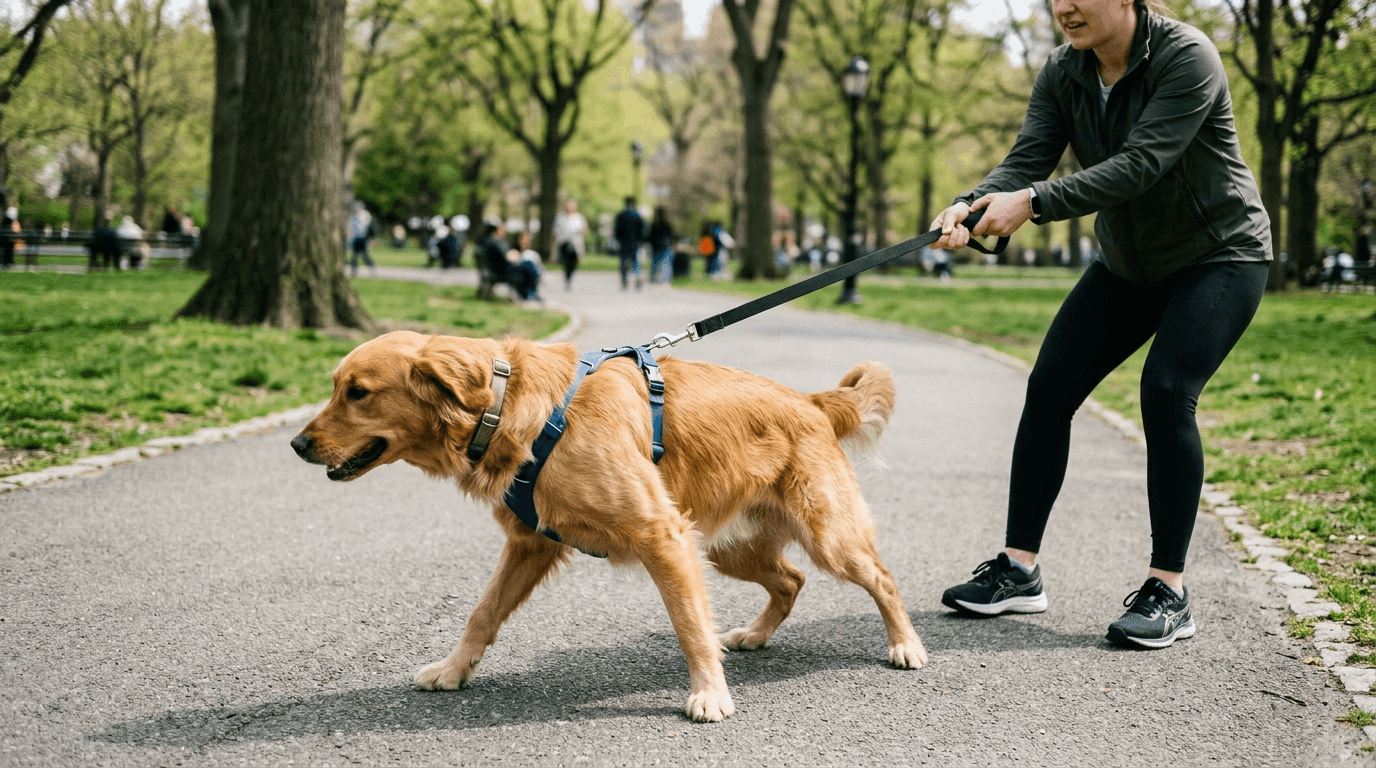
When dogs pull on the leash, it can quickly turn a simple walk into a frustrating struggle. Many owners assume their dog is being stubborn or disobedient, yet the reality is often quite different. Dogs naturally move faster than humans, and without proper guidance, they tend to follow their instincts rather than your pace. As a result, leash pulling becomes a learned behavior that continues unless it is corrected early and consistently.
In most cases, pulling starts because it works. When a dog lunges forward and reaches something interesting, it reinforces the idea that pulling gets results. Over time, this habit becomes stronger, making it harder to manage. However, with the right understanding and approach, you can teach your dog to walk calmly beside you without stress or tension.
Understanding Why Dogs Pull During Walks
To fix the problem effectively, it helps to understand why dogs pull on the leash in the first place. Dogs are naturally curious animals, and their sense of smell drives much of their behavior. When they detect a scent or spot something exciting, they instinctively move toward it. Unfortunately, the leash creates resistance, which often leads to even stronger pulling.
Additionally, excitement plays a major role. Many dogs associate walks with freedom and stimulation, so they rush ahead without thinking. Instead of walking calmly, they focus on reaching their destination as quickly as possible. This behavior is not intentional misbehavior but rather a lack of training and impulse control.
Another factor involves inconsistent training. If a dog is sometimes allowed to pull and sometimes corrected, it becomes confused about expectations. Consequently, the behavior persists because the rules are unclear. Therefore, consistency is essential when addressing leash pulling.
How Equipment Affects Leash Behavior
The tools you use can either help or worsen the situation. While collars are common, they often encourage pulling because they place pressure on the neck without redirecting movement. In contrast, a well-designed harness can provide better control and reduce strain.
Front-clip harnesses, for example, gently guide the dog back toward you when it pulls. This makes it easier to interrupt the behavior without causing discomfort. Although equipment alone will not solve the issue, it creates a safer and more manageable environment for training.
It is also important to use a standard leash rather than retractable ones during training. Retractable leashes encourage constant tension, which reinforces pulling. Instead, a fixed-length leash helps your dog learn boundaries more effectively.
Simple Techniques To Stop Pulling Fast
Although it may seem challenging at first, you can correct this behavior with simple, consistent techniques. One of the most effective methods is the “stop and stand” approach. Whenever your dog pulls, stop walking immediately. This teaches your dog that pulling does not lead to forward movement.
Once the leash relaxes, continue walking again. Over time, your dog begins to understand that calm behavior gets rewarded with progress. While this method requires patience, it produces lasting results when practiced consistently.
Another useful technique is changing direction. When your dog pulls, turn and walk the opposite way. This encourages your dog to pay attention to you rather than focusing solely on the environment. Eventually, your dog learns to follow your lead instead of pulling ahead.
Reward-based training also plays a key role. When your dog walks beside you without pulling, offer treats or praise. Positive reinforcement strengthens good behavior and makes your dog more likely to repeat it. Because of this, combining rewards with consistent correction creates a balanced training approach.
The Role Of Timing And Consistency
Timing is critical when addressing leash pulling. Corrections and rewards must happen immediately to be effective. If you delay your response, your dog may not connect the behavior with the consequence. Therefore, staying attentive during walks is essential.
Consistency matters just as much. Every walk should follow the same rules, regardless of location or distractions. If you allow pulling sometimes, your dog will continue testing boundaries. However, when expectations remain clear, progress becomes much faster.
Short training sessions often work better than long walks. Instead of focusing on distance, concentrate on quality. Even a brief walk can provide valuable training opportunities if you remain consistent and engaged.
Common Mistakes That Slow Progress
Many dog owners unintentionally reinforce pulling without realizing it. One common mistake is continuing to walk while the dog pulls. This teaches the dog that pulling works, even if it feels frustrating for you.
Another mistake is using harsh corrections. While it may seem effective in the moment, it can create fear or anxiety, which worsens behavior over time. Instead, focus on calm, controlled responses that guide your dog toward better habits.
Inconsistent cues also create confusion. If different family members use different commands or techniques, the dog struggles to understand what is expected. Therefore, everyone involved should follow the same training approach.
Building Better Walking Habits Over Time
While quick fixes can reduce pulling, long-term success requires building strong habits. Start by practicing in low-distraction environments, such as your backyard or a quiet street. This allows your dog to focus on learning without becoming overwhelmed.
Gradually introduce more distractions as your dog improves. By increasing difficulty step by step, you help your dog adapt to real-world situations. As a result, calm walking becomes a consistent behavior rather than a temporary improvement.
Mental stimulation also plays a role. Dogs that receive enough exercise and enrichment are less likely to pull out of boredom or excess energy. Therefore, combining physical activity with mental challenges creates a more balanced and responsive dog.
When To Seek Professional Help
In some cases, leash pulling may persist despite your efforts. If your dog shows extreme behavior, such as lunging or aggressive pulling, working with a professional trainer can be beneficial. A trainer can identify specific triggers and tailor a plan to address them effectively.
Additionally, certain breeds or high-energy dogs may require more structured training. Seeking guidance early can prevent the behavior from becoming deeply ingrained. While it may take time, professional support often accelerates progress significantly.
Conclusion
When dogs pull on the leash, it is usually a result of natural instincts combined with learned behavior. Although it can feel frustrating, the solution lies in consistent training, proper equipment, and clear communication. By understanding why dogs pull on the leash and applying simple techniques, you can transform your walks into calm and enjoyable experiences.
Patience remains the key to success. While progress may not happen overnight, steady effort leads to lasting results. As your dog learns to walk beside you, both of you will enjoy greater comfort, safety, and connection during every outing.
FAQ
- Why does my dog get worse at pulling in new places?
New environments increase excitement and distractions, making it harder for your dog to stay focused on training. - Can older dogs learn to walk calmly on a leash?
Yes, older dogs can learn new behaviors with consistent training and patience, even if the habit has existed for years. - Should I stop walks while training my dog?
No, but you should focus on shorter, controlled sessions that prioritize training over distance. - Are treats necessary for leash training?
Treats help reinforce good behavior, but praise and consistency also play an important role. - How long does it take to fix leash pulling?
Results vary, but many dogs show improvement within a few weeks of consistent training.

