
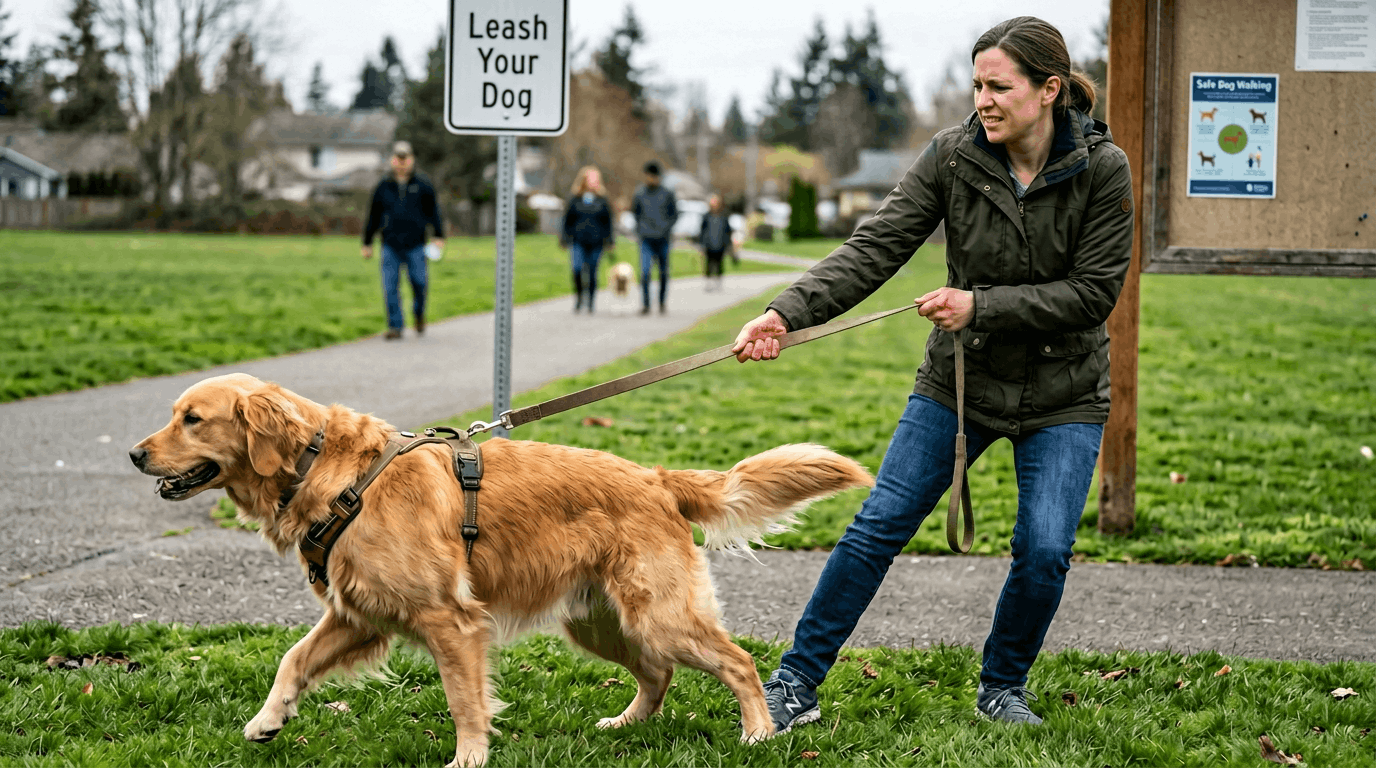
Walking your dog should feel like a relaxing and enjoyable part of your day, yet for many owners, it turns into a physical struggle. Dog pulling injuries are a common issue that often goes unnoticed until pain or discomfort appears. Whether it is wrist strain, shoulder tension, or even back pain, repeated pulling can slowly take a toll on your body. Fortunately, with the right approach and awareness, you can prevent these problems and create a safer walking experience for both you and your dog.
Most people underestimate how much force a dog can generate on a leash. Even a medium-sized dog can create sudden, strong jerks that place stress on joints and muscles. Over time, this repeated strain increases the risk of dog pulling injuries, especially if proper handling techniques are not used. In addition, poor leash habits often develop early and become more difficult to correct if left unaddressed. Therefore, understanding the root causes of pulling is the first step toward preventing long-term damage.
Why Dog Pulling Leads To Injuries
Dog pulling injuries usually happen because of constant tension combined with sudden movements. When a dog lunges or pulls forward, the force travels directly through the leash into your hand, arm, and upper body. As a result, your muscles and joints absorb that energy, which can lead to discomfort or even injury over time. While one strong pull might not seem serious, repeated incidents quickly add up.
Additionally, posture plays a significant role. Many owners unknowingly brace themselves incorrectly when their dog pulls. This creates uneven pressure on the body and increases the likelihood of strain. For example, leaning backward or gripping the leash too tightly can cause tension in the shoulders and wrists. Because of this, dog pulling injuries are often linked to both the dog’s behavior and the handler’s technique.
Another factor is unpredictability. Dogs often react suddenly to distractions such as other animals, loud noises, or unfamiliar people. These unexpected movements create sharp, jerking motions that are difficult to control. Consequently, even experienced dog owners can experience dog pulling injuries if they are not prepared for these situations.
How Proper Training Reduces Risk
One of the most effective ways to prevent dog pulling injuries is through consistent leash training. Teaching your dog to walk calmly beside you reduces tension and minimizes sudden movements. While this process requires patience, the long-term benefits are significant.
Start by setting clear expectations. Your dog should understand that pulling does not lead to forward progress. When your dog begins to pull, stop walking or gently change direction. This interrupts the behavior and encourages your dog to stay close to you. Over time, this simple technique can dramatically reduce the risk of dog pulling injuries.
Positive reinforcement also plays an important role. Reward your dog when it walks calmly without tension on the leash. This helps reinforce good behavior and makes it more likely to continue. In contrast, relying only on correction without rewards can create confusion or frustration.
Consistency is key. Every walk should follow the same rules to avoid mixed signals. When your dog understands what is expected, it becomes easier to maintain control and prevent dog pulling injuries. As a result, both signals. When your dog understands what is expected, it becomes easier to maintain control and prevent dog pulling injuries. As a result, both you and your dog benefit from a more relaxed and predictable walking experience.
Using The Right Equipment For Safety
While training is essential, the equipment you use can also impact your safety. The right tools can help distribute pressure more evenly and give you better control during walks. However, it is important to remember that equipment alone cannot eliminate dog pulling injuries without proper training.
A well-fitted harness can reduce strain on your dog’s neck while giving you more control. Front-clip harnesses, in particular, can help redirect pulling behavior and make it easier to guide your dog. At the same time, a sturdy leash with a comfortable grip can reduce pressure on your hands and wrists.
Avoid using overly long leashes in crowded or high-distraction areas. Shorter leashes provide better control and reduce the chances of sudden lunges. In addition, consider using shock-absorbing leashes, which can help reduce the impact of sudden pulls. These small adjustments can significantly lower the risk of dog pulling injuries during everyday walks.
It is also important to ensure that all equipment fits properly. Loose or poorly adjusted gear can create additional challenges and increase the risk of injury. Therefore, take the time to check your setup regularly and make adjustments as needed.
Improving Your Walking Technique
Your own movement and posture play a major role in preventing dog pulling injuries. Even with a well-trained dog, improper technique can still lead to strain. By making a few simple adjustments, you can protect your body and improve your overall walking experience.
First, maintain a relaxed grip on the leash. Holding the leash too tightly increases tension and reduces flexibility. Instead, keep your arm slightly bent and your movements fluid. This allows you to absorb minor pulls without placing excessive strain on your joints.
Next, focus on your posture. Stand upright with your shoulders relaxed and your core engaged. This balanced position helps distribute force more evenly across your body. In contrast, leaning or twisting can create unnecessary stress and increase the risk of dog pulling injuries.
Additionally, stay aware of your surroundings. Anticipating potential distractions allows you to prepare before your dog reacts. For example, if you notice another dog approaching, you can adjust your position or redirect your dog’s attention. This proactive approach reduces the likelihood of sudden pulling and helps prevent injuries.
Recognizing Early Signs Of Strain
Preventing dog pulling injuries also involves paying attention to your body. Early signs of strain often appear gradually, and ignoring them can lead to more serious problems. By recognizing these warning signals, you can take action before the issue worsens.
Common signs include soreness in the wrists, shoulders, or back after walks. You may also notice stiffness or reduced flexibility in certain areas. While these symptoms may seem minor, they often indicate that your body is under stress.
If you experience discomfort, take time to rest and recover. Stretching and strengthening exercises can also help improve resilience and reduce the risk of dog pulling injuries. In addition, consider adjusting your walking routine or technique to address the source of the problem.
Listening to your body is essential. Ignoring pain or pushing through discomfort can lead to more serious injuries over time. Therefore, prioritize your well-being and make necessary changes to protect yourself.
Creating A Safer Walking Routine
A structured walking routine can make a significant difference in preventing dog pulling injuries. When walks follow a predictable pattern, your dog is less likely to become overly excited or reactive. This creates a calmer environment and reduces the risk of sudden pulling.
Start by establishing a calm beginning. Before leaving the house, wait until your dog is relaxed. This sets the tone for the entire walk and reduces initial tension. Once outside, maintain a steady pace and avoid rushing.
Incorporate short training moments throughout the walk. These moments help reinforce good behavior and keep your dog focused. For example, pause occasionally to practice simple commands or reward calm walking. Over time, these small actions contribute to safer and more enjoyable walks.
Ending the walk calmly is just as important. Allow your dog to settle down gradually rather than transitioning immediately into high-energy activities. This reinforces a balanced routine and supports long-term improvement.
By maintaining consistency, you create an environment where dog pulling injuries are far less likely to occur.
Conclusion
Dog pulling injuries are a common but preventable problem that can affect both you and your dog. While the issue may seem frustrating at first, the solution lies in a combination of training, proper technique, and awareness. By addressing the root causes of pulling and making thoughtful adjustments, you can significantly reduce the risk of injury.
Ultimately, the goal is to create a walking experience that feels safe, controlled, and enjoyable. With patience and consistency, you can transform your daily walks into a positive routine that benefits both your physical health and your relationship with your dog. Over time, these changes not only prevent dog pulling injuries but also build trust and confidence between you and your pet.
FAQ
- What causes leash strain during walks?
Leash strain usually happens when dogs pull suddenly or consistently, placing pressure on your joints and muscles. - Can small dogs cause physical discomfort too?
Yes, even small dogs can create repeated strain, especially with frequent pulling or sudden movements. - Are harnesses better than collars for walking?
Harnesses can reduce neck pressure and improve control, making them a safer option in many cases. - How can I stop my dog from lunging?
Training, redirection, and managing triggers can help reduce lunging behavior over time. - Should I avoid walking if I feel pain?
If you feel discomfort, it is best to rest and adjust your approach to prevent further strain.

