
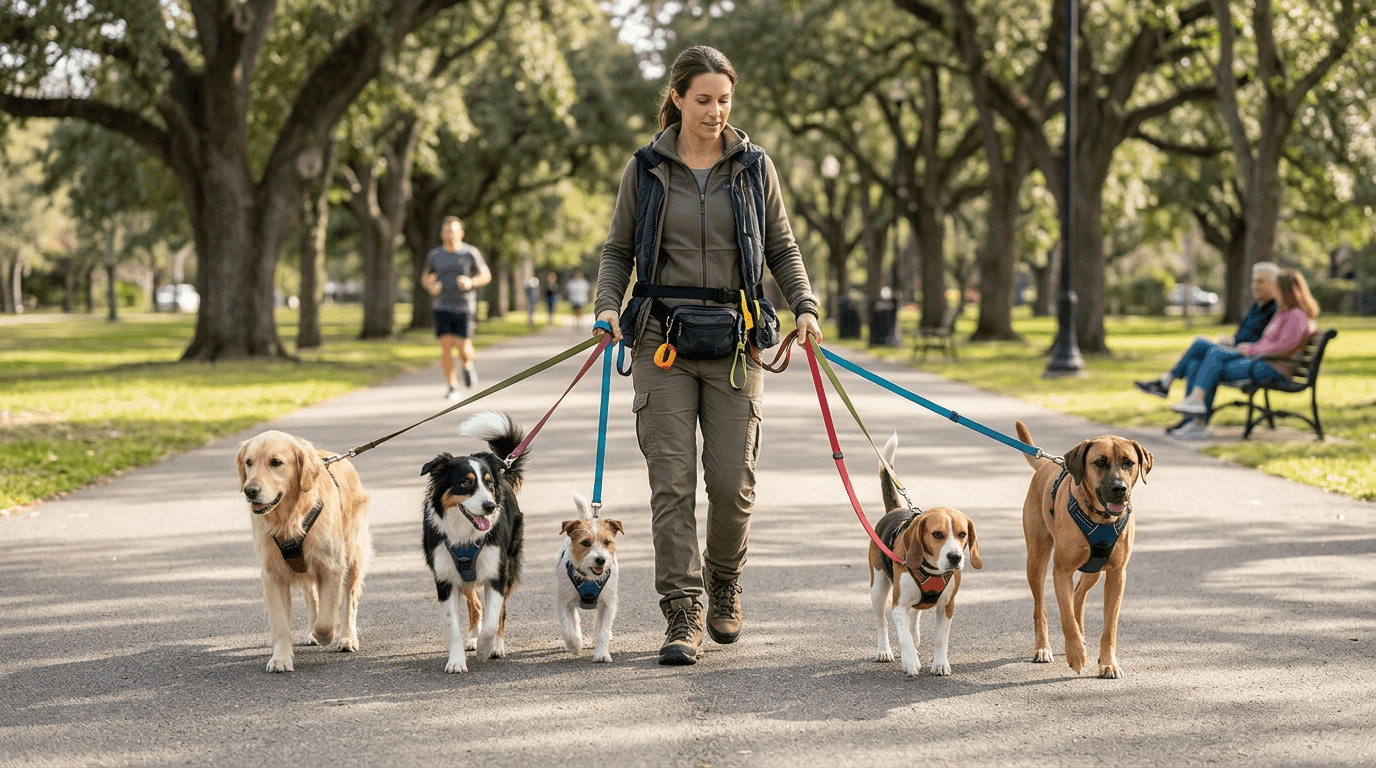
Walking more than one dog at the same time can feel overwhelming, especially when each dog has its own pace, energy level, and behavior. Walking multiple dogs safely is not just about control; it is also about protecting your body from strain and preventing unnecessary stress. Without the right approach, even a short walk can leave you feeling tense, sore, and frustrated. Fortunately, with a few smart adjustments and consistent habits, you can turn these walks into smooth, manageable experiences that benefit both you and your dogs.
Many people assume that walking multiple dogs safely requires strength alone, yet technique matters far more. When dogs pull in different directions or react suddenly, the force on your arms and shoulders increases quickly. As a result, you may experience discomfort in your wrists, back, or neck. Over time, this repeated strain can lead to more serious issues. Therefore, understanding how to manage movement and maintain balance is essential for long-term comfort.
Why Walking Multiple Dogs Can Cause Strain
Handling several dogs at once creates a unique challenge because each dog responds differently to the environment. While one dog may walk calmly, another might react to distractions or pull forward. Consequently, your body absorbs uneven force, which increases the risk of fatigue and injury. Walking multiple dogs safely becomes difficult when those forces are not controlled properly.
In addition, leash management plays a major role. When leashes cross or tangle, your movement becomes restricted. This often forces you into awkward positions that place extra pressure on your joints. Because of this, even small mistakes in coordination can lead to discomfort over time.
Another factor is mental overload. Managing multiple dogs requires constant awareness, which can create tension in your body. When you feel stressed, your posture changes, and your muscles tighten. As a result, walking multiple dogs safely becomes harder, and physical strain increases without you realizing it.
Creating A Balanced Walking Setup
The way you prepare for your walk can make a significant difference. Before stepping outside, take time to organize your setup so that everything feels controlled and balanced. Walking multiple dogs safely starts with positioning and equipment that support smooth movement.
Try to keep dogs with similar energy levels together. This helps maintain a steady pace and reduces sudden pulling. If one dog is more energetic, consider walking it separately until it learns better leash manners. While this may take extra time, it prevents excessive strain and creates a more controlled experience.
Positioning also matters. Keep dogs on specific sides and maintain consistency. When each dog understands its place, movement becomes more predictable. This reduces the chances of crossing paths or pulling in opposite directions.
Additionally, choose leashes that allow flexibility without creating slack. Too much slack can lead to tangling, while too little can increase tension. Finding the right balance helps you maintain control and supports walking multiple dogs safely without unnecessary effort.
Improving Your Technique And Movement
Your body mechanics play a crucial role in reducing strain. Even with well-behaved dogs, poor technique can lead to discomfort. Therefore, focus on how you move and hold the leashes throughout the walk.
Keep your arms relaxed and slightly bent instead of locked. This allows your body to absorb movement more naturally. At the same time, maintain an upright posture with your shoulders relaxed. When your body stays aligned, the force from the dogs distributes more evenly, which supports walking multiple dogs safely.
Another helpful strategy is to move with intention. Instead of reacting to every pull, guide your dogs with subtle direction changes. For example, if one dog starts to pull, gently adjust your path rather than resisting with force. This reduces strain and encourages better behavior over time.
Also, stay aware of your pace. Walking too quickly can increase excitement, while moving too slowly may cause restlessness. Finding a steady rhythm helps maintain calm energy and makes walking multiple dogs safely much easier.
Training Dogs To Walk Together Calmly
Training is one of the most effective ways to reduce physical strain. When dogs understand how to walk calmly, the effort required to manage them decreases significantly. Walking multiple dogs safely becomes far more natural when each dog responds to basic commands.
Start by training each dog individually. Teach them to walk without pulling and to respond to simple cues like stop, slow, and stay. Once each dog has these skills, gradually introduce them to walking together. This step-by-step approach prevents confusion and helps reinforce good behavior.
During group walks, reward calm behavior consistently. Positive reinforcement encourages dogs to stay focused and reduces unnecessary pulling. Over time, they learn that staying close to you leads to better outcomes.
If problems arise, address them early. Ignoring small issues can lead to bigger challenges later. By staying consistent and patient, you create a foundation that supports walking multiple dogs safely in any environment.
Managing Distractions And Unexpected Situations
Outdoor environments are full of distractions, from other animals to sudden noises. When walking multiple dogs, these distractions can quickly lead to tension if not handled properly. Therefore, learning to anticipate and manage these situations is essential.
Stay alert and scan your surroundings regularly. When you notice potential triggers, prepare your dogs before they react. For instance, you can adjust your position or redirect their attention with a command. This proactive approach reduces sudden pulling and supports walking multiple dogs safely.
In addition, create space when needed. If a situation feels overwhelming, it is better to step aside and regain control. This prevents escalation and protects your body from sudden strain.
Calm energy also plays a role. Dogs often mirror your emotions, so staying relaxed helps them remain steady. By maintaining control and awareness, you can handle unexpected situations with confidence.
Building Strength And Preventing Fatigue
While technique is important, physical strength also supports your ability to handle multiple dogs comfortably. Strengthening key muscle groups can reduce fatigue and help prevent injury over time. Walking multiple dogs safely becomes easier when your body is prepared for the demands of the activity.
Focus on exercises that improve core stability and arm strength. A strong core helps maintain balance, while stronger arms allow you to manage leash tension more effectively. Even simple routines can make a noticeable difference in how your body feels during walks.
At the same time, listen to your limits. If you feel fatigued, take breaks or shorten your walks. Pushing through discomfort can lead to long-term issues. Instead, build endurance gradually and allow your body to adapt.
Stretching before and after walks can also help. This keeps your muscles flexible and reduces stiffness. Over time, these habits support walking multiple dogs safely without unnecessary strain.
Establishing A Consistent Routine
Consistency creates predictability, which reduces both physical and mental strain. When your dogs know what to expect, they are less likely to act unpredictably. As a result, walking multiple dogs safely becomes a smoother and more enjoyable process.
Start each walk with a calm routine. Wait until your dogs are relaxed before heading out. This sets a steady tone and prevents excessive excitement. During the walk, maintain a consistent pace and structure.
Ending the walk calmly is equally important. Allow your dogs to settle before transitioning to other activities. This reinforces balanced behavior and supports long-term improvement.
Over time, consistency builds habits that make walking multiple dogs safely feel natural. What once felt challenging gradually becomes second nature.
Conclusion
Walking multiple dogs safely is not about controlling every movement with force. Instead, it is about creating balance, structure, and communication that reduces strain and improves the overall experience. By focusing on proper technique, consistent training, and thoughtful preparation, you can transform even the most chaotic walks into calm and manageable outings.
Although the process takes time, every small improvement adds up. With patience and consistency, you will notice less tension in your body and better behavior from your dogs. Eventually, walking multiple dogs safely becomes something you can enjoy rather than endure, allowing you to build a stronger connection with each of your dogs.
FAQ
- How many dogs can one person walk comfortably?
This depends on your strength, experience, and the dogs’ behavior. Start with fewer dogs and increase gradually. - What is the best way to prevent leash tangling?
Keep consistent positioning and avoid giving too much slack in the leashes to maintain better control. - Should I train dogs together or separately first?
It is best to train each dog individually before walking them together for better results. - How can I handle a sudden distraction during walks?
Stay calm, create distance, and redirect your dogs’ attention using simple commands. - Is it okay to stop and reset during a walk?
Yes, pausing helps regain control and prevents strain, making the walk safer and more manageable.

