
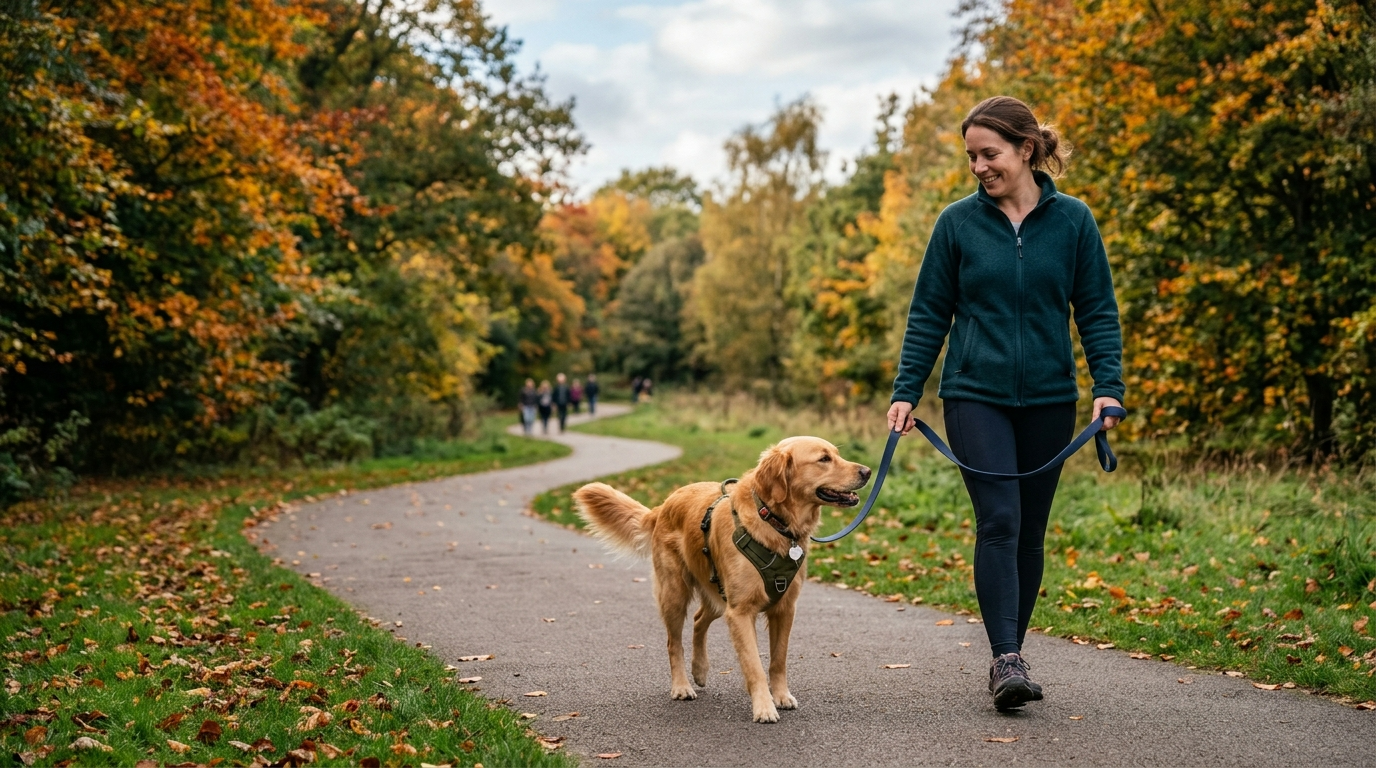
Walking your dog should feel like a peaceful part of your day, yet for many owners, it becomes a stressful routine filled with pulling, tension, and frustration. Calm leash walking is not just a training goal; it is a complete shift in how you and your dog experience the world together. When your dog learns to walk calmly beside you, everything changes, from your physical comfort to your emotional connection.
At its core, calm leash walking creates balance. Instead of constant pulling and reacting, your dog moves with you, not against you. This simple shift reduces stress, improves safety, and makes every walk more enjoyable. While it may seem like a small adjustment, the impact reaches far beyond the leash.
How Calm Walking Improves Daily Life
Many dog owners focus only on stopping pulling, yet the benefits of calm leash walking go much deeper. When your dog walks calmly, your body feels less strain. There is less tension on your arms, shoulders, and back, which makes longer walks more comfortable. As a result, you begin to enjoy walking again rather than dreading it.
In addition, calm leash walking improves your dog’s mental state. Dogs that move calmly are less reactive and more focused. Instead of being overwhelmed by every distraction, they learn to stay connected to you. This creates a more relaxed experience for both of you.
Furthermore, daily routines become smoother. Getting out the door feels easier, transitions happen more naturally, and your dog becomes more predictable. Over time, this consistency builds confidence and reduces anxiety.
The Connection Between Calmness And Control
Control does not come from force; it comes from clarity and communication. Calm leash walking teaches your dog what is expected without creating tension or fear. When your dog understands how to behave, control becomes effortless rather than forced.
This connection is built through repetition and consistency. Each calm step reinforces the behavior you want to see. Gradually, your dog begins to choose calm movement because it feels natural and rewarding.
At the same time, your role becomes clearer. Instead of reacting to your dog’s behavior, you guide it. This shift in dynamic strengthens trust and makes communication more effective. As a result, calm leash walking becomes a shared experience rather than a struggle.
Why Pulling Disrupts The Entire Experience
Pulling may seem like a simple issue, but it affects every part of the walk. When your dog pulls, tension builds immediately. This tension travels through the leash and into your body, creating discomfort and stress. Over time, this can lead to fatigue and even injury.
In addition, pulling increases excitement. The faster your dog moves, the more stimulated it becomes. This creates a cycle where excitement leads to pulling, and pulling leads to more excitement. Breaking this cycle is essential for achieving calm leash walking.
Another problem is unpredictability. A pulling dog is more likely to lunge at distractions or react suddenly. This makes walks feel chaotic and difficult to manage. By focusing on calm leash walking, you remove this unpredictability and create a more controlled environment.
Building Better Habits Through Consistency
Consistency is the foundation of calm leash walking. Dogs learn through repetition, so every walk becomes an opportunity to reinforce good behavior. When your responses remain the same, your dog quickly understands what is expected.
Start by setting clear rules. Pulling should never lead to forward movement. When your dog pulls, stop or change direction. This teaches your dog that calm behavior is the only way to move forward.
At the same time, reward calm walking. Positive reinforcement helps your dog associate good behavior with positive outcomes. Over time, this makes calm leash walking the preferred choice.
Although progress may feel slow at first, consistency creates lasting results. Each small improvement builds toward a more balanced and enjoyable walking experience.
The Emotional Benefits For You And Your Dog
Beyond physical comfort, calm leash walking has a strong emotional impact. When walks are stressful, both you and your dog can feel tension and frustration. This affects your overall relationship and makes daily routines less enjoyable.
However, when walks become calm, the emotional tone shifts completely. You feel more relaxed, and your dog becomes more confident. This creates a positive cycle where calm energy reinforces calm behavior.
In addition, calm leash walking strengthens trust. Your dog learns to rely on your guidance, while you gain confidence in your ability to manage situations. This mutual understanding deepens your bond and improves communication.
Over time, this emotional connection extends beyond walks. Your dog becomes more responsive in other situations, and your overall relationship becomes more balanced.
How Calm Walking Improves Social Behavior
Dogs that practice calm leash walking tend to behave better around others. When your dog is not pulling or reacting, it becomes easier to navigate social situations. Encounters with other dogs, people, and new environments feel more controlled.
This improved behavior reduces stress for everyone involved. You can approach situations with confidence, knowing that your dog is less likely to react unpredictably. As a result, social experiences become more enjoyable rather than overwhelming.
In addition, calm leash walking helps your dog develop better focus. Instead of being distracted by every stimulus, your dog learns to stay connected to you. This focus makes it easier to guide behavior in different settings.
Over time, these improvements create a well-rounded dog that can handle a variety of environments with ease.
Turning Walks Into A Shared Experience
When pulling is no longer an issue, walks become something you share rather than endure. Calm leash walking allows you to enjoy the moment, notice your surroundings, and connect with your dog.
This shared experience creates a sense of partnership. Your dog is not just moving independently; it is moving with you. This cooperation strengthens your relationship and makes walks more meaningful.
In addition, you gain more flexibility. You can explore new routes, spend more time outside, and enjoy different environments without worrying about control. This freedom enhances both your lifestyle and your dog’s well-being.
By focusing on calm leash walking, you transform walks into a positive and rewarding part of your day.
Why Patience Leads To Lasting Results
Training for calm leash walking requires patience, but the results are worth the effort. Quick fixes may offer temporary improvement, yet lasting change comes from consistent practice and clear communication.
Each dog learns at its own pace. Some may improve quickly, while others need more time. Regardless of the timeline, steady progress is what matters most. By staying patient, you create an environment where learning can happen naturally.
In addition, patience helps you remain calm. When you approach training with a relaxed mindset, your dog is more likely to respond positively. This reinforces the calm behavior you want to see.
Over time, patience turns effort into habit. What once required focus becomes automatic, and calm leash walking becomes your new normal.
Conclusion
Calm leash walking is more than a training goal; it is a transformation that improves every aspect of your daily routine. From physical comfort to emotional connection, the benefits are both immediate and long-lasting. By focusing on consistency, communication, and patience, you create a walking experience that feels balanced and enjoyable.
Although the journey requires effort, the rewards are undeniable. Walks become calmer, your dog becomes more responsive, and your relationship grows stronger. In the end, calm leash walking changes everything, turning a simple activity into a meaningful and rewarding experience for both you and your dog.
FAQ
- How long does it take to improve leash behavior?
Most dogs show progress within a few weeks, although consistent training is needed for lasting results. - What should I do if my dog pulls constantly?
Stop moving or change direction when pulling happens, and reward calm behavior to reinforce better habits. - Can older dogs learn to walk calmly?
Yes, dogs of any age can improve with patience, consistency, and proper training techniques. - Why does my dog react to other dogs on walks?
Reactivity often comes from excitement or fear, which can be managed through gradual exposure and training. - Is calm walking better than strict control methods?
Yes, calm walking focuses on balance and communication, which creates more lasting and positive results.

