
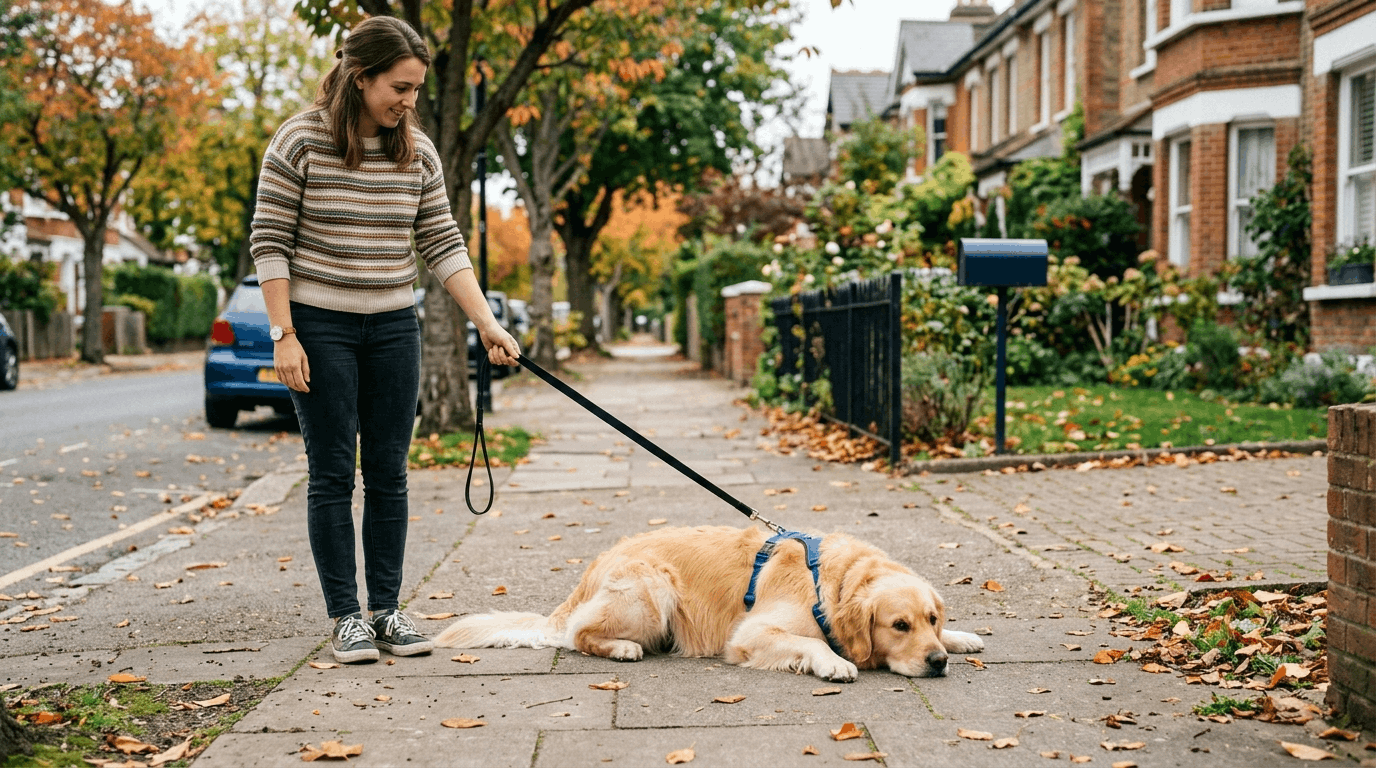
When your dog suddenly stops walking, refuses to move, or resists going outside, it can feel confusing and frustrating. Dog walking refusal is more common than many owners realize, and it often signals something deeper than simple stubbornness. While it may seem like a minor issue at first, ignoring it can affect your dog’s physical health, mental well-being, and overall quality of life. However, once you understand the reasons behind this behavior, you can begin to address it in a way that improves your dog’s daily experience.
Dogs rely on routine, movement, and exploration to stay balanced. When dog walking refusal becomes part of that routine, it disrupts more than just exercise. It limits stimulation, reduces confidence, and can even increase anxiety over time. Therefore, addressing the issue early creates a positive ripple effect that benefits every aspect of your dog’s life.
Understanding Why Dogs Refuse To Walk
Before you can solve dog walking refusal, it is important to understand what causes it. Dogs rarely refuse to walk without a reason. In many cases, the behavior stems from fear, discomfort, or confusion. For example, loud noises, unfamiliar environments, or past negative experiences can make your dog hesitant to move forward.
In addition, physical discomfort can play a role. If your dog feels pain while walking, it may stop to avoid further discomfort. This is especially common in older dogs or those with joint issues. Therefore, observing your dog’s body language is essential when dealing with dog walking refusal.
Another common cause is lack of confidence. Dogs that feel unsure about their surroundings may freeze or resist movement. Instead of pushing forward, they stay in place where they feel safer. Understanding this emotional response helps you approach the problem with patience rather than frustration.
How Refusal Impacts Physical Health
Regular walks are essential for maintaining your dog’s physical health. When dog walking refusal limits activity, it can lead to weight gain, reduced muscle strength, and lower overall fitness. Over time, these changes affect your dog’s energy levels and mobility.
In addition, lack of movement can contribute to stiffness and joint problems. Dogs need consistent activity to keep their bodies functioning properly. Without it, even simple movements can become more difficult.
Moreover, reduced exercise often leads to excess energy at home. This can result in unwanted behaviors such as chewing, barking, or restlessness. By addressing dog walking refusal, you help restore balance and support your dog’s physical well-being.
The Mental And Emotional Effects Of Avoidance
Walking is not just about physical exercise; it is also a major source of mental stimulation. When dog walking refusal becomes a habit, your dog misses out on important opportunities to explore and engage with the environment.
This lack of stimulation can lead to boredom and anxiety. Dogs that do not experience regular walks may become more reactive or withdrawn. In contrast, dogs that walk regularly tend to feel more relaxed and confident.
In addition, overcoming dog walking refusal builds trust. When you guide your dog through challenging situations calmly, it learns to rely on you. This strengthens your bond and improves communication.
By addressing the emotional side of the issue, you create a more balanced and confident dog.
Building Confidence Through Positive Experiences
One of the most effective ways to overcome dog walking refusal is by building confidence gradually. Instead of forcing your dog to walk, create positive experiences that encourage movement. Start with short distances in a calm environment and reward progress.
For example, walk a few steps and offer praise or a treat. This helps your dog associate walking with positive outcomes. Over time, these small successes build confidence and reduce hesitation.
Consistency is key. Repeating this process daily helps your dog develop new habits. As confidence grows, dog walking refusal becomes less frequent and eventually disappears.
In addition, keep your approach calm and patient. Dogs respond best to steady guidance rather than pressure. By creating a supportive environment, you help your dog feel safe and motivated to move forward.
Creating A Routine That Encourages Movement
Structure plays an important role in solving dog walking refusal. Dogs feel more secure when they know what to expect. Therefore, establishing a consistent walking routine can make a significant difference.
Start by walking at the same time each day. This predictability helps your dog prepare mentally for the activity. In addition, use the same starting point and route initially to create familiarity.
Before leaving the house, ensure your dog is calm. If your dog feels anxious or overly excited, pause and allow it to settle. This sets a balanced tone for the walk.
Over time, this routine helps reduce uncertainty and supports steady progress. By maintaining consistency, you make it easier to overcome dog walking refusal and create a positive habit.
Identifying And Managing Triggers
Triggers often play a major role in dog walking refusal. These can include loud noises, busy streets, or unfamiliar environments. Identifying these triggers allows you to manage them more effectively.
For example, if your dog is sensitive to noise, choose quieter routes for your walks. This reduces stress and helps your dog feel more comfortable. Gradually, you can introduce new environments as confidence improves.
In addition, watch for early signs of discomfort. If your dog begins to hesitate or show tension, pause and provide reassurance. Acting early prevents the situation from escalating.
By managing triggers carefully, you create a more controlled environment that supports progress and reduces dog walking refusal.
The Role Of Patience And Consistency
Solving dog walking refusal takes time, and progress may not always feel immediate. However, patience and consistency are essential for lasting change. Each small improvement brings your dog closer to a confident walking routine.
Avoid forcing your dog to move. This can increase fear and make the problem worse. Instead, focus on gradual progress and positive reinforcement.
Celebrate small victories, such as a few extra steps or reduced hesitation. These moments indicate that your approach is working. Over time, these improvements add up to meaningful change.
By staying consistent, you create a supportive environment where your dog can learn and grow.
Strengthening Your Bond Through Walking
Addressing dog walking refusal does more than improve behavior; it strengthens your relationship with your dog. Walking together becomes a shared experience that builds trust and connection.
As your dog becomes more confident, it begins to rely on your guidance. This mutual understanding improves communication and creates a deeper bond.
In addition, walking provides opportunities for positive interaction. Spending time together in a calm and structured way reinforces your relationship and enhances your dog’s overall happiness.
By overcoming dog walking refusal, you create a routine that benefits both you and your dog.
Conclusion
Dog walking refusal may seem like a simple challenge, but its impact reaches far beyond the walk itself. From physical health to emotional well-being, this behavior affects multiple aspects of your dog’s life. By understanding the causes and addressing them with patience and consistency, you can create meaningful change.
Through gradual exposure, positive reinforcement, and structured routines, your dog learns to feel confident and comfortable during walks. Over time, what once felt like a struggle becomes a rewarding and enjoyable experience. Fixing dog walking refusal not only improves your dog’s life but also strengthens your connection and enhances your daily routine.
FAQ
- Why does my dog suddenly stop walking?
Dogs may stop due to fear, discomfort, or unfamiliar environments that make them feel uncertain. - Can health issues cause walking problems?
Yes, pain or physical discomfort can lead to hesitation or refusal to walk. - How long does it take to fix this behavior?
Progress varies, but consistent training often shows results within a few weeks. - Should I force my dog to walk?
No, forcing can increase fear. It is better to encourage movement through positive experiences. - What is the best way to build walking confidence?
Start with short, calm walks and reward progress to create positive associations.

