
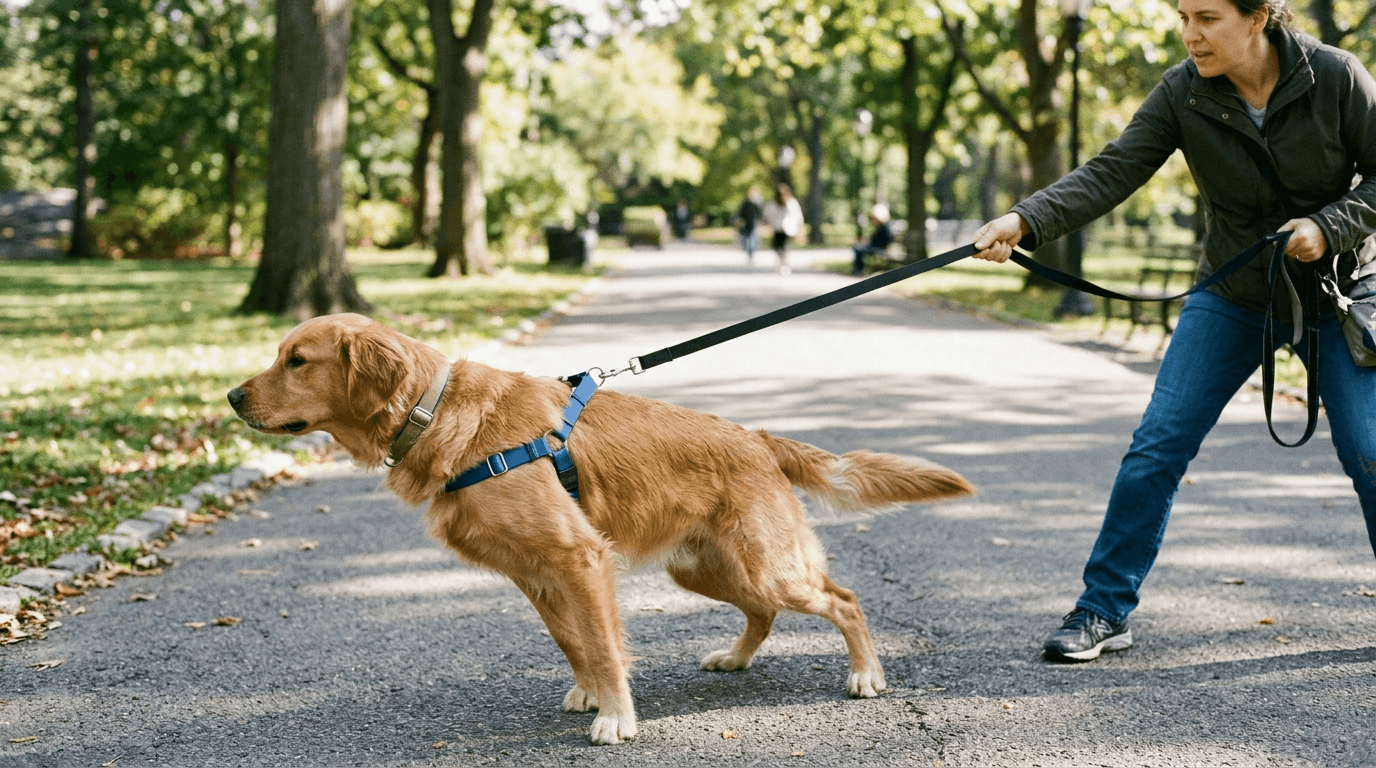
Many dog owners assume leash pulling happens because their dogs have too much physical energy. While exercise certainly matters, physical activity alone does not always solve the problem. Some dogs still pull intensely even after long walks or active play sessions. This often happens because the real issue involves mental stimulation rather than physical exhaustion alone. Understanding how the brain affects leash pulling behavior can completely change the way owners approach training and daily walks.
Dogs naturally experience the world through scent, curiosity, exploration, and problem-solving. When those instincts remain under-stimulated, frustration and excess mental energy often appear through pulling, lunging, pacing, or overexcitement outdoors.
Mental stimulation helps dogs feel calmer, more balanced, and more emotionally regulated. Consequently, mentally satisfied dogs usually focus better during walks and respond more calmly to distractions.
Leash pulling rarely comes from stubbornness alone. In many cases, dogs pull because they feel overstimulated, under-stimulated, anxious, or unable to process the environment calmly. Physical movement without mental engagement sometimes increases excitement rather than improving behavior.
Creating calmer walks requires more than simply tiring a dog physically. Owners must also provide opportunities for dogs to think, sniff, learn, and process information naturally. Once mental needs are addressed properly, leash manners often improve much faster and more naturally.
Why Dogs Pull During Walks
Dogs pull for many different reasons, yet most causes involve emotional excitement or lack of impulse control rather than intentional disobedience.
Leash pulling behavior often develops because dogs move faster than humans naturally. Outdoor environments contain exciting smells, movement, sounds, and visual stimulation that encourage dogs to rush forward impulsively.
If pulling helps dogs reach interesting things faster, the behavior becomes self-rewarding. Consequently, many dogs repeat the habit automatically during every walk.
Mental overstimulation also plays a major role. Dogs surrounded by intense environmental input sometimes lose focus completely because their brains become overloaded with excitement.
Under-stimulation contributes too. Dogs lacking mental enrichment at home may treat walks as their only opportunity for stimulation and exploration. As a result, they become excessively excited once outdoors.
Anxiety and nervousness may also trigger pulling. Some dogs rush ahead because they feel uncertain or stressed in certain environments.
Training problems often appear when owners focus only on physical control without addressing emotional and cognitive needs underneath the behavior.
Understanding the emotional reasons behind pulling helps owners create more effective and compassionate solutions long term.
The Connection Between Mental Stimulation and Behavior
Mental stimulation affects canine behavior far more than many owners realize. Dogs that engage their brains regularly often display calmer, more balanced behavior both indoors and outdoors.
Leash pulling behavior frequently improves once dogs receive enough cognitive engagement throughout the day. Mental activity helps reduce frustration, impulsiveness, and overstimulation naturally.
Problem-solving exercises challenge the brain in productive ways. Dogs that use mental energy through training, scent work, puzzles, and interactive games often feel more emotionally satisfied afterward.
Mental enrichment also increases focus. Dogs practicing concentration regularly become better at checking in with their owners during walks instead of reacting impulsively to every distraction.
Confidence improves as well. Dogs that solve problems and learn new skills often become emotionally more resilient and less reactive outdoors.
Many owners mistakenly rely only on physical exercise. However, endless physical activity sometimes creates fitter dogs with even more energy rather than calmer behavior.
Balanced mental enrichment often tires dogs more effectively because cognitive effort requires emotional regulation and concentration.
Dogs need opportunities to think just as much as opportunities to run.
How Scent Work Reduces Pulling
Dogs naturally experience the world through scent first. Sniffing provides enormous mental stimulation because canine noses process information at extraordinary levels.
Allowing controlled sniffing opportunities during walks can significantly improve leash pulling behavior because dogs feel mentally fulfilled instead of frustrated.
Many owners unintentionally rush dogs through walks without allowing proper scent exploration. Consequently, dogs pull harder trying to reach smells and investigate the environment independently.
Sniff walks work differently from exercise-focused walks. Instead of moving quickly, dogs receive time to explore scents calmly while maintaining loose leash behavior.
Scent games at home also help reduce excitement levels before walks. Hiding treats, using snuffle mats, or creating scent trails encourages natural problem-solving and mental engagement.
Nose work builds focus and emotional confidence as well. Dogs engaged mentally through scent activities often approach walks with calmer energy afterward.
Structured sniffing satisfies instinctive needs that physical exercise alone cannot fully replace.
Training Sessions Create Better Focus
Short daily training sessions improve leash manners because they strengthen communication and concentration gradually over time.
Leash pulling behavior often decreases when dogs practice focus-based exercises consistently. Commands such as sit, stay, watch me, leave it, and touch all improve impulse control and owner engagement.
Training challenges the brain while reinforcing calm behavior patterns. Consequently, mentally engaged dogs usually respond more effectively during walks.
Short sessions work best for most dogs. Five to ten minutes of focused practice several times daily often produces better results than long exhausting drills.
Positive reinforcement strengthens emotional confidence during training. Dogs learn faster when they associate calm behavior and focus with rewards and encouragement.
Training indoors first also helps dogs succeed before facing outdoor distractions.
Consistency matters greatly. Daily mental practice creates stronger habits than occasional intense sessions followed by inconsistency.
Dogs that regularly practice attention exercises usually become more responsive during walks because they understand how to reconnect with their owners calmly.
Puzzle Toys and Interactive Feeding Help Calm Dogs
Feeding routines provide excellent opportunities for mental stimulation. Dogs naturally enjoy problem-solving around food, which means interactive feeding methods often reduce excess excitement and frustration significantly.
Leash pulling behavior sometimes improves when dogs receive cognitive challenges before walks instead of eating passively from bowls.
Puzzle feeders encourage dogs to think, manipulate objects, and solve problems to access food gradually. This process creates mental fatigue while slowing down eating speed.
Snuffle mats also provide valuable enrichment because dogs use scent and focus to locate hidden food pieces naturally.
Frozen enrichment toys, treat-dispensing balls, and interactive puzzles all help satisfy mental needs indoors.
Dogs that work for their food often feel calmer afterward because problem-solving creates emotional satisfaction and cognitive engagement.
Interactive feeding also helps reduce boredom and restlessness throughout the day, especially for high-energy breeds.
Mental exercise through food enrichment often creates more balanced behavior overall, including improved focus during walks.
Why Overstimulation Makes Pulling Worse
Many owners unintentionally create more leash pulling behavior by overstimulating their dogs constantly without teaching calmness and emotional regulation.
Busy dog parks, nonstop high-energy play, chaotic environments, and excessive excitement may overload some dogs mentally. As a result, they struggle to focus or self-regulate during walks.
Overstimulated dogs often appear frantic, reactive, or hyperactive rather than relaxed and attentive.
Mental stimulation should encourage calm problem-solving instead of nonstop adrenaline and excitement.
Structured enrichment activities such as training, scent work, and controlled play often produce better emotional balance than chaotic activity alone.
Calmness itself should also receive rewards and reinforcement regularly. Dogs need opportunities to practice relaxing and settling, not just constant stimulation.
Balanced routines help dogs transition smoothly between activity and rest throughout the day.
Emotional regulation becomes much easier once dogs learn how to process stimulation calmly instead of reacting impulsively to everything around them.
The Importance of Pre-Walk Mental Activities
Many dogs begin pulling before leaving the house because excitement levels become too intense during walk preparation.
Mental exercises before walks often reduce leash pulling behavior significantly because they shift dogs into calmer and more focused emotional states.
Simple obedience drills, puzzle toys, or short scent games before leaving the house can help release nervous energy constructively.
Practicing commands such as sit, stay, and eye contact during leash preparation teaches dogs that calm behavior leads to walks starting successfully.
Owners should also avoid rewarding frantic excitement unintentionally. Waiting calmly before opening doors or attaching the leash encourages better emotional control.
Some dogs benefit greatly from five minutes of mental engagement before stepping outside because it helps lower impulsive energy levels.
Starting walks calmly often determines how the rest of the outing unfolds emotionally.
How Confidence Affects Leash Manners
Not all leash pulling behavior comes from excitement alone. Some dogs pull because they feel nervous, insecure, or overwhelmed outdoors.
Mental stimulation helps build confidence because dogs learn problem-solving skills and emotional resilience gradually through successful experiences.
Confident dogs often process environmental stimuli more calmly than insecure dogs. Consequently, they pull less frantically when facing unfamiliar situations.
Training games, scent work, and controlled socialization all help nervous dogs feel more emotionally capable.
Positive reinforcement remains especially important for fearful dogs because punishment may increase anxiety and worsen pulling behaviors.
Mental enrichment teaches dogs how to think through situations calmly instead of reacting automatically through panic or excitement.
Owners should also remain emotionally calm themselves because dogs respond strongly to human tension and frustration during walks.
Confidence-building takes time, yet mentally enriched dogs often become noticeably calmer and more adaptable long term.
Creating Balanced Daily Routines
Mental stimulation works best when incorporated consistently into everyday routines rather than used occasionally as a quick fix.
Leash pulling behavior usually improves gradually when dogs experience balanced routines involving physical activity, mental enrichment, training, and rest.
Morning scent games, short training sessions, puzzle feeders, and structured walks all contribute to emotional stability throughout the day.
Dogs thrive on predictability because routines reduce stress and improve emotional security naturally.
Owners should also balance stimulation with proper rest periods. Mentally overloaded dogs sometimes become more reactive instead of calmer.
Different dogs require different enrichment styles depending on breed, personality, and energy level. Working breeds often need more cognitive engagement than lower-energy companion breeds.
Observation helps owners adjust routines effectively. Restlessness, excessive pulling, barking, or inability to settle may signal unmet mental needs.
Small daily improvements often create major long-term behavioral changes over time.
Why Patience Matters During Training
Leash habits rarely change overnight. Dogs need repetition, consistency, and emotional support while learning calmer walking behavior.
Mental stimulation improves leash pulling behavior gradually because dogs slowly develop better focus, impulse control, and emotional regulation through repeated experiences.
Owners should celebrate small progress instead of expecting instant perfection. Several calm walking steps may represent meaningful improvement for reactive or overexcited dogs.
Frustration and harsh corrections often slow progress because stressed dogs struggle to learn effectively.
Positive reinforcement and calm guidance create stronger communication while preserving trust between owner and dog.
Every dog learns differently depending on age, temperament, history, and confidence level. Patience helps owners remain realistic while building long-term success gradually.
The goal is not robotic obedience. Instead, owners should focus on creating calmer, safer, and more enjoyable walking experiences overall.
Building Calmer Walks Through Mental Enrichment
Many leash problems begin long before the walk itself starts. Dogs that lack mental stimulation often carry excess excitement, frustration, or nervous energy into outdoor environments, which quickly appears through pulling and loss of focus.
Understanding the relationship between mental enrichment and leash pulling behavior helps owners approach training more effectively and compassionately. Dogs need opportunities to think, explore, sniff, and problem-solve regularly in order to feel emotionally balanced.
Physical exercise remains important, yet cognitive engagement often creates deeper and longer-lasting calmness. Scent games, puzzle toys, training exercises, interactive feeding, and confidence-building activities all help dogs regulate themselves more effectively.
Owners should remember that calmer walks develop gradually through consistency and emotional support rather than force or punishment.
Dogs thrive when their mental and physical needs work together in balance. Once those needs are met consistently, many dogs naturally become more focused, relaxed, and responsive during daily walks.
Ultimately, mental stimulation does far more than entertain dogs. It creates healthier emotional balance, stronger communication, and calmer behavior that improves life both inside and outside the home.
FAQ
1. Can mental stimulation really reduce pulling on walks?
Yes. Mental enrichment improves focus, emotional balance, and impulse control, which often reduces pulling behavior naturally.
2. What mental activities help dogs most before walks?
Scent games, puzzle feeders, short training sessions, and interactive toys often help dogs feel calmer beforehand.
3. Why does my dog still pull after exercise?
Physical exercise alone may not satisfy mental needs, so dogs sometimes remain overstimulated or frustrated afterward.
4. Are sniff walks good for leash training?
Yes. Controlled sniffing provides valuable mental stimulation and helps many dogs relax during walks.
5. How long does it take to improve leash manners?
Progress depends on consistency, the dog’s personality, and training habits, although gradual improvement is common over time.

