
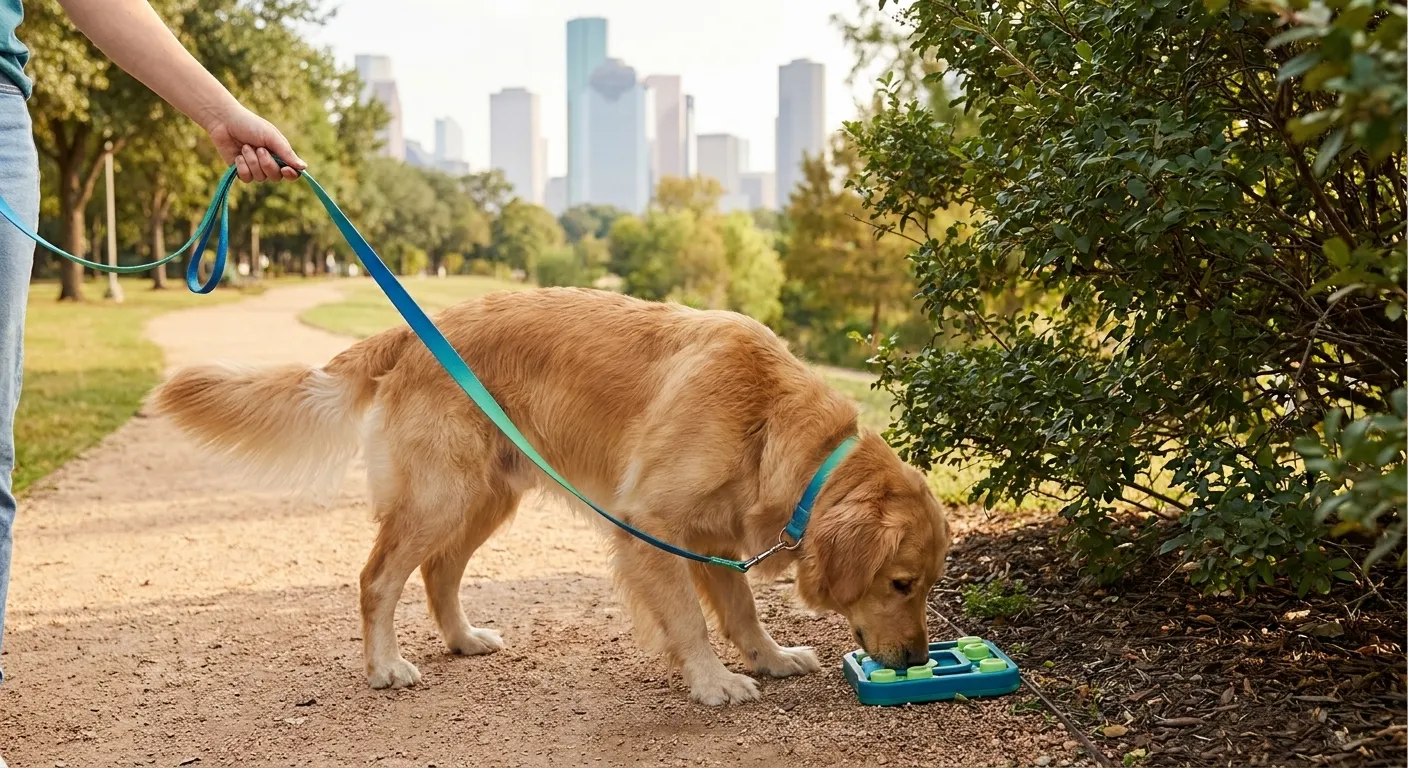
Are your daily dog walks feeling a little…routine? For many tech-savvy dog owners like Ava, who juggles a demanding marketing career and a high-energy Golden Retriever like Max, walks are more than just potty breaks—they’re opportunities for connection and growth. If you’re looking to transform your strolls into brain-boosting adventures, incorporating mental enrichment dog walks is your next step. This approach doesn’t just tire your dog physically; it engages their mind, leading to a happier, calmer, and more fulfilled companion.
Why Mental Enrichment Matters on Walks
Just as humans need mental stimulation, dogs thrive when their brains are put to work. A physically tired dog is good, but a mentally tired dog is often even better behaved and more content. For breeds like Max, who are intelligent and active, a lack of mental engagement can lead to boredom, destructive behaviors, or even reactivity. Integrating mental enrichment into your dog’s routine walks can significantly improve their overall well-being, strengthen your bond, and make every outing an exciting learning experience. Furthermore, these enriched experiences can help prevent common behavioral challenges by providing an outlet for natural canine instincts.
Simple Ways to Add Brain Games to Your Walks
Transforming a regular walk into a mental workout is easier than you think. Here are some actionable strategies:
1. Scent Work Adventures
Dogs experience the world primarily through their noses. Let them use this superpower! Instead of rushing through areas, allow your dog ample time to sniff. Hide treats along your path (in safe, clean spots like under leaves or behind a tree root) and encourage them to find them. You can also play ‘find it’ with a favorite toy in tall grass. This type of nose work is incredibly engaging and tiring. In fact, just 15 minutes of dedicated scent work can be as tiring as an hour of physical exercise for some dogs. Consider exploring different types of puzzle toys that can be brought along for portable scent challenges.
2. ‘Choose Your Own Adventure’ Routes
Break the monotony of the same old route. Let your dog lead the way occasionally, within safe boundaries. At an intersection, pause and see which direction they lean towards. This gives them a sense of agency and allows them to explore new scents and sights, which is enriching in itself. Varying your routes also introduces novel stimuli and challenges their cognitive mapping skills. Consequently, your dog becomes more confident and adaptable in different environments.
3. Incorporate Micro-Training Sessions
Walks are perfect opportunities for quick training refreshers. Stop periodically and practice known cues like ‘sit,’ ‘stay,’ ‘down,’ or ‘come.’ Reward generously with high-value treats and praise. You can also introduce new tricks or challenges, like walking around a lamppost or weaving through your legs. These short bursts of focus boost their confidence and reinforce good behavior in distracting environments. Moreover, these sessions strengthen your communication and bond.
4. Explore Different Textures and Environments
Expose your dog to various surfaces – grass, pavement, gravel, sand, dirt paths. Each texture offers a different sensory experience and can engage their paws and proprioception. Visiting different environments like parks, quiet urban streets, or nature trails provides a rich tapestry of sights, sounds, and smells. For example, a walk through a wooded area offers different sensory input than a busy urban park. This variety is crucial for well-rounded development and preventing boredom.
Elevating Your Mental Enrichment Dog Walks: Advanced Techniques
Once you’ve mastered the basics, you might be ready to introduce some more advanced techniques to your daily outings. These ideas further enhance the cognitive challenge and can be tailored to your dog’s specific interests and abilities.
5. Obstacle Course Creation
Turn natural elements into a fun agility course. Encourage your dog to walk over a fallen log, weave around trees, or step through a puddle (if they enjoy it!). You can also use park benches or low walls for ‘paws up’ commands or controlled climbs. Always ensure safety and never force your dog into anything they’re uncomfortable with. This builds their physical confidence and problem-solving skills simultaneously.
6. The ‘Find It’ Game with a Twist
Instead of just hiding treats, make the ‘find it’ game more complex. Start by scattering a few treats in plain sight, then gradually increase the difficulty by hiding them in less obvious spots, under leaves, or behind bushes. You can even teach your dog a specific scent cue for a particular type of treat. This encourages sustained focus and problem-solving, making your mental enrichment dog walks truly engaging.
7. Name That Object/Scent
Beyond basic commands, you can teach your dog to identify specific objects or even scents. For instance, carry a favorite toy like a specific chew toy and, while on your walk, ask your dog to ‘find the ball’ or ‘get the rope.’ Reward them when they correctly identify it among other objects or even just by looking at it. Similarly, you can work on naming scents if you’re advanced in scent work. This is a fantastic way to engage their intelligence and deepen your communication.
8. Varying Pace and Direction
Simple changes in pace and direction can add a surprising amount of mental stimulation. Incorporate sudden stops, quick turns, and changes from a brisk walk to a slow stroll. This requires your dog to pay closer attention to your movements and anticipate your next action, improving their focus and responsiveness. Consequently, they remain more engaged throughout the entire walk.
Safety First: Essential Considerations for Enriched Walks
While making your walks more exciting, safety must always be your top priority. Thoughtful preparation ensures both you and your dog have a positive and secure experience. This is especially true when exploring new environments or engaging in more adventurous activities.
Always Be Aware of Your Surroundings
When you’re focused on enrichment activities, it’s easy to get distracted. Therefore, always stay vigilant about traffic, other dogs, wildlife, and potential hazards like broken glass or toxic plants. Keeping your dog on a leash in unfamiliar or busy areas is generally the safest approach. For added peace of mind, consider equipping your dog with ID tags & GPS trackers.
Know Your Dog’s Limits
Every dog is an individual. Some dogs might love climbing over logs, while others prefer sniffing every blade of grass. Respect your dog’s comfort levels and physical capabilities. If they seem stressed, tired, or uninterested, scale back the activity. The goal is to make walks enjoyable, not stressful. Observing their body language is key to a successful outing.
Prepare for the Elements
Hot pavement can burn paws, and extreme cold can be dangerous. Always check weather conditions and ground temperatures before heading out. Carry water for both you and your dog, especially on longer or more active walks. In low light conditions, a safety vest can significantly improve visibility.
Bring High-Value Rewards
For mental enrichment activities, especially training-focused ones, high-value treats are crucial. These are small, soft, and extra-tasty rewards that your dog rarely gets, making them highly motivating. Consequently, your dog will be more eager to participate and learn.
Respect Nature and Others
When exploring natural areas, stick to marked trails, pack out everything you pack in, and keep your dog under control to protect wildlife and plants. Furthermore, always be mindful of other walkers, cyclists, and dog owners, ensuring your dog doesn’t interfere with their experience.
The Benefits Beyond the Walk: Why These Walks Matter
The positive impact of incorporating mental enrichment dog walks extends far beyond the duration of your outing. These enriched experiences contribute significantly to your dog’s overall well-being, fostering a calmer, happier, and more adaptable companion. Indeed, the investment in these walks pays dividends in many aspects of your shared life.
Reduced Boredom and Destructive Behaviors
Dogs with active minds are less likely to become bored, which often manifests as unwanted behaviors at home. Chewing furniture, excessive barking, or digging are frequently signs of under-stimulated dogs. Providing engaging mental enrichment dog walks helps channel their energy constructively, leading to a more peaceful home environment. This proactive approach can significantly reduce the need for bark control devices.
Improved Confidence and Resilience
Successfully navigating new environments, solving scent puzzles, and mastering new commands builds a dog’s confidence. This increased self-assurance helps them cope better with novel situations and reduces anxiety in unfamiliar settings. A confident dog is generally a happier and more resilient dog, better equipped to handle life’s various challenges.
Stronger Bond Between You and Your Dog
Engaging in shared activities that challenge and excite your dog naturally strengthens your bond. As you work together on scent games, training cues, or exploring new paths, you build trust and mutual understanding. These positive shared experiences create lasting memories and reinforce your partnership. The connection formed during these enriching walks is truly invaluable.
Better Physical Health
While the focus is mental, many enrichment activities also involve varied physical movements. Walking on different terrains, climbing small obstacles, and changing paces all contribute to better muscle tone, balance, and overall physical fitness. Therefore, mental enrichment dog walks offer a holistic approach to your dog’s health.
Enhanced Cognitive Function
Just like humans, dogs benefit from keeping their brains active. Regular mental stimulation can help maintain cognitive function as they age, potentially delaying the onset of age-related cognitive decline. Learning new things and solving problems keeps their minds sharp and engaged throughout their lives. Furthermore, these activities can contribute to a longer, healthier life.
Making Mental Enrichment a Habit
Integrating mental enrichment dog walks into your routine doesn’t have to be an overhaul. Start small, perhaps by adding one new activity to one walk each day. Gradually, you’ll discover what your dog enjoys most and what works best for your schedule. Consistency is more important than intensity. Even short bursts of focused mental activity can make a significant difference. Remember, every walk is an opportunity to learn and grow together.
Consider setting a goal to try a new route once a week or introduce a new micro-training challenge every few days. You might even want to track your progress, noting which activities your dog responds to with the most enthusiasm. This iterative process of discovery and adaptation ensures that your walks remain fresh and exciting for both of you. Ultimately, the goal is to foster a lifestyle of continuous positive engagement for your beloved companion.
For more inspiring ideas and expert advice on dog care and training, be sure to visit our Blog regularly. We are always sharing new ways to enhance your relationship with your dog and ensure their well-being.
Conclusion: Transform Your Walks, Transform Your Dog
Mental enrichment dog walks are a powerful tool for tech-savvy dog owners seeking to provide more than just physical exercise. By consciously engaging your dog’s mind through scent work, varied routes, micro-training, and exploring new environments, you’re investing in their happiness, confidence, and overall well-being. These innovative approaches not only prevent boredom and destructive behaviors but also strengthen the incredible bond you share. Start small, be consistent, and watch your dog thrive as every walk becomes an exciting adventure for their brain and body. Your dog will thank you for these stimulating and thoughtful outings, leading to a calmer, more fulfilled companion by your side.
For further reading on canine cognition and the importance of mental stimulation, you might find resources from the American Veterinary Society of Animal Behavior helpful. Their insights often provide a scientific foundation for these enrichment practices. Additionally, exploring articles from the American Kennel Club on dog enrichment can offer a broader perspective on keeping your dog mentally sharp.
FAQ
What are brain-boosting dog walks?
Brain-boosting dog walks are outings designed to engage your dog’s mind as much as their body. They incorporate activities like scent games, exploring new routes, and short training sessions to provide cognitive stimulation, leading to a more fulfilled and calmer dog.
How often should I do enriched dog walks?
Ideally, you should aim to incorporate elements of mental stimulation into most of your daily walks. Even 10-15 minutes of focused scent work or micro-training can make a big difference. Consistency is key, so find a routine that works for both you and your dog.
What equipment do I need for stimulating dog walks?
You don’t need much! High-value treats are essential for rewards. A long leash can be helpful for scent work in safe, open areas. A treat pouch or small bag for easy access to rewards is also very convenient. Otherwise, just your regular walking gear is sufficient.
Can all dogs benefit from mentally stimulating walks?
Absolutely! All dogs, regardless of age, breed, or energy level, can benefit from mental stimulation. For older dogs, it can help maintain cognitive function, while for puppies, it aids in development. Adjust the intensity and type of activity to suit your individual dog’s needs and abilities.
How do I know if my dog is enjoying the mental enrichment?
Look for signs of engagement and enjoyment: a wagging tail, relaxed body language, focused sniffing, eagerness to participate in games, and a calm demeanor after the walk. If your dog seems stressed, uninterested, or overwhelmed, it might be too much, or the activity needs to be adjusted. Positive body language is your best indicator.

