
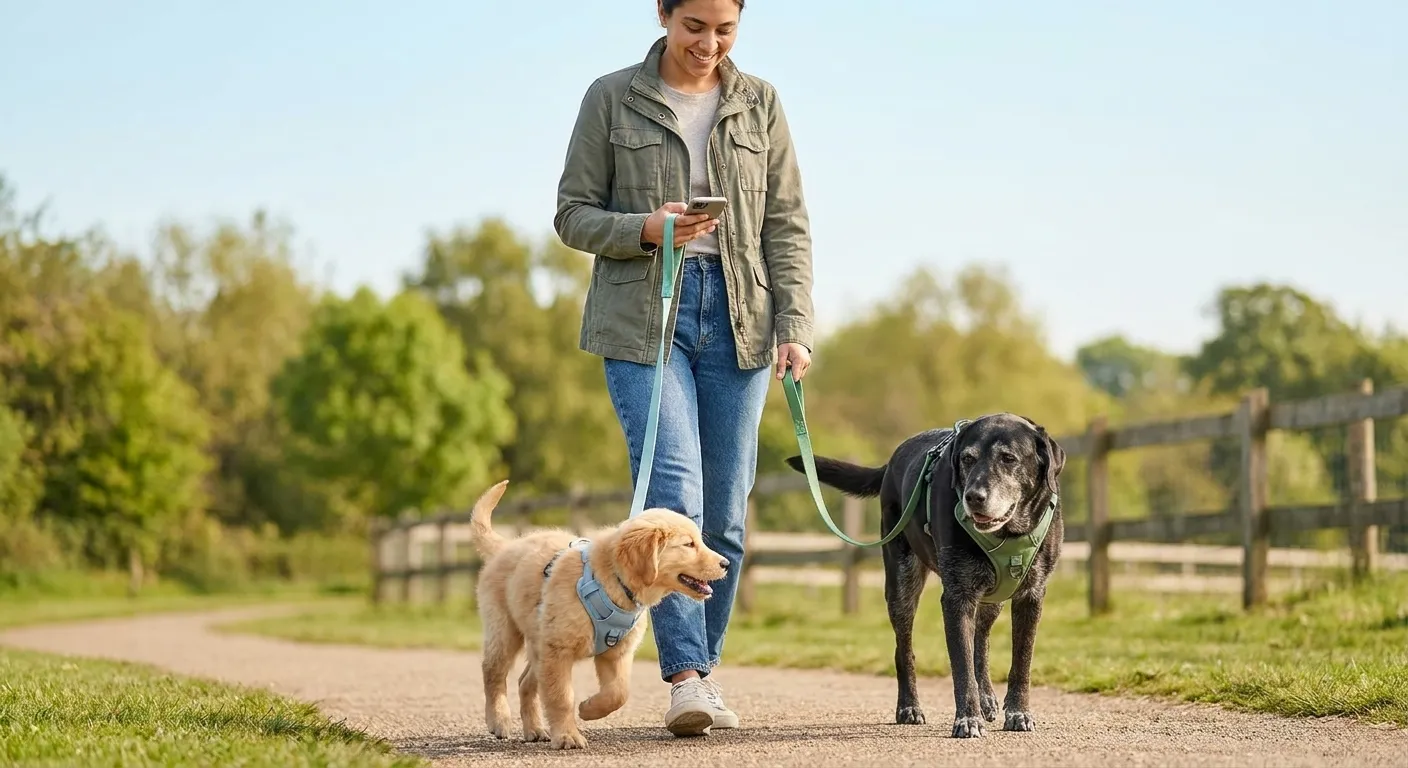
Every dog’s life is a journey, and their walking needs evolve with each milestone. From the boundless energy of a new puppy to the gentle pace of a beloved senior, understanding how to adapt your routine is key to ensuring their health, happiness, and continued bond. For savvy owners like Ava, who might one day welcome a new pup or care for an aging Max, knowing how to tailor puppy and senior dog walks is essential. This guide will help you create enriching, safe, and appropriate walking experiences for every life stage, fostering a positive relationship through every adventure.
The Puppy Stage: Foundation for a Lifetime (8 weeks – 1 year)
Puppyhood is a critical time for socialization and building positive associations with the outside world. Walks for puppies are less about strenuous exercise and more about exploration, learning, and exposure. This stage truly sets the groundwork for their future comfort and confidence. Therefore, approaching these early outings with intention is incredibly beneficial.
Short, Frequent Explorations
- Duration: Keep walks very short, typically 5-15 minutes, several times a day. Their little legs and attention spans can’t handle much more. A general rule of thumb is 5 minutes per month of age, twice a day (e.g., a 3-month-old pup = 15 minutes, twice a day). This helps prevent overexertion.
- Focus: Think ‘sniffari’ and ‘exposure.’ Let them explore new sights, sounds, and smells at their own pace. Allow plenty of time for potty breaks. Meanwhile, observe their reactions to new stimuli.
- Socialization: Safely introduce them to different people, calm vaccinated dogs, various surfaces, and gentle urban sounds. Positive experiences now prevent fear later. For example, a brief encounter with a friendly, vaccinated adult dog can be incredibly valuable.
- Training: Use walks as micro-training sessions for loose-leash walking, ‘sit,’ ‘stay,’ and recall in low-distraction environments. Always reward good behavior. Consequently, they will associate walks with positive reinforcement.
Safety First for Little Paws
Ensure your puppy is fully vaccinated before exposing them to public areas. Avoid extreme weather, hot pavement, and rough terrain that could harm their developing joints. A well-fitting, comfortable harness is preferable to a collar to protect their trachea. Additionally, consider carrying your puppy for short stretches if the environment seems overwhelming or potentially unsafe. This helps them observe without being directly in the thick of it. For extra peace of mind, consider ID tags and GPS trackers, which are useful for all dog ages, but especially for curious puppies.
Engaging the Puppy Mind
Beyond physical exploration, mental stimulation is vital for puppies. During walks, point out interesting things, use positive verbal cues, and celebrate their discoveries. This builds their confidence. Furthermore, you can bring a small, favorite chew toy or treat pouch to reward their focus and calm behavior amidst distractions. Remember, every walk is a learning opportunity, shaping their understanding of the world around them.
The Senior Stage: Comfort, Connection, and Gentle Movement (7+ years)
As dogs age, their bodies change. Walks for senior dogs should prioritize comfort, gentle exercise, and mental stimulation without overexertion. Maintaining mobility is crucial for their quality of life. This means adjusting expectations and routines to meet their evolving needs. Indeed, their pace might slow, but their desire for connection and exploration remains.
Gentle Paces and Shorter Distances
- Duration: Reduce walk duration and intensity. Instead of one long walk, consider multiple shorter, gentler strolls throughout the day (e.g., 15-20 minutes, 2-3 times a day). Listen to your dog’s cues – if they lag or show signs of discomfort, it’s time to head home. This prevents undue strain.
- Focus: Maintain gentle mobility and mental engagement. Scent walks are excellent for seniors, as their sense of smell often remains strong even as other senses diminish. Explore familiar, comfortable routes.
- Terrain: Stick to even, soft surfaces like grass or smooth paths to protect aging joints. Avoid stairs, steep hills, or slippery surfaces. Therefore, choosing the right environment is paramount.
Supporting Senior Mobility
Many senior dogs benefit from supportive gear. A well-fitted harness with a handle can help you assist them over curbs or up gentle inclines. Orthopedic dog boots can provide extra grip and cushioning on hard surfaces. Consider consulting your vet about supplements or therapies like hydrotherapy, which can significantly improve their comfort and mobility. In addition, regular grooming helps you monitor their paws and joints for any changes or discomfort.
Mental Engagement for Aging Minds
While physical activity might decrease, mental stimulation remains vital for senior dogs. Scent games on walks, allowing them to thoroughly investigate interesting smells, are incredibly enriching. You can also vary your gentle routes to introduce new, safe sensory experiences. Incorporating puzzle toys at home can further engage their minds. For example, scattering kibble in the grass during a walk can turn it into a fun, low-impact search game. These activities keep them sharp and happy.
Adapting Puppy and Senior Dog Walks for Health and Happiness
Understanding the unique needs of both puppies and senior dogs allows us to provide them with the best possible care. For puppies, walks are about positive exposure, learning, and short bursts of activity. For seniors, it’s about comfort, gentle movement, and maintaining their connection to the world at a manageable pace. Consequently, both stages require thoughtful consideration and adaptation.
Key Considerations for Puppy Walks
- Vaccination Status: Always prioritize your puppy’s health. Consult your veterinarian about safe outdoor exposure timelines.
- Over-stimulation: Puppies can get overwhelmed easily. Watch for signs like excessive yawning, lip-licking, or trying to hide. Keep initial outings brief and calm.
- Potty Training: Walks are excellent opportunities for potty breaks. Celebrate successes to reinforce good habits.
- Positive Reinforcement: Always carry treats and praise to make every experience positive. This builds a strong bond.
- Gear: A comfortable, well-fitting harness is essential. Avoid retractable leashes, which can teach pulling and be dangerous.
Key Considerations for Senior Dog Walks
- Listen to Cues: Your senior dog will tell you when they’ve had enough. Observe their gait, energy levels, and responsiveness.
- Weather Sensitivity: Senior dogs are more susceptible to extreme temperatures. Adjust walk times or duration accordingly.
- Routine: While flexibility is good, seniors often thrive on predictable routines. Consistency can reduce anxiety.
- Vet Check-ups: Regular veterinary visits are crucial to monitor their health, especially joint health and pain management.
- Accessibility: Choose routes that are easy to navigate, avoiding steep hills or uneven ground. Remember, even short, frequent strolls are beneficial for maintaining mobility.
Creating Enriched Experiences for Every Age
Whether you’re guiding a curious puppy or supporting a wise senior, the goal of walking remains the same: to enrich their lives and strengthen your bond. For puppies, this means introducing them to the wonders of the world safely and positively. For seniors, it involves helping them enjoy the outdoors comfortably and with dignity. Both stages benefit immensely from your patient and observant presence.
Innovative Approaches to Puppy and Senior Dog Walks
Modern pet owners have access to many tools and strategies to enhance their dog’s walking experiences. For puppies, consider using a puppy carrier for parts of your walk, allowing them to observe the world from a safe vantage point without physical exertion. This is particularly useful in busy environments. For seniors, specialized supportive harnesses or even dog strollers can extend their ability to enjoy the outdoors when their legs can no longer carry them far. These aren’t just practical; they show your commitment to their well-being.
Furthermore, technology can play a role. Fitness trackers for dogs can help you monitor activity levels, ensuring puppies get enough appropriate exercise without overdoing it, and that seniors maintain a healthy level of gentle movement. This data can be invaluable for discussions with your vet. For instance, you could track your dog’s activity and discuss it during their next check-up, especially if you notice changes. You can learn more about general dog care and enrichment on our blog.
Building a Lasting Connection Through Walks
The shared experience of a walk, regardless of your dog’s age, deepens your connection. It’s a time for communication, observation, and mutual enjoyment. For puppies, these early walks build trust and confidence in you as their guide. For seniors, they reinforce the comfort and security of your presence, allowing them to continue experiencing the world with their favorite companion. These moments are truly precious.
Remember, adapting puppy and senior dog walks is an ongoing process. Just as humans change, so do our canine companions. Being attuned to their individual needs, celebrating their milestones, and adjusting your approach ensures that every walk is a joyful and beneficial adventure. This flexibility is a hallmark of responsible and loving pet ownership.
For further reading on canine development and aging, reputable sources like the American Veterinary Medical Association (AVMA) offer valuable insights into each life stage. For instance, you can find information on puppy care here and senior dog health here. These resources provide a scientific foundation for understanding your dog’s changing needs.
Conclusion
Embracing the journey of dog ownership means understanding and adapting to the evolving needs of our furry friends. From the first tentative steps of a puppy to the gentle amble of a senior, tailoring their walks is an act of love and responsibility. By focusing on appropriate duration, terrain, and mental stimulation, we ensure that every stage of their life is filled with enriching, safe, and positive outdoor experiences. These carefully planned puppy and senior dog walks not only contribute to their physical health but also strengthen the incredible bond you share. So, step out with confidence, knowing you’re providing the best possible adventures for your cherished companion, no matter their age.
FAQ Section
How often should a young puppy be walked?
Young puppies, generally under 4-5 months, benefit from multiple short walks throughout the day. Aim for 5-15 minutes, 3-5 times daily, focusing on potty breaks, gentle exploration, and positive exposure to new sights and sounds. The key is frequency over duration.
What are good signs that my senior dog is enjoying their stroll?
A senior dog enjoying their walk might have a relaxed body posture, a gently wagging tail, and an interest in sniffing their surroundings. They should maintain a steady, comfortable pace without lagging behind or showing signs of stiffness. Happy senior dog outings are about quality, not speed.
Can I use a stroller for my elderly dog?
Absolutely! A dog stroller can be a fantastic tool for elderly dogs, especially those with mobility issues or arthritis. It allows them to still enjoy the fresh air, new smells, and your company without the physical exertion, greatly enhancing their quality of life.
Should all puppy and older dog outings be the same length?
No, the length of walks should vary significantly for different age groups. Puppy walks are short and frequent, while older dog excursions should be shorter and more gentle than those for adult dogs. Always tailor the activity to their individual energy levels and physical capabilities.
How important is socialization during a young dog’s early outdoor experiences?
Socialization is incredibly important during a young dog’s early outdoor experiences. It helps them develop into well-adjusted, confident adult dogs. Safely exposing them to various sights, sounds, people, and calm, vaccinated dogs during their walks builds positive associations and prevents future fear or reactivity.

