
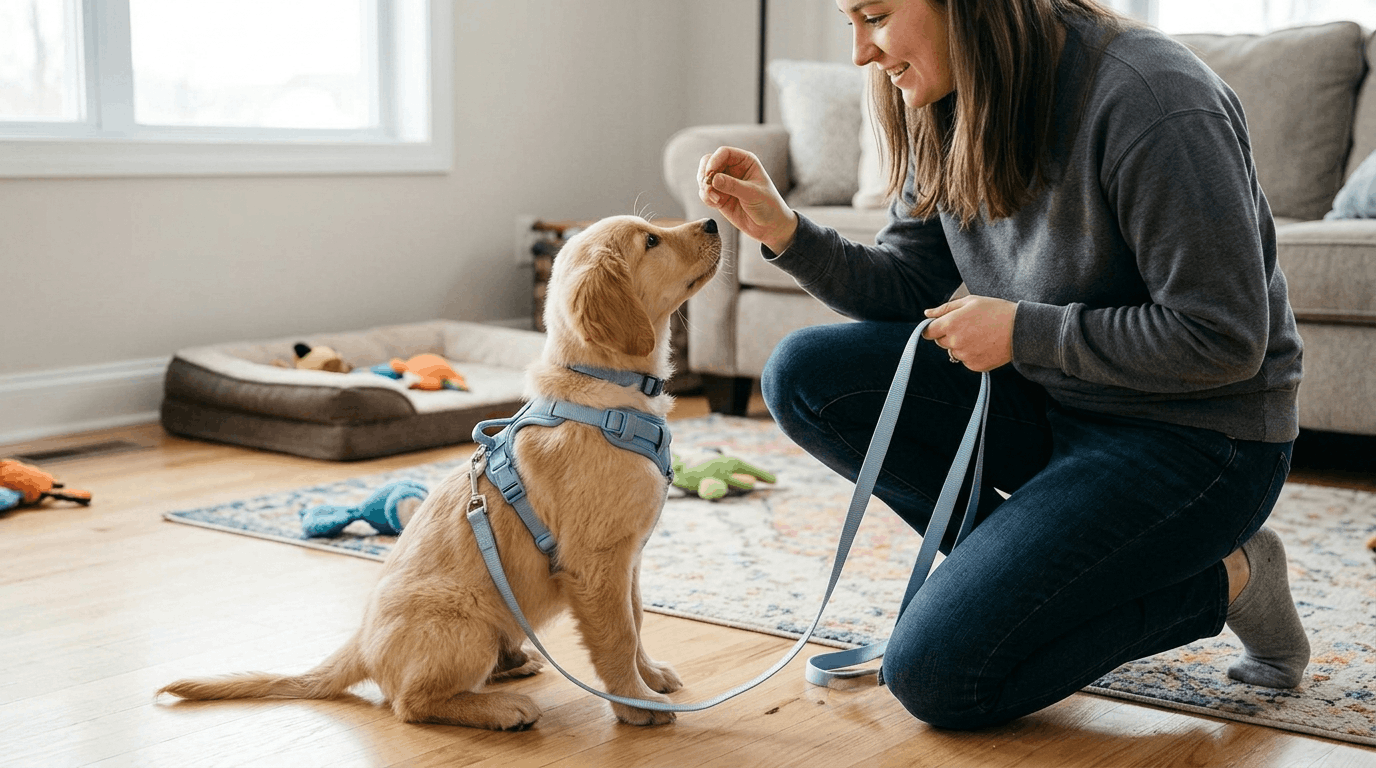
Starting puppy leash training can feel like a challenge, especially when your puppy is full of energy, curiosity, and excitement. However, with the right approach, it becomes one of the most rewarding parts of raising a well-behaved dog. Instead of viewing it as a struggle, think of it as an opportunity to build communication, trust, and structure from the very beginning. When done correctly, puppy leash training sets the foundation for calm, enjoyable walks that last a lifetime.
Puppies are naturally curious, so they want to explore everything around them. As a result, they often pull, stop suddenly, or get distracted easily. This is completely normal. However, if these habits are not addressed early, they can turn into long-term behavioral issues. Therefore, starting puppy leash training early helps shape positive habits before unwanted behaviors become ingrained.
Understanding Your Puppy’s Behavior First
Before diving into techniques, it helps to understand how puppies think. Puppies do not pull to be difficult. Instead, they pull because it works. When they move forward quickly, they reach something interesting. Over time, this behavior becomes reinforced.
In addition, puppies have short attention spans. This means they cannot focus for long periods, especially in stimulating environments. Therefore, puppy leash training should be broken into short, manageable sessions. Keeping things simple and positive helps your puppy learn faster.
Another important factor is emotional state. Puppies that feel overwhelmed may freeze or resist walking. On the other hand, overly excited puppies may pull constantly. Recognizing these states allows you to adjust your approach and create a more balanced experience.
Start Indoors For Better Focus
One of the easiest ways to simplify puppy leash training is to begin indoors. A quiet environment reduces distractions and allows your puppy to focus on learning basic movement with the leash.
Attach the leash and let your puppy get used to the feeling. At first, your puppy may chew on it or try to pull away. This is normal, so stay patient. Encourage your puppy to follow you with gentle movement and positive reinforcement.
Short sessions work best. Practice for a few minutes at a time, then take a break. This keeps your puppy engaged without feeling overwhelmed. Over time, your puppy becomes comfortable with the leash, making outdoor training much easier.
By starting indoors, you create a strong foundation that supports smoother progress later.
Introduce The Leash Gradually Outdoors
Once your puppy feels comfortable indoors, you can move to a quiet outdoor area. This step is important because the outside world adds new sights, sounds, and smells. These distractions can make puppy leash training more challenging, so start slowly.
Choose a calm location with minimal distractions. Allow your puppy to explore while maintaining gentle guidance. If your puppy pulls, stop moving and wait for it to relax. This teaches that pulling does not lead to progress.
At the same time, reward calm behavior immediately. When your puppy walks beside you or follows your lead, offer praise or a small treat. This reinforces the behavior you want to see.
Gradually, increase the level of distraction as your puppy improves. This step-by-step approach helps your puppy adapt without becoming overwhelmed.
Use Simple Techniques That Work Consistently
Consistency is the key to successful puppy leash training. One of the most effective methods is the stop and go technique. When your puppy pulls, stop walking. Wait until the leash becomes loose, then continue moving.
This simple rule teaches your puppy that calm walking leads to progress. Over time, your puppy begins to choose the behavior that works.
Another useful technique is changing direction. If your puppy becomes distracted or pulls ahead, turn and walk the other way. This encourages your puppy to pay attention and follow your movement.
Both methods rely on clear communication rather than force. By staying consistent, you create predictable outcomes that help your puppy learn quickly.
Keep Training Positive And Reward Based
Positive reinforcement is essential in puppy leash training. Puppies respond best when they are rewarded for good behavior rather than corrected harshly for mistakes. This creates a positive association with the leash and walking.
Use treats, praise, or gentle encouragement to reward calm walking. Timing is important, so reward your puppy as soon as it displays the desired behavior. This helps your puppy understand exactly what it did right.
At the same time, avoid rewarding unwanted behavior. If your puppy pulls and still moves forward, the behavior continues. Instead, pause and reset before continuing.
Over time, your puppy learns that staying close and calm brings positive results. This makes training feel natural and enjoyable for both of you.
Choose The Right Equipment For Comfort
The equipment you use can make a big difference in puppy leash training. A lightweight leash and a properly fitted harness are often the best choices for young dogs. Harnesses distribute pressure evenly and reduce strain on the neck.
Front clip harnesses can provide additional guidance by gently redirecting your puppy when it pulls. This helps reinforce calm movement without causing discomfort.
It is important to ensure that all equipment fits correctly. A loose harness may slip, while a tight one can restrict movement. Comfort plays a major role in how your puppy responds during training.
By choosing the right gear, you create a supportive environment that makes learning easier.
Be Patient With Progress And Setbacks
Puppy leash training does not happen overnight. Puppies are still learning about the world, so progress takes time. Some days may feel easy, while others may feel challenging. This is completely normal.
Patience is essential. Avoid becoming frustrated when your puppy struggles. Instead, focus on small improvements and build from there. Each positive step brings you closer to your goal.
Consistency also matters. Practice regularly, even if sessions are short. Frequent repetition helps your puppy develop strong habits.
If your puppy regresses, return to simpler steps. This reinforces the basics and rebuilds confidence. Over time, these efforts lead to lasting results.
Create A Calm Walking Routine Early
Establishing a routine helps your puppy understand what to expect. Start each walk calmly by waiting for your puppy to settle before leaving. This prevents excitement from carrying into the walk.
Maintain a steady pace and avoid rushing. Puppies respond better to calm, predictable movement. Ending the walk calmly is just as important, as it reinforces balanced behavior.
By creating a routine, you make puppy leash training more structured and easier to follow. Over time, your puppy learns that walks are calm and controlled experiences.
Conclusion
Puppy leash training does not have to be complicated or stressful. By starting early, staying consistent, and focusing on positive reinforcement, you can create a strong foundation for calm walking behavior. Each step you take builds confidence and improves communication between you and your puppy.
Although the process requires patience, the results are worth it. Walks become more enjoyable, your puppy becomes more responsive, and your bond grows stronger. With the right approach, puppy leash training becomes a natural and rewarding part of your daily routine.
FAQ
- When should I start leash training my puppy?
You can begin as early as 8 weeks old, starting with short and simple sessions indoors. - Why does my puppy keep pulling on the leash?
Puppies pull because it helps them reach things faster, which reinforces the behavior. - How long should training sessions be?
Keep sessions short, around 5 to 10 minutes, to match your puppy’s attention span. - Is a harness better than a collar for puppies?
Yes, harnesses reduce neck strain and provide better control during early training. - How long does it take to see results?
Most puppies show improvement within a few weeks with consistent and positive training.

