
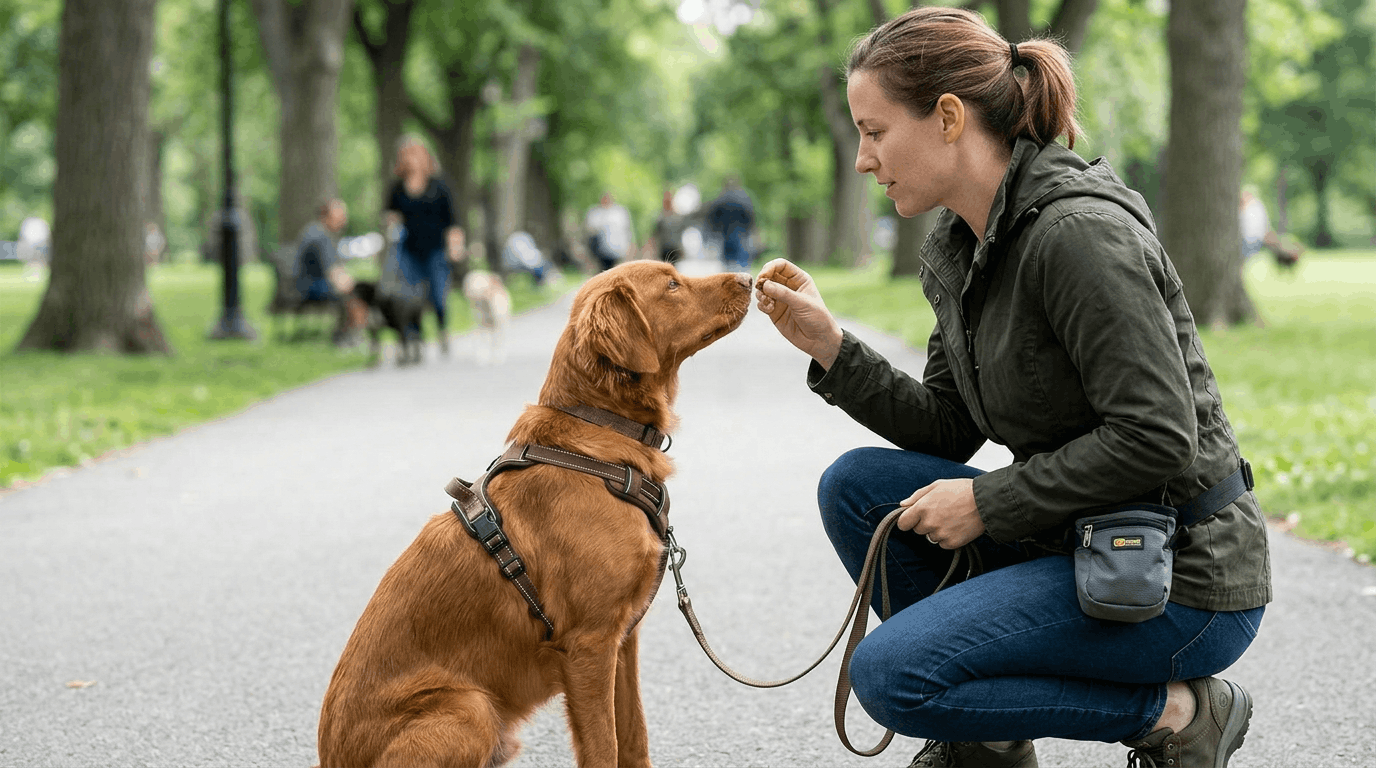
If your dog suddenly lunges at other dogs, people, or moving objects, you know how stressful and unpredictable walks can feel. Stop dog lunging is not just about correcting behavior in the moment; it is about understanding what triggers the reaction and guiding your dog toward calmer responses. While lunging and pulling often happen together, they are both rooted in excitement, frustration, or fear. The good news is that with the right approach, you can reshape these behaviors and create a more controlled and enjoyable walking experience.
Many dogs do not lunge because they are aggressive. Instead, they react because they feel overwhelmed or overly excited. When that energy builds without direction, it explodes into sudden movement. Therefore, stop dog lunging training focuses on teaching your dog how to stay calm and respond differently in those moments. Once your dog learns to manage its emotions, the behavior begins to change.
Understanding Why Dogs Lunge On The Leash
Before you can effectively stop dog lunging, it is important to understand why it happens. Dogs often lunge because the leash restricts their natural movement. When they see something interesting or triggering, they cannot approach or move freely. As a result, frustration builds quickly.
In addition, repeated exposure to triggers without proper guidance strengthens the behavior. If your dog lunges every time it sees another dog, that reaction becomes a habit. Over time, the behavior feels automatic, which makes it harder to control.
Another factor is lack of focus. Dogs that are not engaged with their owner tend to react more to their surroundings. Therefore, building attention is a key part of stop dog lunging training. When your dog looks to you for guidance, it becomes easier to redirect its behavior.
Start With Distance And Control
One of the most effective ways to stop dog lunging is to create distance from triggers. When your dog is too close to something that causes a reaction, it becomes difficult to regain control. Therefore, increasing distance gives your dog the space needed to stay calm.
For example, if your dog reacts to other dogs, cross the street or move to a quieter area. This reduces intensity and allows your dog to remain in a manageable state. Over time, you can gradually decrease the distance as your dog improves.
In addition, control your environment whenever possible. Choose quieter walking routes and avoid crowded areas during training. This controlled approach helps your dog succeed and builds confidence.
By managing distance effectively, you create the foundation needed to stop dog lunging in a calm and structured way.
Teach Focus Before Reactivity Begins
Focus is one of the most powerful tools in training. When your dog pays attention to you, it becomes less reactive to distractions. Therefore, teaching focus is essential if you want to stop dog lunging behavior.
Start by practicing simple attention exercises in a calm environment. Reward your dog for making eye contact or responding to its name. These small actions build a habit of checking in with you.
During walks, use these cues before your dog reacts. If you notice a trigger approaching, ask for attention and reward it. This shifts your dog’s focus away from the trigger and back to you.
Timing is critical. Acting before the reaction begins prevents escalation. Over time, this proactive approach helps stop dog lunging by replacing reactive behavior with focused engagement.
Use Controlled Movement To Break The Pattern
When your dog starts to lunge, your response should remain calm and controlled. Avoid pulling back harshly, as this can increase tension and make the situation worse. Instead, use movement to guide your dog away from the trigger.
Changing direction is a simple yet effective method. As soon as you notice tension building, turn and walk the other way. This interrupts the behavior and helps your dog reset. With repetition, your dog learns that lunging does not lead to the desired outcome.
Another technique involves slowing down or stopping. When your dog pulls forward, pause until it relaxes. This reinforces the idea that calm behavior leads to movement.
By using controlled movement consistently, you teach your dog how to respond differently, which supports stop dog lunging training over time.
Reward Calm Behavior Consistently
Positive reinforcement plays a key role in changing behavior. While it is important to manage lunging, it is equally important to reward calm responses. When your dog sees a trigger but remains calm, reward it immediately.
This reinforces the behavior you want to see. Over time, your dog begins to associate calmness with positive outcomes. As a result, stop dog lunging becomes more natural and less forced.
Use treats, praise, or a calm tone to acknowledge good behavior. Keep rewards consistent, especially during early training stages. Gradually, you can reduce treats as your dog becomes more reliable.
Consistency is what creates lasting change. Every calm moment is an opportunity to strengthen better habits.
Choose The Right Equipment For Better Control
While training is the main focus, the right equipment can support your efforts. Certain tools are designed to provide better control and reduce pulling. When used correctly, they can help stop dog lunging more effectively.
Front clip harnesses are a popular option. They redirect your dog’s movement when it pulls, making it easier to guide behavior. This reduces strain on your body and prevents strong forward lunges.
Head collars are another option for strong pullers. They control the dog’s head, which influences its direction. However, they require proper introduction to ensure comfort.
Regardless of the tool, proper fit and usage are essential. Equipment should support training, not replace it. When combined with consistent techniques, the right gear can make a noticeable difference.
Build Patience And Consistency Into Every Walk
Training takes time, especially when dealing with reactive behavior. However, patience and consistency are what lead to long-term success. Each walk is an opportunity to reinforce calm behavior and reduce lunging.
Avoid rushing the process. Progress may feel slow at first, but small improvements add up. For example, shorter reactions or quicker recovery times indicate that your training is working.
Stay calm during setbacks. Dogs respond to your energy, so maintaining a steady approach helps them feel more secure. Over time, this calm energy supports stop dog lunging training and builds confidence.
By committing to a consistent routine, you create an environment where your dog can learn and improve naturally.
Conclusion
Learning how to stop dog lunging and leash pulling behavior is about more than control. It is about understanding your dog, managing triggers, and teaching calm responses through consistent training. While the process requires patience, the results are worth the effort.
As your dog learns to stay calm and focused, walks become more enjoyable and less stressful. You gain confidence, your dog becomes more predictable, and your connection strengthens. With the right approach, stop dog lunging is not just possible, it becomes a lasting change that improves your daily routine.
FAQ
- Why does my dog lunge at other dogs?
Dogs often lunge due to excitement, fear, or frustration when they cannot approach or interact freely. - Can leash training reduce lunging behavior?
Yes, consistent leash training helps teach calm responses and reduces reactivity over time. - How long does it take to see improvement?
Most dogs show progress within a few weeks, although consistent practice is essential for lasting results. - Should I avoid triggers completely?
Temporary avoidance helps during training, but gradual exposure is important for long-term improvement. - Is lunging a sign of aggression?
Not always. Many dogs lunge due to excitement or lack of control rather than true aggression.

