
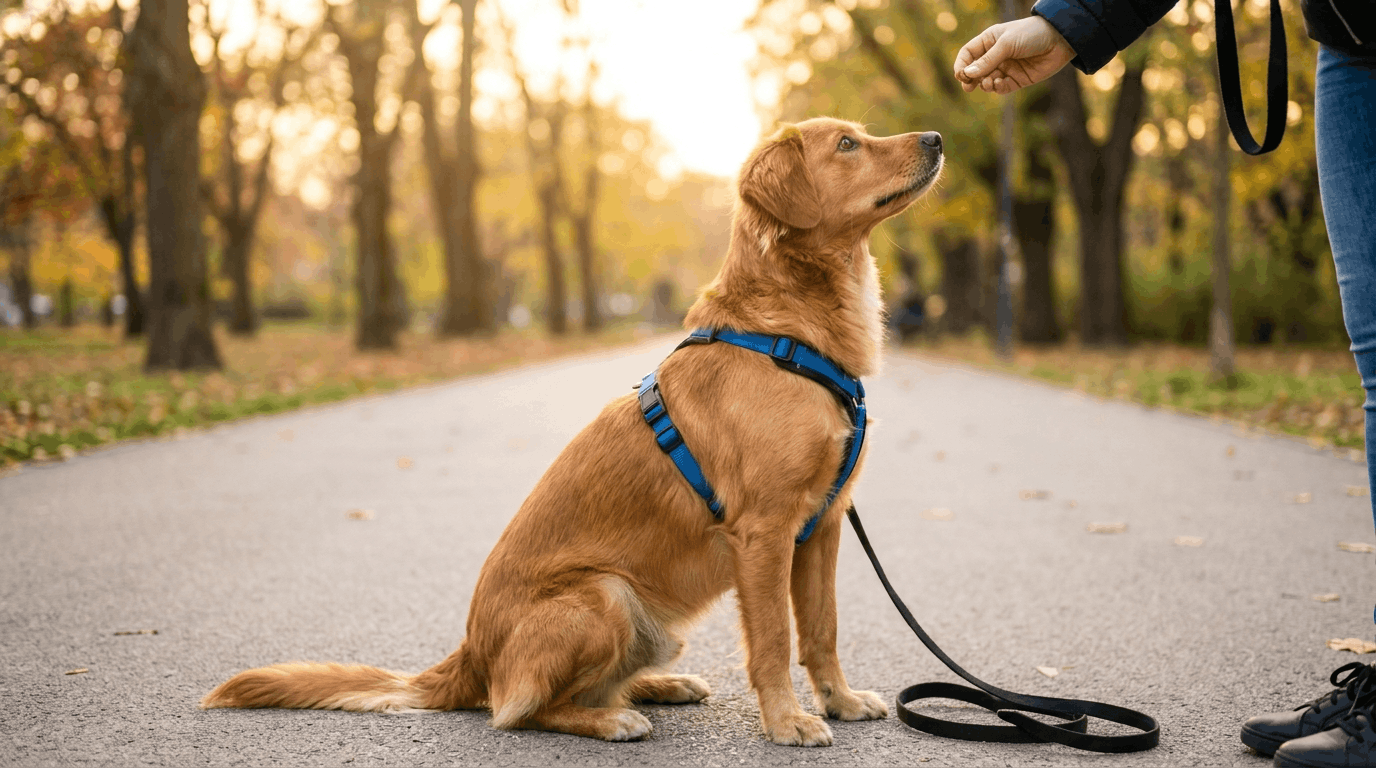
Walking your dog should feel relaxing, yet for many owners, it becomes a daily struggle. Stop dog pulling is one of the most common goals for dog owners who feel frustrated by constant tension on the leash. While pulling may seem like stubborn behavior, it is usually a learned habit reinforced over time. The good news is that with patience, consistency, and the right approach, you can train your dog to walk calmly beside you.
Most dogs pull because they are excited to explore. When pulling gets them where they want to go faster, the behavior becomes stronger. As a result, stop dog pulling training focuses on breaking that connection and replacing it with calm, controlled movement. Once your dog understands that pulling no longer works, the entire walking experience begins to change.
Why Dogs Pull And How To Change It
Dogs are naturally curious, and the outside world offers endless stimulation. New smells, sounds, and sights can quickly trigger excitement. Therefore, when your dog steps outside, it often wants to move ahead quickly. This leads to tension on the leash and reinforces pulling behavior.
To stop dog pulling effectively, you must change what your dog learns from the walk. Instead of allowing forward progress during pulling, you create a new rule: calm walking moves forward, pulling does not. This shift may seem simple, yet it forms the foundation of successful leash training.
Additionally, dogs learn through repetition. If pulling has worked for weeks or months, it will take time to undo. However, consistent responses create new habits. Over time, your dog begins to understand what leads to success, which helps stop dog pulling naturally.
Start With Calm Energy Before The Walk
Training begins before you even step outside. If your dog is overly excited at the door, that energy carries into the walk. Therefore, one of the most important steps to stop dog pulling is to start in a calm state.
Wait until your dog relaxes before putting on the leash. If your dog jumps or spins, pause and give it time to settle. Once calm behavior appears, reward it with attention or a treat. This teaches your dog that calmness leads to progress.
When you open the door, maintain that same control. If your dog rushes forward, close the door and reset. Although this may take patience at first, it sets the tone for the entire walk. Eventually, your dog learns that calm behavior is the only way forward.
Use The Stop And Go Method Consistently
One of the simplest and most effective techniques to stop dog pulling is the stop and go method. When your dog pulls, stop walking immediately. Do not yank the leash or react emotionally. Instead, stay still and wait.
As soon as your dog releases tension and looks back or steps toward you, begin walking again. This teaches your dog that pulling leads to stopping, while calm walking leads to movement. Over time, this clear pattern helps stop dog pulling without confusion.
Consistency is critical here. Every time your dog pulls, the same response should follow. If you sometimes allow pulling and sometimes stop, your dog receives mixed signals. Therefore, stay consistent even when progress feels slow.
Although this method may feel repetitive, it creates lasting results. With practice, your dog begins to choose calm walking because it leads to progress.
Change Direction To Break The Pattern
Another powerful technique involves changing direction. When your dog starts pulling, turn and walk the other way. This interrupts the behavior and shifts your dog’s focus back to you.
This method works because it removes your dog’s ability to lead. Instead, your dog learns to follow your movement. Over time, this reinforces attention and helps stop dog pulling more effectively.
Keep your movements smooth and calm. Avoid sudden jerks or harsh corrections. The goal is to guide your dog, not startle it. When your dog follows your new direction calmly, reward that behavior.
By repeating this process, your dog learns that staying close to you is the easiest and most rewarding choice.
Reward The Behavior You Want
Positive reinforcement plays a key role in training. While it is important to stop unwanted behavior, it is equally important to reward good behavior. When your dog walks calmly beside you, acknowledge it immediately.
Use treats, praise, or gentle encouragement to reinforce calm walking. This helps your dog understand exactly what you expect. Over time, these rewards make it easier to stop dog pulling because your dog associates calm behavior with positive outcomes.
Timing matters. Reward your dog as soon as it shows the desired behavior. This clear connection strengthens learning and speeds up progress.
Gradually, you can reduce treats and rely more on praise. However, in the early stages, rewards help build strong habits.
Choose The Right Equipment For Support
While training is the main focus, the right equipment can support your efforts. Certain tools are designed to reduce pulling and improve control. However, they should always be used alongside proper training.
Front clip harnesses are a popular choice. They redirect your dog’s movement when it pulls, making it easier to guide. This added control can help stop dog pulling more quickly while maintaining comfort.
Head collars are another option, especially for strong pullers. They guide your dog’s head, which influences its direction. When used correctly, they provide excellent control with minimal effort.
Regardless of the tool you choose, proper fit is essential. Equipment should feel comfortable and secure. When used correctly, these tools support your training and make the process smoother.
Practice In Low Distraction Areas First
Training is easier in quiet environments. Busy streets and crowded areas can overwhelm your dog and make learning more difficult. Therefore, begin your training in a calm space with fewer distractions.
As your dog improves, gradually introduce more challenging environments. This step-by-step approach helps your dog build confidence and maintain focus. Over time, you will notice that stop dog pulling becomes easier even in busy settings.
If your dog struggles in a new environment, return to a quieter space and reinforce basic skills. This prevents frustration and keeps progress steady.
By controlling the environment, you create better learning conditions and stronger results.
Stay Patient And Consistent
Training takes time, and progress may not always feel immediate. However, patience and consistency are the keys to success. Every walk is an opportunity to reinforce good habits and build better behavior.
Avoid becoming frustrated. Dogs respond best to calm, clear guidance. When you stay relaxed, your dog is more likely to mirror that energy. This helps stop dog pulling in a way that feels natural and sustainable.
Celebrate small improvements. Even a few steps of calm walking are progress. Over time, these small moments add up to lasting change.
By staying committed, you create a routine that benefits both you and your dog.
Conclusion
Learning how to stop dog pulling is not about quick fixes. It is about building habits that create calm, controlled walks over time. Through consistent training, clear communication, and positive reinforcement, your dog can learn to walk beside you without tension.
Although the process requires patience, the results are worth it. Walking becomes enjoyable again, and your bond with your dog grows stronger. With the right approach, stop dog pulling is not just possible, it becomes your new normal.
FAQ
- How long does leash training usually take?
Most dogs show improvement within a few weeks, although consistent practice is needed for lasting results. - What should I do if my dog keeps pulling?
Stop walking, wait for calm behavior, and then continue. Consistency is key to improving leash habits. - Can older dogs learn better leash behavior?
Yes, dogs of any age can learn with patience, repetition, and clear guidance. - Are harnesses better than collars for training?
Harnesses often provide better control and reduce strain, especially for strong pullers. - Why does my dog pull more in new places?
New environments create excitement and distractions, which can increase pulling behavior temporarily.

