
Even the most routine dog walks can present unexpected challenges. Knowing essential emergency dog walking tips can empower you to handle sudden situations with confidence and keep your canine companion safe. Whether it’s an encounter with an unleashed dog, a sudden loud noise, or an unexpected injury, preparedness is key to a calm and effective response. Our goal is to equip you with the knowledge to react quickly and positively, turning potential crises into manageable moments. This comprehensive guide will help you feel more secure and ready for whatever your adventures bring, ensuring both you and your furry friend enjoy every outing.
Being prepared isn’t about anticipating every single problem; rather, it’s about having a toolkit of strategies and resources at your disposal. This proactive approach not only enhances your dog’s safety but also strengthens the bond you share, as your dog learns to trust your calm leadership in stressful situations. Let’s explore how you can transform potential walk-time worries into opportunities for positive reinforcement and effective problem-solving.
Navigating Unexpected Canine Encounters
One of the most common emergencies on a walk is an encounter with an off-leash dog. The best first step is often to remain calm. Your dog will pick up on your energy, so a relaxed demeanor is crucial. If the approaching dog seems friendly, a quick ‘leave it’ or ‘let’s go’ might redirect your dog, encouraging them to focus on you instead. Always be ready with high-value treats to reward this positive redirection.
However, if the dog appears aggressive or overly boisterous, immediate action is necessary. Consider creating a barrier with your body, a backpack, or a nearby object. Keep your leash short, maintaining control of your dog, and avoid direct eye contact with the approaching dog, as this can be perceived as a challenge. Sometimes, a loud, firm ‘NO!’ or ‘GO HOME!’ can effectively deter an approaching dog, giving you time to move away. Remember, your priority is to protect your dog and yourself. For more general advice on staying safe, explore our Dog Walking Safety Tips for Urban & Trail Adventures.
In addition, carrying a small, air-horn-like device or even just being ready to shout can be surprisingly effective. These tools are not meant to harm, but to create a startling sound that can break an aggressive dog’s focus. After all, prevention is always better than intervention. If an encounter does escalate, immediately report it to local animal control, providing as much detail as possible about the other dog and owner.
Coping with Sudden Loud Noises and Startles
Unexpected loud noises, such as sirens, backfires, or even sudden construction sounds, can be incredibly startling for dogs. Your dog might react by trying to bolt, cowering, or becoming agitated. In these moments, it’s vital to maintain a firm but gentle grip on the leash, preventing them from escaping or running into danger. Offer reassuring words in a calm, soothing voice. Your voice can be a powerful tool for comfort.
Try to redirect their attention with a treat or a quick, familiar command like ‘sit’ or ‘look at me’. This helps shift their focus from the scary noise to you and a positive interaction. If your dog is particularly prone to anxiety from loud noises, consider desensitization training at home or consult a professional trainer. This proactive approach can make a significant difference in their outdoor comfort. Furthermore, understanding your dog’s unique needs can help you prepare for these situations, as discussed in Building Confidence on Walks: Helping Shy or Anxious Dogs Thrive Outdoors.
For dogs with severe noise phobias, a thunder shirt or calming vest can provide comfort during walks. These garments apply gentle, constant pressure, which can have a calming effect. Additionally, planning your walks during quieter times of day or choosing less busy routes can minimize exposure to sudden loud sounds. This thoughtful planning is another aspect of excellent emergency dog walking tips.
What to Do in a Medical Emergency
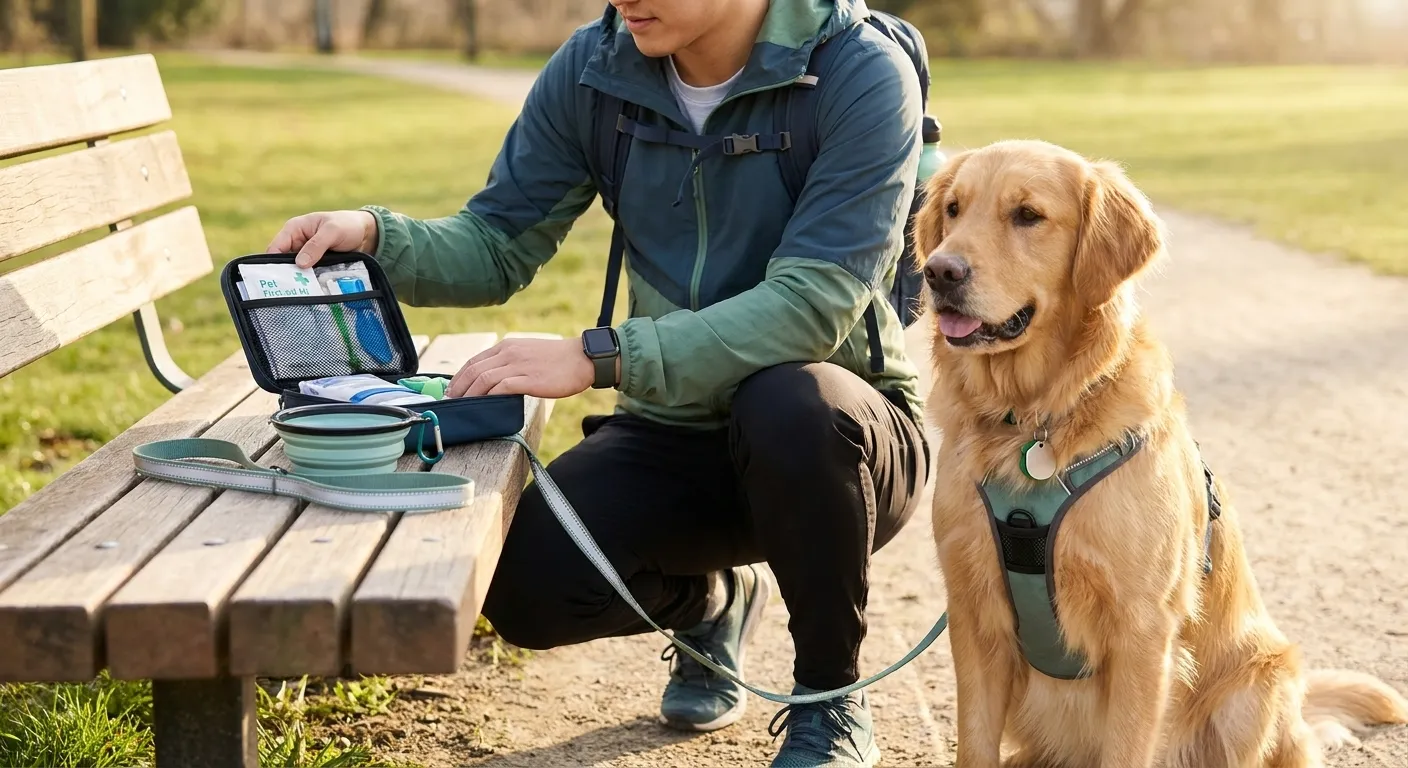
While we hope it never happens, knowing basic first aid can be life-saving for your canine companion. Always carry a small, portable first-aid kit specifically designed for pets. This kit should include antiseptic wipes, sterile gauze, self-adhesive bandages, tweezers, and pet-safe wound spray. If your dog sustains a minor cut or scrape, clean the area thoroughly and apply a bandage to prevent infection.
For more serious injuries, such as a sudden lameness, severe bleeding, or a suspected fracture, your immediate actions are crucial. Try to keep your dog as calm and still as possible to prevent them from exacerbating the injury. If you suspect a broken bone or severe pain, avoid moving the affected area. Gently support them and, if possible, fashion a makeshift splint with items like a rolled-up magazine and tape, but only if you know how to do so without causing more harm.
Crucially, always have your veterinarian’s number saved in your phone, and know the location and contact information for the nearest emergency veterinary clinic. Time is often of the essence in these situations. Learning basic canine CPR, while hopefully never needed, can provide immense peace of mind and potentially save a life. The American Veterinary Medical Association (AVMA) offers valuable resources on pet first aid and CPR, which can be incredibly beneficial for any dog owner. You can find more information on their website here.
Remember, a calm owner helps create a calm dog, making any emergency situation easier to manage. Staying prepared means you can focus on your dog’s well-being, no matter what surprises the walk brings. These medical emergency dog walking tips are a cornerstone of responsible pet ownership.
Environmental Hazards and Weather Woes
Our outdoor environments can present various hazards. Be vigilant about what your dog sniffs or tries to eat. Avoid areas with visible broken glass, sharp objects, or suspicious puddles. Keep an eye out for toxic plants, especially if you’re exploring new trails or parks. Understanding local flora and fauna can prevent accidental poisonings. Always carry water for your dog, especially on warmer days, to prevent dehydration.
Weather can also turn quickly. A sudden downpour, an unexpected heatwave, or a cold snap can pose risks. In hot weather, avoid walking during the hottest parts of the day and check the pavement temperature – if it’s too hot for your hand, it’s too hot for their paws. In cold weather, consider paw protection like booties and a warm coat for short-haired breeds. For rainy days, we have specific advice in Splish, Splash, Walk: Enjoying Rainy Day Dog Walks with Your Pup.
Sudden changes in weather, like unexpected thunderstorms, can also lead to the loud noise issues discussed earlier. Always check the forecast before heading out, and if the weather looks questionable, opt for a shorter walk or indoor activities instead. Being prepared for varying weather conditions is a vital part of emergency dog walking tips.
Lost Dog Protocol: When the Unthinkable Happens
While we all strive to prevent it, a dog can get lost, even on a routine walk. This is where preparation truly shines. Firstly, ensure your dog always wears a collar with up-to-date ID tags, including your phone number. Secondly, microchipping your dog is non-negotiable. It provides a permanent form of identification that greatly increases the chances of reunion. Make sure your microchip registration is current with your contact information.
If your dog does get loose, act quickly. Call their name in a calm, reassuring voice. Do not chase them, as this can often make them run further away. Instead, try to sit or lie down and call them, making yourself seem less threatening. If you have treats or a favorite toy, use them to entice your dog back. Immediately alert local animal shelters, vet clinics, and post on local social media groups. Having a recent, clear photo of your dog readily available on your phone is incredibly helpful for these alerts. These proactive steps are crucial emergency dog walking tips.
Consider investing in a smart dog collar that offers GPS tracking. Devices like these can provide real-time location data, giving you invaluable peace of mind. For more information on these technologies, read about Smart Dog Collar Benefits: Elevate Your Dog’s Walking Safety & Health. These tools transform the daunting prospect of a lost dog into a manageable situation with a higher chance of a happy reunion.
Building a Strong Foundation: Training for Emergencies
Effective training is perhaps the most powerful of all emergency dog walking tips. A solid recall is paramount – your dog should come back to you reliably, even with distractions. Practice this in various environments, gradually increasing the distractions. A strong ‘leave it’ command can prevent your dog from eating something harmful or engaging with an aggressive dog.
Similarly, a ‘stay’ or ‘wait’ command can keep your dog safe if you need a moment to assess a situation or open a gate. Loose leash walking, as discussed in Achieving Zen: Loose Leash Walking Tips for a Calm Canine Companion, also contributes to safety by preventing unexpected pulls or tangles. Consistent positive reinforcement training builds trust and responsiveness, making your dog more likely to listen to you in a crisis.
Consider enrolling in an obedience class or working with a professional trainer to hone these essential skills. Even advanced training can be enjoyable and strengthen your bond. Remember, every command learned is a step towards a safer, more confident walking experience for both of you. These foundational skills are not just for everyday walks; they are critical emergency dog walking tips.
Essential Gear for Preparedness
Having the right gear is fundamental to being prepared for any situation. Beyond a sturdy leash and comfortable harness, consider these additions to your emergency dog walking kit:
- First-Aid Kit: As mentioned, a small, well-stocked kit for minor injuries.
- Water and Collapsible Bowl: Essential for hydration, especially on longer walks or warm days.
- High-Value Treats: For redirection, recall, and positive reinforcement in stressful moments.
- Poop Bags: Always, always clean up after your dog.
- Flashlight or Headlamp: For walks in low light or unexpected delays that extend into dusk.
- Personal Safety Alarm: For your own protection in isolated areas.
- Reflective Gear: For both you and your dog, increasing visibility to drivers and cyclists.
- Multi-Tool: Can be surprisingly useful for various small repairs or tasks.
A well-organized emergency kit, whether a small pouch attached to your leash or a dedicated section of your backpack, ensures you have immediate access to these vital items. For a more comprehensive list of everyday items, check out The Ultimate Checklist: Essential Dog Walking Gear for Every Adventure. Equipping yourself properly is a key component of effective emergency dog walking tips.
Your Role: Staying Calm and Confident
Ultimately, your demeanor is one of the most powerful tools in any emergency. Dogs are incredibly perceptive and will often mirror your emotional state. If you panic, your dog is likely to become more anxious or fearful. Practicing mindfulness and deep breathing can help you stay calm under pressure. Before reacting, take a moment to assess the situation and choose the most effective course of action.
Confidence comes from preparedness. The more you know about handling various scenarios, the more confident you’ll feel on your walks. Embrace the learning process, celebrate small victories in training, and remember that every walk is an opportunity to strengthen your bond and build resilience together. Your calm, confident leadership is perhaps the most important of all emergency dog walking tips.
Conclusion: Empowering Every Walk
Navigating the unexpected on dog walks can feel daunting, but with the right knowledge and tools, you can transform potential crises into manageable moments. By understanding how to handle unexpected encounters, respond to medical emergencies, mitigate environmental hazards, and prepare for a lost dog scenario, you become a more confident and capable pet parent. Furthermore, investing in consistent training and equipping yourself with essential gear significantly enhances your preparedness.
Remember, every walk is an adventure, and being prepared ensures that these adventures remain positive and safe for both you and your beloved canine companion. Embrace these emergency dog walking tips, and step out with confidence, knowing you’re ready for whatever comes your way. Your proactive approach not only safeguards your dog’s well-being but also deepens the incredible bond you share.
FAQ: How can I best prepare for unexpected events during dog walks?
The best preparation involves a combination of training, essential gear, and knowing basic first aid. Ensure your dog has a strong recall, carries up-to-date ID, and is microchipped. Always carry a pet first-aid kit, water, and high-value treats. Familiarize yourself with emergency vet locations and learn basic canine CPR. This holistic approach helps you handle various situations with confidence.
FAQ: What should I do if my dog encounters an aggressive off-leash dog?
Remain calm. Try to create a barrier between your dog and the approaching dog using your body or an object. Keep your dog’s leash short and avoid direct eye contact with the aggressive dog. A loud, firm command like ‘NO!’ can sometimes deter them. Be prepared to move quickly to a safer location and use high-value treats to distract your dog. Report aggressive dog encounters to local authorities.
FAQ: Are there specific items I should always carry on a walk for safety?
Absolutely! A well-stocked pet first-aid kit, fresh water with a collapsible bowl, high-value treats, poop bags, and a flashlight (especially for low-light walks) are crucial. Consider reflective gear for visibility, and for enhanced safety, a smart dog collar with GPS tracking can be invaluable. These items address common walk-time challenges effectively.
FAQ: How important is training for walk-time emergencies?
Training is incredibly important. A reliable recall can prevent your dog from getting lost or running into danger. A strong ‘leave it’ command can stop them from ingesting harmful substances or engaging in unwanted interactions. Consistent positive reinforcement training builds trust and responsiveness, making your dog more likely to follow your commands during stressful situations. It’s truly foundational for safe walks.
FAQ: What’s the most crucial thing to remember during a dog walking emergency?
Staying calm is the most crucial thing. Your dog will pick up on your energy, and your calm demeanor can help them remain less anxious. A clear head allows you to assess the situation accurately and implement the most effective solution. Confidence derived from preparation empowers you to act decisively and positively, ensuring the best outcome for your canine companion.

